Illegal Mobilisation in One Day: How Courts Cancel Conscription Orders


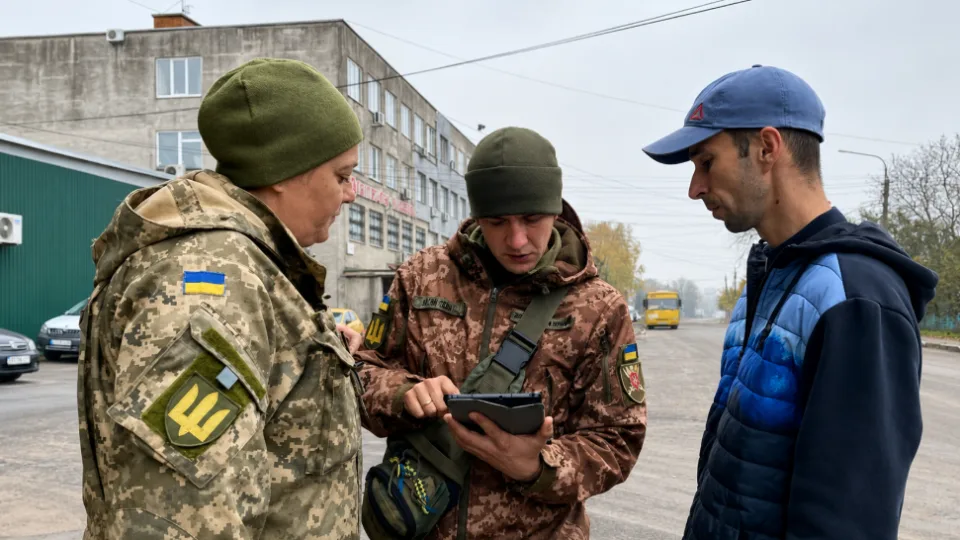










In the fifth year of the war, judicial practice concerning mobilisation has reached an unprecedented level of detail. Courts are increasingly ruling in favour of conscripts, citing "violations" by Territorial Recruitment Centres (TRCs). "Judicial-Legal Newspaper" continues its analysis of how the right to defence operates in real-world cases.
Mobilisation processes are currently marked by intense debate. On one side stands the constitutional duty to defend the homeland; on the other, the principle of the rule of law and the procedural discipline required of authorities. As an analysis of court decisions reveals, TRCs and Medical Commissions (MCs) frequently disregard procedures established by the Government (Resolutions No. 1487, No. 560), which often leads to their actions being deemed unlawful.
Blitz Mobilisation and Procedural Violations: Case No. 160/3858/26
The plaintiff was detained at 03:37 a.m. and taken to the TRC, where he was not even registered for military service. His mobile phone was confiscated, preventing him from contacting a lawyer. Within the next day, the man underwent a Medical-Legal Commission (MLC) examination without the necessary preliminary medical checks, after which he received a conscription order and was dispatched to a military unit.
The plaintiff was not given a referral for a medical examination, and despite his refusal to undergo the commission, MLC officials issued a certificate concluding that he was fit for service.
The court stated that the TRC is not authorised to forcibly detain individuals; this falls under the exclusive competence of the police, who must draw up a protocol.
The court ultimately found that significant procedural violations of the conscription procedure, as stipulated by Procedure No. 560, occurred during the plaintiff's mobilisation. Specifically, the court established that the man was detained and brought to the TRC not for administrative liability under Articles 210, 210-1 of the Code of Administrative Offences, but for mobilisation within a single day. The plaintiff was held on TRC premises without the ability to use a mobile phone or provide medical documents.
The decision emphasises that such circumstances may indicate a criminal offence under Part 1 of Article 146 of the Criminal Code of Ukraine (illegal deprivation of liberty). Therefore, these procedural violations cannot create negative legal consequences for the plaintiff.
The TRC and military unit commander's orders regarding conscription and enrolment were cancelled. The plaintiff was ordered to be removed from the personnel lists.
Prohibition of Conscription During Deferment Application Review: Case No. 460/9184/26
A man submitted a deferment application based on paragraph 9 of part 1 of Article 23 of the Law (raising a child with a disability). Despite the application being under review, the TRC issued a conscription order two days later.
The court referred to paragraph 7 of point 60 of Cabinet of Ministers Resolution No. 560, which establishes a mandatory prohibition on conscripting a person until the commission's decision is made. The TRC did not act in the manner prescribed by law.
According to Conscription Procedure No. 560, the TRC commission must review the deferment application and make a corresponding decision, before which the conscript cannot be called up for military service. Furthermore, until that decision is rendered, he cannot be sent to the Medical-Legal Commission.
In the court's opinion, the absence of a commission decision on the deferment application automatically precluded the possibility of conscripting the plaintiff.
The decision states that the TRC order, while issued within the authority of the body, was not in the manner prescribed by law, as officials failed to consider circumstances essential for decision-making.
Therefore, the court concluded that the conscription order did not meet the requirements of Article 2 of the Code of Administrative Procedure of Ukraine and must be cancelled.
As a result, the mobilisation order was cancelled, and the person was ordered to be released from military service.
Deferment for Caring for Parents and Challenging TRC "Assumptions": Case No. 300/1870/25
A son applied for a deferment due to his mother's Group II disability. The TRC commission refused, reasoning that the mother has an ex-husband (the plaintiff's father) who, according to law, "may" support her despite the divorce.
The court pointed out that the right to support after divorce must be established by a court decision on alimony, not merely exist in theory. Meanwhile, the obligation of adult children to support parents is unconditional and provided by Article 202 of the Family Code of Ukraine.
The TRC failed to provide evidence of other persons and relied solely on assumptions.
The TRC decision was cancelled by the court, and the commission was ordered to grant the plaintiff a deferment.
Double Fine and "Reservation" in the "Oberig" System: Case No. 205/6722/26
An enterprise employee had a reservation. The TRC issued him two fines (UAH 17,000 and UAH 25,500) for the same violation—failure to appear for a summons he claimed not to have received.
Thus, by a decision dated 10 March, the man was fined UAH 17,000 under Part 3 of Article 210-1 of the Code of Administrative Offences for failing to appear for a summons dated 26 December 2025. Despite this, on 14 May 2026, the TRC issued another decision, fining him UAH 25,500 again, citing the same circumstances: failure to appear for the same summons sent by registered mail.
The court concluded that the circumstances described in both decisions were identical, and therefore the person was repeatedly held administratively liable for the same offence.
The court reiterated that Article 61 of the Constitution of Ukraine explicitly prohibits double legal liability of the same kind for the same offence. A similar prohibition is contained in Part 8 of Article 247 of the Code of Administrative Offences, which precludes the possibility of re-examining a case if there is already a valid decision imposing an administrative penalty for the same circumstances.
Moreover, the court noted that, according to the "Reserve+" app data at the time of case consideration, the plaintiff had a valid reservation effective until 17 December 2026.
As a result, the TRC decision was cancelled, and the case was closed.
Risks and Pitfalls: When the Court May Refuse
At the same time, positive judicial practice does not mean that every dispute with the TRC will automatically conclude in favour of the plaintiff. Analysis of administrative court decisions shows that success largely depends on the specific circumstances of the case and proper substantiation of violations.
Unregistered reservation. In case No. 560/1437/26, the court denied the claim because, at the time of issuing the conscription order, the reservation procedure had not yet been completed. The court reasoned that the right to deferment must be properly formalised before the person acquires the status of a serviceman.
Insufficient evidence of a valid reason for absence. In case No. 953/14083/25, the court upheld the administrative penalty decision because the medical certificate provided did not contain data allowing unambiguous patient identification, and timely notification to the TRC about the inability to appear was not confirmed.
Recent administrative court decisions indicate that judicial oversight remains an effective mechanism for verifying the legality of TRC decisions. If significant violations of legal requirements occurred during mobilisation procedures, courts side with plaintiffs.
At the same time, practice demonstrates several important conclusions:
-
Procedural guarantees matter: courts check not only the grounds for mobilisation but also compliance with the procedure established by law.
-
Documents must be submitted in advance: if a person has the right to deferment, it is important to apply to the TRC promptly with an application and supporting documents.
-
Reservation must be properly formalised: the employer's application or the initiation of the procedure alone is insufficient; the right to deferment must be confirmed according to legal requirements.
-
Each case is evaluated individually: the final decision depends on the combination of evidence, specific circumstances, and whether violations were significant enough to deem TRC decisions unlawful.
Therefore, success in court depends not only on the fact of a violation but also on the plaintiff's ability to properly prove and document it.
Subscribe to our Telegram channel t.me/sudua, follow SUD.UA on Google News , and join us on VIBER, WhatsApp, Facebook and on Instagram to stay informed about the important events.