Disability group membership does not automatically grant the right to care: the commissions that replaced MSEC test people for their ability to survive independently


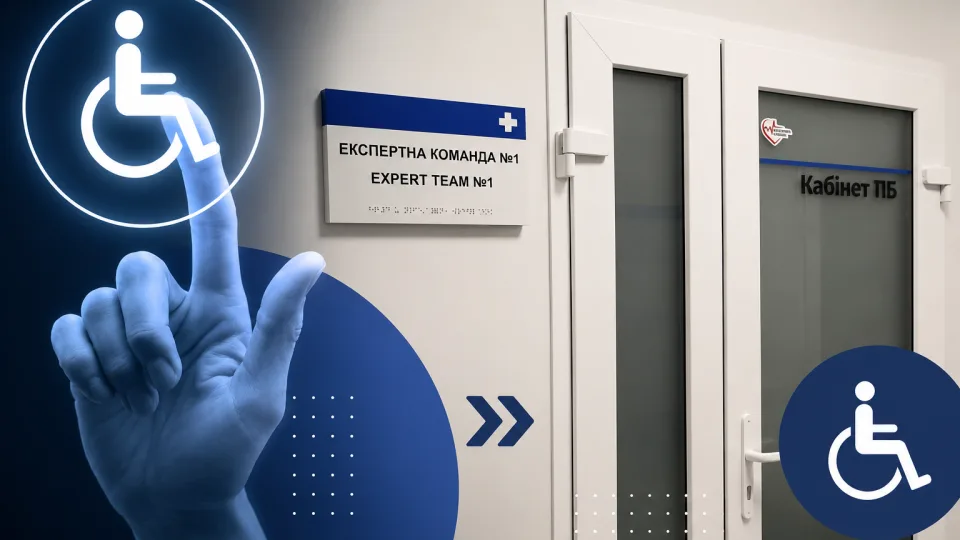










The reform of the medical and social expertise system has brought about changes beyond just the names of the bodies that establish disability. With the liquidation of MSEC, the approach to assessing an individual's condition has also evolved. The key factor is now less about the diagnosis or established disability group, and more about the extent to which a person's health condition limits their daily functioning. This is precisely what now determines the decision regarding the need for constant external care.
Individuals who previously received, or expected to receive, relevant MSEC conclusions are increasingly facing refusals from expert teams. This problem is particularly acute for families applying for social benefits, compensation, or caregiver status, as well as for conscripts seeking deferment or exemption from military service due to the need for constant care of a close relative. The "Judicial and Legal Newspaper" has thoroughly analysed when refusals for constant care may occur and whether such decisions can be appealed.
Who Determines the Need for Constant External Care Today?
As of 1 January 2025, the powers of the medical and social expert commissions ceased. Their functions concerning the establishment of disability and assessment of an individual's functional state have been transferred to expert teams that assess a person's daily functioning. This reform was introduced by the Cabinet of Ministers of Ukraine resolution dated 15 November 2024, No. 1338, titled "Some issues of introducing the assessment of a person's daily functioning."
Consequently, a comprehensive assessment has been introduced that evaluates how a person's health condition affects their ability to live independently, move, communicate, orient themselves, control their behaviour, and perform self-care. These indicators now hold decisive importance when determining the need for constant external care.
The key is to establish whether a person can independently and safely provide basic life needs without threat to life and health, taking into account:
-
the frequency with which assistance is needed (episodic, regular, constant);
-
the amount of assistance required (partial or full);
-
the effectiveness of assistive rehabilitation devices.
If performing an action is accompanied by significant pain or risk to life and health, it is considered that such an action cannot be performed independently.
How to appeal the expert team's decision
If the expert team concludes that a person does not require constant external care, this decision is not necessarily final. Legislation provides mechanisms for its review, both administratively and through the courts.
Firstly, a person can utilise the administrative procedure for reviewing the decision. The Law "On Administrative Procedure" guarantees the right of any person to appeal an administrative act if they believe their rights or lawful interests have been violated by it. During such a review, it can be assessed whether all medical documents were examined, whether the factual circumstances were fully established, whether the evaluation criteria were correctly applied, and whether the decision is properly justified.
If, during the review, it is established that the conclusion was made without considering important medical documents or in violation of the established procedure, the decision may be changed or cancelled. Furthermore, an administrative appeal does not deprive the person of the right to proceed directly to court.
Deadlines for Appealing an Expert Team's Decision
Upon receiving an extract of an expert team's decision, one should promptly consider an appeal. Ukrainian legislation provides two mechanisms for protecting rights: administrative review of the decision and appeal to the administrative court.
According to paragraphs 70–76 of the Procedure for Assessing a Person's Daily Functioning, approved by Cabinet of Ministers of Ukraine Resolution No. 1338 dated 15 November 2024, an expert team's decision can be appealed to the Centre for Functional State Assessment of the Person. The application for this must be submitted within 40 calendar days from the date the expert team made its decision.
Should a person disagree with the outcome of the administrative review, or choose to proceed directly to court, Part Two of Article 122 of the Code of Administrative Procedure of Ukraine generally applies. This allows an administrative lawsuit to be filed within six months from the day the person learned, or should have learned, about the violation of their right.
If an administrative appeal was pursued first, the six-month period for initiating court proceedings typically begins on the day the final decision from that review is received.
Judicial Practice
In its Resolution dated 6 April 2026, in case No. 214/3475/24, the United Chamber of the Cassation Civil Court of the Supreme Court noted that citizens frequently apply to courts in separate proceedings to establish the legal fact of providing constant care or the need for such care. This is most often done to arrange social benefits, obtain deferment from mobilisation, or exercise other rights.
However, the Supreme Court emphasised that if the law already defines a specific administrative procedure for establishing such a fact, the court cannot substitute the competent authority. The resolution states that determining the need for constant external care falls within the remit of authorised healthcare bodies and, following reform, expert teams assessing a person's daily functioning. These bodies must evaluate medical documents and the person's functional state to make an appropriate decision.
If a person disagrees with such a decision, the proper course of action to protect their rights is not to seek the establishment of this fact by a civil court, but rather to appeal the authority's decision through administrative court proceedings.
Essentially, the Supreme Court distinguished between two different issues: establishing a medical fact, which is the competence of the expert team, and verifying the legality of its decision, which is the competence of the administrative court. This approach is fundamental as it prevents situations where different courts might effectively replace specialised medical bodies.
In its practice, the Supreme Court has repeatedly stressed that an administrative court does not conduct its own medical examination. The subject of verification is different: whether the expert team acted within its powers, whether all submitted medical documents were examined, and so forth. If a decision was made formally, without analysing all evidence or without proper justification, the administrative court may recognise it as illegal and cancel it.
At the same time, even after cancelling a decision, the court usually does not independently establish the need for constant external care. Most often, it obliges the competent authority to conduct a repeated assessment, taking into account the court's conclusions.
What Evidence Can Be Decisive?
In practice, one of the most common reasons for refusal is an applicant's belief that established disability alone is sufficient. However, the Ministry of Health separately emphasises that the need for constant external care is determined not by the fact or group of a disability, but by the degree of loss of an individual's ability to self-care and function daily.
Therefore, during an appeal, the following may be important: medical documentation from healthcare institutions, results of instrumental and laboratory examinations, conclusions from specialised doctors, documents about external care actually provided, and other medical documents confirming the inability to independently meet basic life needs.
It is not enough merely to mention a severe diagnosis. It is necessary to prove that, due to their health condition, the individual objectively cannot manage without constant help from others.
Subscribe to our Telegram channel t.me/sudua, follow SUD.UA on Google News , and join us on VIBER, WhatsApp, Facebook and on Instagram to stay informed about the important events.