The law was passed, but it did not come into effect: owners of destroyed housing in the temporarily occupied territories cannot receive money


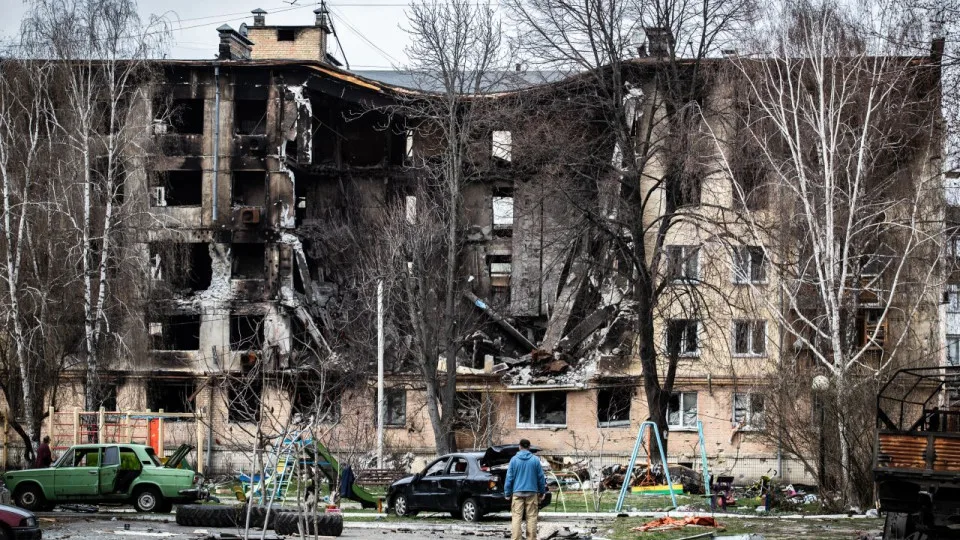










Owners of destroyed or damaged housing in temporarily occupied territories and active combat zones do not have a full mechanism to receive compensation for property that cannot be inspected due to the war. Draft law No. 11161, which was supposed to regulate this issue, was adopted by the Verkhovna Rada in December 2024. However, the document has still not been signed by the President of Ukraine and therefore has not come into force.
Why owners of housing in the TOT cannot go through the usual procedure
The current compensation mechanism for destroyed property under the "eRecovery" program involves establishing the fact of damage or destruction of the property. This requires an appropriate inspection of the object. However, owners of housing in temporarily occupied territories or territories where active hostilities continue often physically cannot provide access to the property to representatives of Ukrainian authorities. As a result, the state cannot conduct an inspection and record the condition of the object.
Internally displaced persons from territories included in the list of combat zones or temporarily occupied by the Russian Federation effectively have no way to prove the destruction or damage of their property. Without a special procedure, this deprives them of the opportunity to count on further compensation.
This problem was supposed to be solved by draft law No. 11161.
As previously reported by the "Judicial and Legal Newspaper", the draft law was intended to simplify the procedure for obtaining compensation for destroyed or damaged property located in active combat zones or temporarily occupied by Russia.
What was proposed in the first version
The first version of the draft law provided a separate simplified mechanism for internally displaced persons who moved from territories included in the relevant list of combat zones or temporarily occupied territories, for which the date of the end of hostilities or occupation has not been determined.
Specifically, it was proposed to:
- simplify the procedure for obtaining compensation for destroyed or damaged property;
- equate damaged objects that cannot be inspected due to hostilities or occupation with destroyed ones;
- not conduct inspections of destroyed or damaged property if it is located in a territory where inspection is impossible due to hostilities or occupation.
Thus, the initial logic of the draft law was: if the state physically cannot access the object and conduct its inspection, the absence of such an inspection should not deprive the owner of the opportunity to claim compensation.
What changed by the second reading
In the version proposed for the second reading, the mechanism was changed.
Instead of immediately providing for the non-conduct of inspections for such objects, the draft law established a special procedure.
After receiving a compensation application for a destroyed object, the commission for considering compensation issues must determine whether it is possible to inspect the property. Based on the results, the commission draws up the relevant act and sends it to the applicant within 10 calendar days from the date of application submission.
This means that if it is established that inspection is impossible, the absence of an inspection act should not block further consideration of the compensation application.
Thus, in the new version, the draft law still provides the possibility of receiving compensation without an actual inspection of property in the TOT. At the same time, the act of impossibility to conduct an inspection is not an automatic decision to pay compensation. The further procedure for granting compensation for such objects was to be established by the Cabinet of Ministers of Ukraine.
Additional conditions for compensation recipients
Also, in the version for the second reading, additional conditions appeared for persons claiming compensation for destroyed housing under this special procedure.
In particular, at the date of application submission, the compensation recipient must have lived in Ukraine for the last two years.
At the same time, the draft law provides exceptions. In particular, a one-time private trip abroad must not exceed 90 days, and the total period of stay outside Ukraine during each annual period over the last two years must not exceed 183 days. In addition, trips abroad for business trips, study, vacation, or medical treatment recommended by a medical institution are not considered violations of this requirement.
There is also an exception for Ukrainian citizens who, after February 24, 2022, obtained refugee status, a person in need of additional or temporary protection, or another similar legal status in a country other than Russia and Belarus due to Russia’s armed aggression against Ukraine.
Compensation in exchange for property and the right of claim against Russia
To receive compensation, the applicant must attach a notarized statement to the application.
In it, they undertake, in case of receiving compensation, to:
- transfer the destroyed real estate object to the ownership of the state or territorial community;
- assign to the state or territorial community the right of claim against Russia for compensation for damages to the destroyed property within the amount of the received compensation.
Thus, the mechanism provides that after compensation payment, the state or territorial community receives not only the real estate object itself but also the right of claim against Russia for reimbursement of the corresponding damages within the amount of the paid compensation.
Thus, during the passage of the draft law, the mechanism changed. Formally, the draft law creates the possibility of receiving compensation for destroyed housing that cannot be inspected but does not provide for automatic payment solely based on the act of impossibility of inspection.
Inability to inspect housing blocks compensation
According to the Ministry of Communities and Territories Development of Ukraine, as of June 2026, more than 342 thousand damaged or destroyed objects were recorded in Ukraine, nearly 300 thousand of which are residential buildings. At the same time, these data do not fully cover property in temporarily occupied territories where inspection is often impossible.
Currently, the existing compensation mechanism depends on the ability to inspect destroyed or damaged property. For property owners in territory controlled by Ukraine, this allows recording the condition of the object and undergoing the procedure to receive compensation under the "eRecovery" program. However, Ukrainian authorities cannot inspect housing in temporarily occupied territories. As a result, people who lost property due to Russian aggression find themselves in different conditions: for some, the compensation procedure is available, while for others, the very inability to access their own housing becomes an obstacle to receiving payments.
Draft law No. 11161, which was supposed to solve the problem of housing owners in temporarily occupied territories, has still not become law. Therefore, the proposed compensation mechanism is effectively on hold, and owners of property that cannot be inspected due to occupation or hostilities continue to wait for a real mechanism to receive compensation.
Subscribe to our Telegram channel t.me/sudua and to Google News SUD.UA, as well as to our VIBER and WhatsApp pages on Facebook and Instagram to stay informed about the most important events.