Fine up to 17 thousand hryvnias and confiscation: Ukraine plans to introduce new penalties for collectors


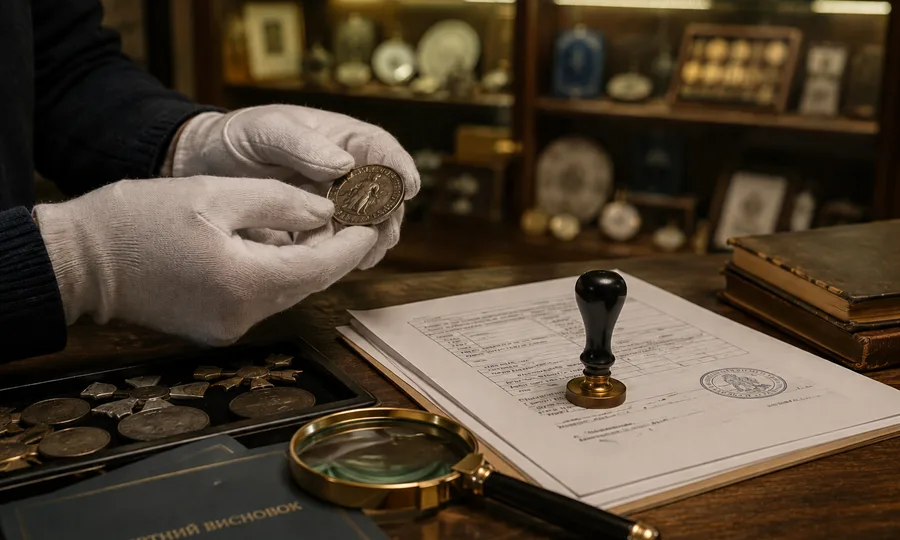










On July 21, 2026, draft law No. 15436 "On Amendments to the Code of Ukraine on Administrative Offenses and the Law of Ukraine 'On Museums and Museum Affairs' regarding the regulation of the non-state part of the Museum Fund of Ukraine and the development of private collecting" was registered in the Verkhovna Rada.
The main goal is to create a legal mechanism for accounting, state registration, and control over cultural values that are privately owned, as well as to develop the institution of private collecting.
The practical significance of the bill lies in the fact that it effectively forms a new model of interaction between the state and owners of cultural values. For the first time, it is proposed to comprehensively regulate the procedure for confirming ownership rights to museum items of the non-state part of the Museum Fund of Ukraine, their state expertise, registration, storage, transfer to museum management, and control over compliance with established requirements.
The collector will receive a legislative definition for the first time
One of the conceptual novelties is the introduction in the Law "On Museums and Museum Affairs" of a new concept — "collector." It is proposed to understand this as a natural person who legally owns cultural values and carries out their acquisition, compilation, documentation, preservation, and responsible use in accordance with the law.
At the same time, the directions of state museum policy are expanded. Among its new tasks, it is proposed to define support for the culture of private collecting, protection of bona fide collectors, ensuring equal opportunities for museums of all forms of ownership, and creating legal and tax incentives for transferring private cultural values into public use through donation, bequest, or management agreements.
Non-state part of the Museum Fund: new formation rules
The bill clarifies the composition of the non-state part of the Museum Fund of Ukraine.
It is proposed to include museum items, museum collections, and museum assemblages that are privately owned and recognized by state expertise as belonging to the Museum Fund of Ukraine. It is also explicitly provided that such items may be stored not only in state or communal museums but also in private museums and directly by collectors.
Declaration of bona fide possession will be the basis for legalizing a private collection
The most extensive changes of the bill are contained in the new Article 15-3 of the Law "On Museums and Museum Affairs."
If the owner does not have documents confirming the acquisition of ownership rights to cultural values, such confirmation may be a Declaration of bona fide possession of cultural values. The bill provides that its submission is possible under the condition of open, continuous, and bona fide possession of the items for at least five years.
The declaration must include information about the owner, a detailed description of the items, the time and circumstances of acquisition, as well as available documents regarding their origin. Submission of the declaration will simultaneously mean the owner’s consent to state expertise and granting experts access to the cultural values.
Mandatory state expertise and registration
After submitting the declaration, all declared cultural values will be subject to state expertise and state registration.
The expert or expert commission during the state expertise will determine the cultural significance and origin of the item, record its condition, set the date of the next expertise, and provide recommendations for storage.
If, based on the expertise results, the item is included in the non-state part of the Museum Fund of Ukraine, the owner will be subject to the legal restrictions and the obligation to comply with the recommended storage conditions.
New storage requirements and control over owners
The bill significantly strengthens the requirements for ensuring the preservation of museum items.
Owners or founders of museums will have to create proper material and technical conditions for their storage and provide special premises for temporary placement of items in case of threat of loss or damage.
Owners of cultural values who independently store items of the non-state part of the Museum Fund will bear full responsibility for their preservation and must ensure conditions according to the recommendations of the state expertise.
The central executive body in the field of museum affairs or the authorized cultural heritage protection body will have the right to check compliance with these requirements at least once every three years and provide collectors with advisory assistance.
Transfer of private collections to museum management
The document also introduces a new mechanism — a museum collection management agreement.
The owner will be able to transfer their cultural values to museums of state, communal, or private ownership for their professional storage, restoration, exhibition, scientific processing, and ensuring public access.
At the same time, private museums will be able to accept such collections only if they have proper storage facilities, appropriate security systems, necessary climate control, and qualified personnel.
Temporary seizure of museum items
If the owner does not ensure proper storage conditions for cultural values, the central executive body, upon the expert’s request, may decide to transfer such items for temporary storage to a state museum.
After eliminating the reasons for the transfer, the owner will have the right to apply for the return of the items, confirming the availability of proper conditions for their further storage. If temporary storage lasts more than one year, the owner must pay for the corresponding services of the state museum.
Unregistered archaeological items may be confiscated
The bill pays special attention to combating illegal circulation of archaeological heritage.
It is proposed to allow circulation only of those museum items, museum collections, and cultural heritage objects that are registered in the manner determined by the Cabinet of Ministers of Ukraine.
At the same time, archaeological items or out-of-context finds that are not declared for state registration by submitting a declaration of bona fide possession by January 1, 2029, will be subject to confiscation by the state with subsequent inclusion in the state part of the Museum Fund of Ukraine.
Moreover, the bill provides that the sale of items of the non-state part of the Museum Fund of Ukraine will be possible only under the condition of their further permanent preservation on the territory of Ukraine, and their export abroad will be prohibited, except for temporary export for exhibitions, restoration, or scientific research.
New administrative fines
The bill proposes to supplement Article 92 of the Code of Ukraine on Administrative Offenses with new types of administrative offenses.
In particular, for the sale, purchase, donation, or exchange of unregistered archaeological heritage items, a fine from 200 to 400 non-taxable minimum incomes of citizens with confiscation of the item is provided. For repeated violation within a year, the fine will increase to 400–800 non-taxable minimum incomes with confiscation.
It is also proposed to establish liability for improper storage of museum items, museum collections, or museum assemblages of the non-state part of the Museum Fund of Ukraine if this led to their damage or loss. For such a violation, a fine from 150 to 1000 non-taxable minimum incomes of citizens is provided. In addition, experts conducting state expertise of cultural values will have the right to draw up relevant protocols on administrative offenses.
Thus, draft law No. 15436 proposes a comprehensive reform of the legal regulation of the non-state part of the Museum Fund of Ukraine.
Subscribe to our Telegram channel t.me/sudua and to Google News SUD.UA, as well as to our VIBER and WhatsApp, page on Facebook and on Instagram to stay informed about the most important events.


Popular news