Mobilization is not "irreversible" if a man was drafted despite an active deferment — court decision


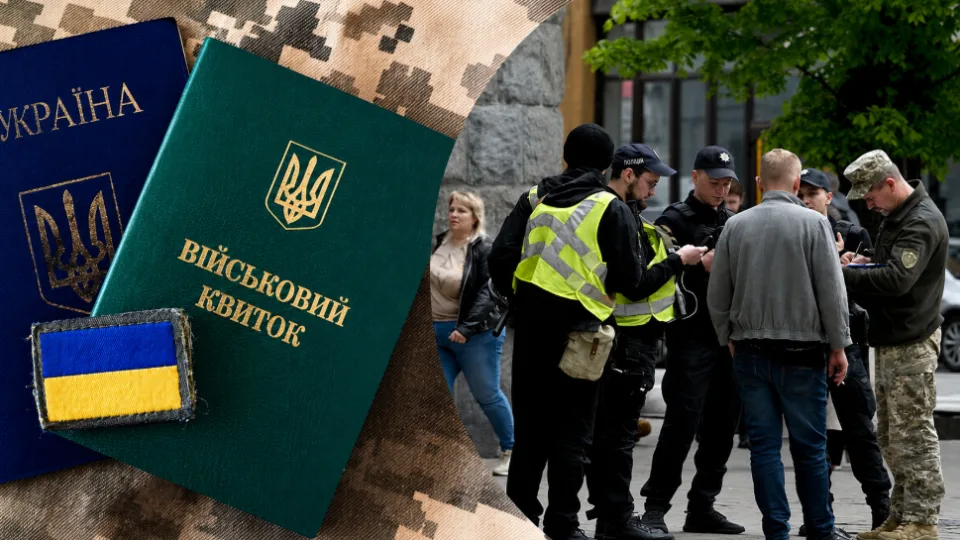










The Eighth Administrative Court of Appeal confirmed the decision of the first instance court, which recognized the mobilization of a citizen as illegal when he had an active deferment at the time of conscription. The court not only canceled the conscription order but also upheld the decision to cancel the order of enrollment to the military unit and ordered the release of the serviceman from service.
At the same time, the appellate court distinguished this case from the Supreme Court’s legal position regarding the "irreversibility" of the mobilization procedure, emphasizing that in this case the subject of the dispute was precisely the illegal individual conscription act issued despite the deferment.
Circumstances of the case
The plaintiff applied to the court after he was conscripted for military service in July 2025 and sent to a military unit. He requested to cancel the conscription order of the territorial recruitment center, cancel the order of the military unit commander on enrollment to the personnel list, and also to oblige the military unit to release him from military service and exclude him from the personnel list.
The plaintiff explained that on June 26, 2025, he applied for a deferment as an educational worker. On the same day, the relevant commission decided to grant him a deferment until August 7, 2025, based on paragraph 2 of part 3 of article 23 of the Law "On Mobilization Preparation and Mobilization."
However, information about the granted deferment was not entered into the Unified State Register of conscripts, those liable for military service, and reservists. As later reported by the Territorial Recruitment Center in response to a lawyer’s inquiry, this was explained by the fact that the man violated military registration rules. Due to the absence of relevant information in the Register, he was mobilized.
What the court established
The appellate court in case No. 260/9985/25 proceeded from the fact that on the day the mobilization order was issued, the plaintiff already had an active deferment and therefore was not subject to conscription.
The panel of judges noted that the decisive factor is the decision of the authorized commission to grant the deferment. The absence of information about it in the Register, if it resulted from the failure of the authorized body to enter the data, does not in itself deprive the person of the right to a deferment.
Why the court disagreed with the military unit’s arguments
In the appeal, the military unit argued that after the person’s arrival at the military unit, new legal relations of military service arise. In its opinion, the Law "On Military Duty and Military Service" does not provide for the release of a serviceman due to the cancellation of a mobilization order, and therefore the cancellation of an already implemented order cannot be grounds for dismissal from service. The defendant also referred to the Supreme Court ruling dated February 5, 2025, in case No. 160/2592/23, which concerned the irreversibility of the conscription procedure.
The appellate court rejected these arguments.
The mobilization order is the primary act, and subsequent decisions are derivative
The panel of judges noted that the conscription order is the individual act from which further legal relations of military service arise.
The court reasoned that recognizing such an order as unlawful removes the legal basis on which subsequent individual acts made in its execution were founded. Accordingly, the order to enroll in the personnel list of the military unit is derivative from the conscription order and must also be canceled.
At the same time, the panel emphasized that the military unit commander, when issuing the enrollment order, acted based on documents received from the territorial recruitment center and had no grounds to question the legality of the mobilization. However, this does not change the fact that his order is derivative from the illegal conscription decision.
The court recognized dismissal as a proper remedy
The appellate court agreed with the first instance court’s conclusion that the Law "On Military Duty and Military Service" does not explicitly provide illegal mobilization as a separate ground for dismissal from military service.
At the same time, the panel noted that military service was a direct consequence of the illegal mobilization order. Therefore, in this case, a proper and effective remedy for the violated right is not only the cancellation of the conscription order but also the obligation of the military unit to release the plaintiff from military service and exclude him from the personnel list. According to the court, this method ensures full restoration of the violated rights.
Why the court did not apply the Supreme Court’s position on the "irreversibility" of mobilization
The appellate court separately explained why it did not agree with the defendant’s reference to the Supreme Court ruling dated February 5, 2025, in case No. 160/2592/23.
The panel noted that that case involved different factual circumstances. There, the plaintiff challenged violations during the military-medical commission, not an individual mobilization act, and applied to the court almost a year after conscription.
In contrast, in this case, the subject of the judicial review was precisely the conscription order issued despite an active deferment. Therefore, the court concluded that the legal findings of the Supreme Court in case No. 160/2592/23 do not apply to these legal relations.
Reference to the "fruit of the poisonous tree" doctrine
The court also referred to the practice of the European Court of Human Rights and the "fruit of the poisonous tree" doctrine, using it as an argument that an unlawful primary act cannot generate lawful derivative decisions.
The panel noted that the legal consequences of an illegal decision must be eliminated in such a way as to maximally restore the legal status of the person that existed before the violation of their rights.
Court decision
As a result of the review, the appellate court dismissed the military unit’s appeal and left the decision of the Zakarpattia District Administrative Court unchanged.
Thus, the decisions recognizing the conscription order illegal and canceling it, canceling the order to enroll the plaintiff in the personnel list of the military unit, as well as obliging the military unit to release him from military service and exclude him from the personnel list, remain in force.
Subscribe to our Telegram channel t.me/sudua and to Google News SUD.UA, as well as to our VIBER and WhatsApp, Facebook page and Instagram to stay updated on the most important events.