A camera filming neighbors and the street can lead to a fine of 300 thousand hryvnias: when video surveillance violates the law


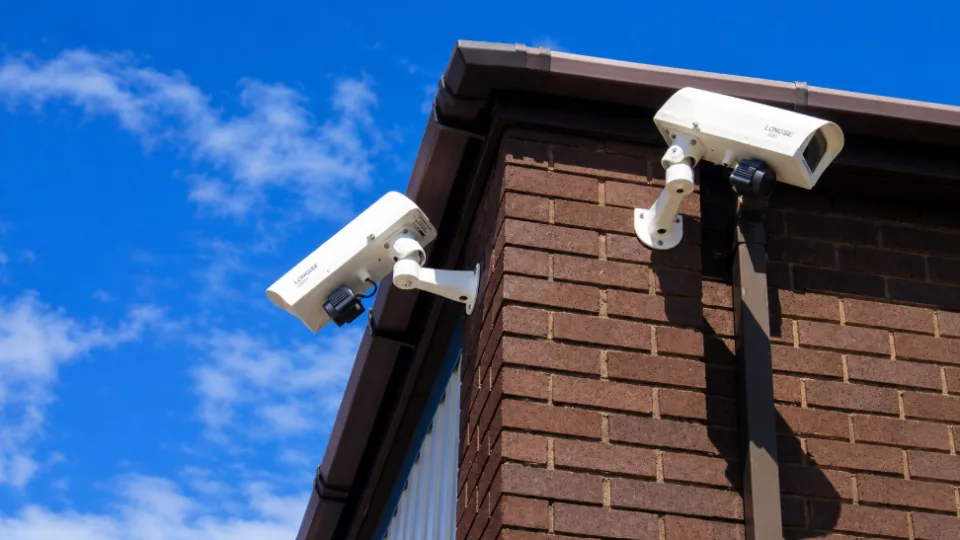










Installing cameras to protect one’s own house or yard is not a violation of the law. However, if they begin to record the street, neighbors' plots, or random passersby, the owner may fall under data protection legislation. This exact situation occurred in Poland, where a man was fined 26,711 zlotys (about 314 thousand hryvnias) after ignoring the regulator’s demand to change the camera placement. At the same time, lawyers emphasize that video surveillance itself is not illegal — the decisive factors are the purpose of filming, the coverage area of the cameras, and the subsequent use of the recordings.
Earlier, the Supreme Court expressed its opinion on the rules of good neighborliness in a dispute about installing video surveillance cameras between neighbors. The court concluded that the mere presence of a camera is not a violation of rights if it is not proven that it actually interferes with private life or otherwise violates the neighbor’s rights.
Why the private camera owner was fined
The Polish Personal Data Protection Office (UODO) announced a fine of 26,711 zlotys imposed on the owner of a private video surveillance system.
The basis was not the installation of cameras itself, but the failure to comply with the regulator’s decision.
Neighbors filed complaints with the office, reporting that the cameras recorded around the clock not only the owner’s territory but also the public road and neighboring land plots, capturing both video and audio.
The regulator concluded that personal data of other individuals — their images and voices — were being processed illegally. The camera owner was ordered to dismantle the equipment or change its location so that it covered only his own property.
However, the man did not comply, did not appeal the decision in court, and did not respond to further letters from the regulator. After that, UODO imposed a financial penalty.
When home video surveillance violates personal data protection rules
Conflicts between neighbors over private cameras occur quite often. Recently, the Higher Administrative Court of Poland also concluded that a camera cannot be directed at a neighbor’s business. At the same time, the current decision was the first case where a fine was imposed specifically due to private video surveillance.
Experts explain that the installation of cameras or filming itself does not automatically mean a violation of personal data protection rules.
The decisive factors are:
- what exactly is captured by the camera lens;
- the purpose of the recording;
- how video and audio materials are subsequently used.
If the camera covers only private territory — for example, a yard, garden, entrance to the house, or driveway — and is used exclusively to protect one’s own property, GDPR provisions may not apply, as such use is considered personal.
The problem arises when the camera begins to record:
- public roads;
- sidewalks;
- neighboring plots;
- strangers.
In such cases, video surveillance goes beyond personal use, and the camera owner becomes a data processor who must have legal grounds for this.
According to experts, the boundary lies precisely between protecting one’s own property and interfering with the private life of others.
If the camera records only the owner’s property, GDPR rules may not apply. But once it covers public space or someone else’s property, the owner must comply with personal data protection laws.
Experts emphasize that a person has the right to protect their home but should not constantly monitor public roads, entrances to other people’s homes, or neighbors' daily lives.
Why the regulator deemed the owner’s actions illegal
Experts point out that in the case that ended with a fine, the problem was not only that the cameras extended beyond private property.
The owner recorded the surrounding area around the clock and used the recordings to contact law enforcement authorities with reports of alleged offenses.
At the same time, the regulator’s decision does not mean that home video surveillance is illegal.
If the cameras recorded only his own plot, there would likely be no grounds for regulatory intervention.
Why Google Street View can film streets
Experts explain that Google Street View’s activities also fall under GDPR requirements.
However, the company operates with a clearly defined lawful purpose — creating a mapping service.
To minimize privacy intrusion, Google:
- automatically blurs people’s faces;
- hides vehicle license plates;
- allows users to request additional blurring of specific objects.
Experts emphasize that large companies have no special privileges. On the contrary, due to the scale of their activities, they bear even greater responsibility for complying with personal data protection requirements.
Can you use a body camera or dashcam?
The same principles apply to cameras installed on cars, bicycles, or clothing.
If a person records a city trip only for personal memories and does not plan to share the video, such use is usually considered personal.
At the same time, a car dashcam used to record possible traffic accidents goes beyond purely personal use, so its owner must consider personal data processing rules.
According to experts, tourists, cyclists, or drivers who use cameras solely for their own safety generally should not fear sanctions.
Risks arise when recordings are:
- used to monitor specific people;
- stored for a long time;
- analyzed;
- published;
- used for public shaming of others.
In such cases, a person recorded on video may file a complaint, after which the regulator will check whether such filming was necessary and proportionate.
Experts also note that regulators most often learn about such cases not at the time of recording, but when videos begin to be shared, especially on social networks.
Publishing even an ordinary tourist video on Facebook, Instagram, or other social networks can already go beyond personal use.
Separately, experts point out that continuous video and audio recording by a car while parked in a parking lot may be considered a disproportionate intrusion into others' privacy if the system operates constantly and not only reacts to movement or other events.
Subscribe to our Telegram channel t.me/sudua and to Google News SUD.UA, as well as our VIBER and WhatsApp, Facebook page and Instagram page to stay informed about the most important events.