Jehovah's Witness refused mobilization because his faith prohibits him from carrying weapons: court sentenced to 3 years imprisonment


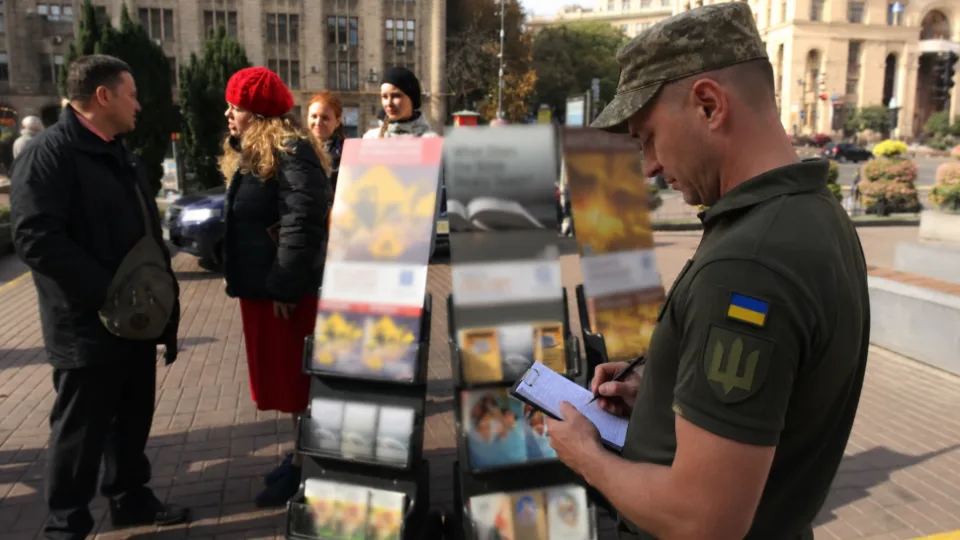










The Shepetivka City District Court of Khmelnytskyi region found a military conscript guilty of evading conscription during mobilization (Article 336 of the Criminal Code of Ukraine), who refused to report to the Territorial Center of Recruitment and Social Support (TCRC&SS), citing his religious beliefs as a member of the religious organization "Jehovah’s Witnesses."
The court concluded that current legislation does not provide for the replacement of military service with alternative service during mobilization in a state of martial law, and freedom of conscience does not grant the right to refuse conscription.
The accused was sentenced to the minimum punishment provided by the article’s sanction — three years of imprisonment.
Circumstances of the case
The court established that the accused was registered for military service, passed a military-medical commission in September 2025, and was deemed fit for military service. He had no deferments from mobilization or other legal grounds for exemption from conscription.
On December 17, 2025, at the premises of the district TCRC&SS, the man refused to receive a summons for deployment to a military unit, explaining this by his religious beliefs. TCRC employees orally informed him of the summons content, warned about criminal liability for evading mobilization, and documented the refusal with an act and body camera video recording. The next day, December 18, he did not report to the TCRC for deployment to the military unit.
In court, the accused did not admit guilt. He explained that since 2015 he has been a Jehovah’s Witness, and his religious beliefs do not allow him to serve in the military, carry weapons, take a military oath, or obey military command orders. At the same time, he stated he was willing to perform alternative (non-military) service, but such an opportunity was not provided to him. This position was supported by his defender, who requested acquittal, referring, in particular, to part four of Article 35 of the Constitution of Ukraine regarding the right to replace military duty with alternative service.
During the trial, TCRC employees were questioned and confirmed that the accused was explained the consequences of refusal and informed that after mobilization he could perform duties not related to the use of weapons. The court also heard the wife and members of the religious community, who confirmed that the man has long professed the faith of Jehovah’s Witnesses and refuses to carry weapons for religious reasons. Besides witness testimonies, the court examined written evidence, the act of refusal to receive the summons, documents on passing the military-medical commission, and the body camera video recording.
Why the court rejected the defense arguments
The court agreed that freedom of conscience and religion is guaranteed by the Constitution of Ukraine but emphasized that current legislation does not establish a mechanism for replacing military service with alternative service during mobilization under martial law. The Law "On Alternative (Non-Military) Service" regulates such an opportunity only in the case of compulsory military service.
The verdict states that religious beliefs alone are not grounds for exemption from criminal liability for evading mobilization. At the same time, the court referred to case 688/1935/26, noting that after mobilization, a serviceman may exercise freedom of conscience, including performing non-combat functions without carrying or using weapons if it aligns with his beliefs. Examples cited by the court include service in hospitals, support units, and positions such as cook, driver, or equipment repairer.
The court also referred to provisions of the Constitution of Ukraine, international treaties, and the practice of the European Court of Human Rights, noting that the right to profess religion is not absolute and may be restricted in the interests of public safety and state protection during a full-scale war. According to the court, under current circumstances, the state has a legitimate aim to ensure the staffing of the Armed Forces, and therefore the lack of possibility to refuse mobilization on religious grounds is a proportionate restriction.
Punishment
Qualifying the accused’s actions under Article 336 of the Criminal Code as evasion of conscription during mobilization, the court sentenced him to three years of imprisonment — the minimum term provided by the article’s sanction.
The court refused to apply probation, reasoning that during martial law such a decision could create an impression of impunity for evading mobilization among other conscripts and negatively affect the state’s defense capability.
Subscribe to our Telegram channel t.me/sudua and to Google News SUD.UA, as well as to our VIBER and WhatsApp, Facebook page and Instagram account to stay informed about the most important events.