Mobile shelters at stops and eviction of tenants from shelters: in the 5th year of the war, the authorities took up civil protection of the population


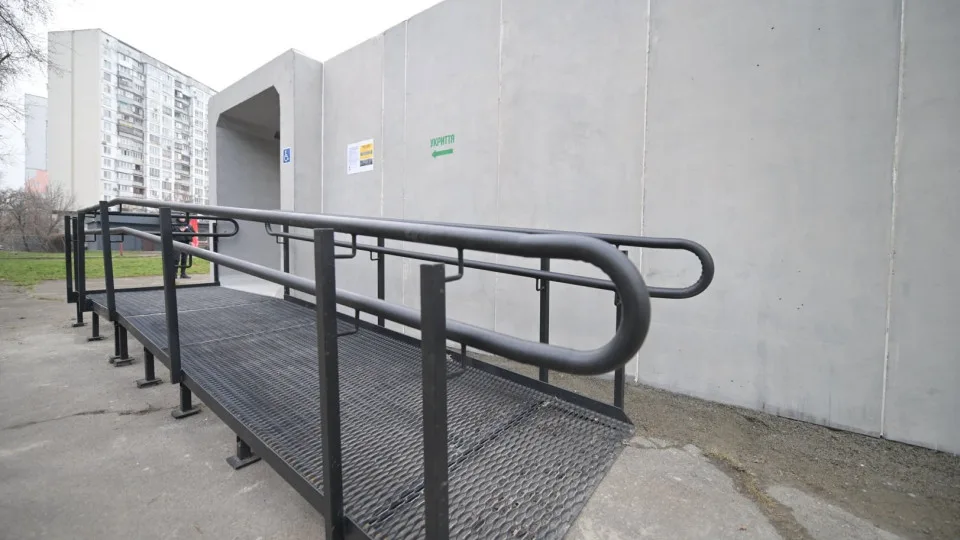










The full-scale Russian aggression revealed the complete unpreparedness of Ukraine's protective structures fund for the real challenges of war. Tragic cases of civilian deaths near locked shelter doors were the result not only of criminal negligence by officials but also of gaps in legislation that allowed shelters to be used improperly or access to them to be restricted.
The draft Law of Ukraine "On Amendments to Certain Legislative Acts of Ukraine Regarding Measures to Ensure Citizens' Safety in a Special Period" No. 15397 aims to create an effective mechanism for monitoring the condition and accessibility of shelters.
The situation around civil protection in Ukraine in 2026 resembles a vicious circle. For example, in Kyiv, the Kyiv City State Administration claims that spending budget funds on mobile shelters without regulations for their commissioning is a direct path to a criminal case.
The draft law 15397 is positioned as a tool to break this circle. The project introduces the term primary (mobile) shelter into Article 32 of the Civil Protection Code of Ukraine. Now it must be an official object of the civil protection protective structures fund with strategic significance.
The draft establishes that the construction and installation of mobile shelters are carried out in accordance with the requirements of the Civil Protection Code of Ukraine and state standards. From August 1, 2025, DSTU 9329:2025 is already in effect, which defines testing methods and parameters for such structures.
Additionally, the document proposes amendments to the laws on urban planning regulation and the legal regime of martial law.
Requirements for maintenance and equipment of shelters
The draft law strengthens requirements for the arrangement and maintenance of civil protection structures.
For shelters, except for anti-radiation shelters, it becomes mandatory to ensure airtightness, proper functioning of engineering networks (water supply, ventilation, heating, and communication), and the presence of reserves of drinking water, medicines, warm clothing, and an electric generator.
Moreover, each structure must have an assigned responsible person who will ensure its proper maintenance.
Thus, the readiness criterion for shelters shifts from formal inspection to an assessment of their actual technical and functional suitability, and the absence of mandatory equipment may be considered a violation of the law.
Civil protection protective structures, dual-purpose structures, and the simplest shelters are subject to mandatory periodic inspections to ensure compliance with legislation regarding their operation under martial law, but at least once a month. Such inspections are conducted by employees of military administrations or local state administrations, who report on the results.
Changes in rental relations: the 24-hour rule
The draft law introduces a much stricter legal regime for civil protection objects.
It is stipulated that shelters of state and communal ownership cannot be privatized, alienated, or withdrawn in any other way.
Furthermore, under martial law, lease agreements for such objects may be terminated early at the initiative of the state or local self-government body within 24 hours, especially in case of violation of their usage rules.
The draft law also prohibits using shelters for cultural, entertainment, or other domestic purposes during martial law, securing the priority of their exclusive purpose — protecting the population.
If the tenant refuses to vacate the object or cannot be found, access to the structure to bring it to readiness is carried out without the user's consent.
Mandatory construction of shelters in new buildings
Amendments to the Law "On Urban Planning Regulation" make civil protection an integral part of architectural design.
The word "may" is replaced with "must" regarding the section on engineering and technical civil protection measures in project documentation.
The draft changes Article 31 of the Law on Urban Planning Regulation. Now it becomes a mandatory condition for objects of categories SS2 and SS3 (medium and significant consequences), where more than 50 people will constantly be present. This means no new residential complex or shopping center will receive a construction permit without a full-fledged shelter in the project.
Digital monitoring and ensuring shelter accessibility
The document provides for the introduction of new mechanisms for digital and physical control over the functioning of civil protection objects.
Thus, during martial law, all protective structures must be equipped with video surveillance systems funded by the state budget, ensuring control over their accessibility and proper use.
At the same time, the Ministry of Internal Affairs must create a unified interactive shelter accounting system indicating their location, technical condition, and operating conditions.
Special emphasis is placed on territorial accessibility: military administrations are obliged to expand the network of protective structures by installing rapidly deployable modular shelters in places of mass gatherings, including near public transport stops and public spaces, to ensure the possibility of reaching the nearest shelter in approximately ten minutes.
The 10-minute rule and modular shelters
Rapidly deployable protective structures, including block-modular types, are a new element of the strategy to increase the shelter fund during a special period.
The draft law explicitly provides for placing such structures in places of possible crowding of people on the terrain, namely at public transport stops, parks, and recreation areas.
Military administrations or local state administrations are obliged to ensure state orders and installation of such structures so that every citizen can independently reach them within no more than 10 minutes.
Rapidly deployable protective structures are technical products, including block-modular types, ready for quick assembly and use.
Such shelters are classified as primary and intended for short-term protection of the population (up to 4 hours) from indirect effects of conventional weapons.
They must comply with state building codes (DBN) and standards and be accessible to persons with disabilities and other low-mobility groups.
Funding for the construction and operation of these new rapidly deployable structures will be carried out according to a special budget program financed from the State Budget of Ukraine.
For reference: in the context of strengthening control over citizens' safety, the current legislation of Ukraine provides a system of penalties for violations in the field of civil protection.
Administrative liability (fines)
According to current legislation (including amendments introduced by Law No. 4200-IX), owners and custodians of protective structures face the following fines:
- For failure to ensure unobstructed access: if the shelter is closed during an alarm, responsible persons are fined from 1700 to 3400 UAH.
- For violations of maintenance and operation requirements: if poor technical condition led to the shelter's unpreparedness for use, the fine ranges from 2250 to 5100 UAH.
- For repeated violations: if a person was already fined for similar actions within a year, the penalty increases to 5100 to 8500 UAH.
Criminal liability
Administrative fines escalate to criminal prosecution if negligence caused severe consequences, according to Article 270-2 of the Criminal Code of Ukraine.
If due to denial of access to the shelter or violation of its maintenance rules during shelling, a person died or suffered serious bodily injury, the guilty party faces imprisonment from 3 to 8 years.
From quantity to quality and responsibility
The draft law is a rather belated but necessary response to the challenges of the special period. It shifts the focus from declarative safety to the physical and digital accessibility of shelters.
However, for effective implementation, it is important to ensure transparent allocation of budget funds for installing cameras and building modular structures, as well as to develop clear action regulations for responsible persons. Although the explanatory note indicates no need for additional funds at the time of submission, the law text requires mass installation of cameras and purchase of modules funded by the State Budget, which demands significant financing.
And the one-month deadline given to the Cabinet of Ministers to bring all acts into compliance seems overly optimistic for such a large-scale reform.Subscribe to our Telegram channel t.me/sudua and to Google News SUD.UA, as well as to our VIBER and WhatsApp, Facebook page and Instagram to stay updated on the most important events.