Undeclared Corporate Rights and Missing Information About Children: What the Ethics Council Checked in Yaroslav Melnyk's Declaration












The High Council of Justice is a collegial, independent constitutional body that operates to form an integrity-based corps of judges and ensure the independence of the judiciary. To assist the bodies electing members of the High Council of Justice (HRC), an Ethics Council is established, which determines candidates' compliance with the criteria of professional ethics and integrity.
The interview is a key stage of the competition for the position of HRC member, where Council members verify whether the candidate is independent, honest, impartial, and whether there are any doubts about the legality of the sources of their property. On July 6, 2026, such a procedure was conducted with Yaroslav Yaroslavovych Melnyk — Doctor of Law, professor, and lawyer, who is applying for the position of HRC member from the congress of representatives of legal higher education institutions and scientific establishments.
Yaroslav Melnyk's interview became one of the longest episodes of the Ethics Council meeting on July 6, 2026. The discussion focused not only on the candidate's professional achievements but also on complex issues related to real estate registration and omissions in declaration.
The interview aimed to establish the candidate's compliance with the criteria of professional ethics and integrity according to Article 9-1 of the Law of Ukraine "On the High Council of Justice." In fact, the main emphasis was not on the candidate's professional activity but on analyzing the fulfillment of the declaration obligation, explanations regarding property assets and the origin of funds, as well as assessing the reliability of the explanations provided.
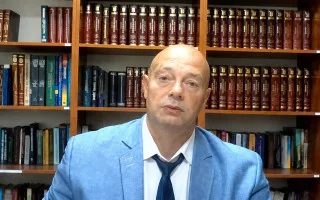
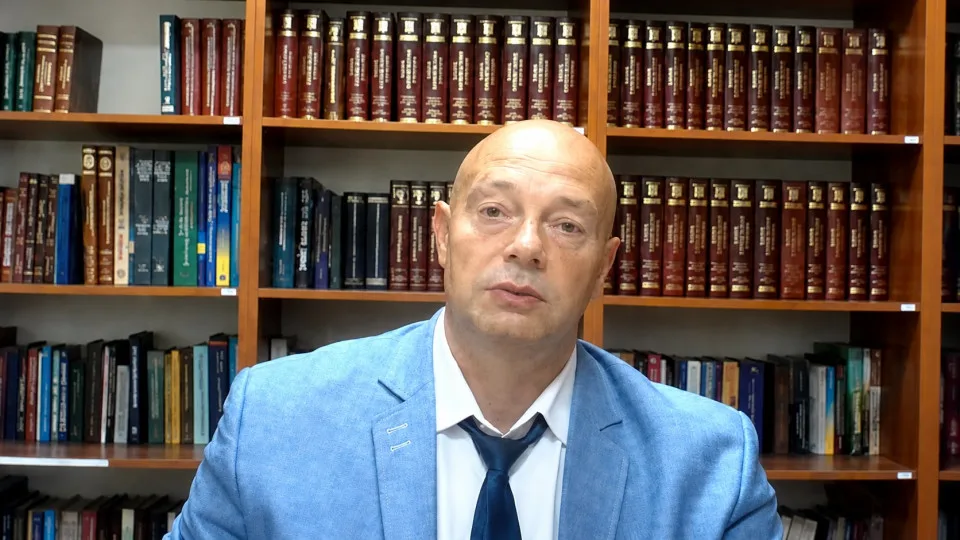
Yaroslav Yaroslavovych Melnyk
The candidate is a Doctor of Law, professor, and lawyer, senior research fellow at the Institute of Legislation of the National Academy of Sciences of Ukraine, and managing partner of a law firm. His professional path includes positions from judicial assistant to leadership roles in scientific institutions.
A notable moment of the interview was the Ethics Council members' close attention to declaration issues and the completeness of the information provided by the candidate. For the commission, accuracy in declarations served as the main marker of how responsibly the applicant approaches fulfilling their legal duties.
One of the first topics discussed was the issue of corporate rights in the law firm co-founded by Yaroslav Melnyk and the absence of this information in the declaration. The candidate stated that he did not intend to hide anything since the data is available in open registers, and the omission occurred due to the late hour of filling out the declaration.
He gave a similar explanation regarding the absence of information about two minor children in the declaration. According to the candidate, family circumstances distracted him during the declaration completion, which led to the omission of the relevant data.
Equally telling was the situation with a residential house in Khmelnytskyi region. According to state registers, ownership rights were registered in the candidate's name after the inheritance was opened, but this property was not reflected in the declaration. Yaroslav Melnyk explained that he was unaware of the ownership registration because he believed he had effectively renounced the inheritance in favor of his brother by family agreement, instead receiving an apartment from his mother.
All these declaration shortcomings were explained by the candidate as technical errors and inattention. At the same time, during the interview, the evaluation focused not so much on the fact of omissions but on their nature, the consistency of explanations, and whether they could affect the assessment of professional ethics and integrity.
It should be noted that the integrity declaration is one of the mechanisms to verify the candidate's compliance with the requirements of Article 61 of the Law of Ukraine "On the Judiciary and the Status of Judges." Therefore, significance lies not only in the list of disclosed information but also in the completeness of disclosure, the reliability of explanations, and their consistency with other materials of the competition dossier. It is precisely the combination of these circumstances, not a single declaration flaw, that the Ethics Council evaluates when forming a conclusion about the candidate's compliance with the criteria of professional ethics and integrity.
After this, the Ethics Council members proceeded to analyze the candidate's property transactions. The most questions arose regarding the transaction for purchasing a residential house in Kyiv with an area of over 100 sq. m. Council members noted that the purchase agreement stated the house's value as 211,800 UAH (approximately 7,000 USD), while the family's actual expenses for its acquisition, according to the interview materials, exceeded 170,000 USD. It was also noted that such a difference could have led to a probable underpayment of taxes estimated at about 16,000 USD.
Yaroslav Melnyk explained that he signed the contract in the form proposed by the seller without paying proper attention to its content because he trusted the other party to the transaction.
This explanation raised the most questions. Ethics Council members doubted the candidate's explanation about signing the contract without detailed familiarization with its content, emphasizing that a lawyer with many years of professional experience is expected to exercise due legal diligence when concluding transactions.
At the same time, the discussion did not concern establishing possible tax consequences; the Ethics Council primarily assessed the candidate's behavior from the standpoint of professional ethics standards and due legal diligence. The evaluation of these circumstances falls within the Ethics Council's powers during the candidate verification procedure and does not itself indicate any violation of law or tax legislation. The material does not contain conclusions about the presence of tax law violations but only reproduces the circumstances and explanations discussed during the interview.
According to Article 9-1 of the Law of Ukraine "On the High Council of Justice," the assessment of professional ethics and integrity belongs to the competence of the Ethics Council, while the general obligation of everyone to pay taxes and fees in the manner and amounts prescribed by law is provided by Article 67 of the Constitution of Ukraine. However, any conclusions regarding the correctness of property valuation, compliance with tax legislation, or the presence of violations can be based only on facts established by competent authorities or court decisions.
Within the competition procedure, the decisive factor was not the establishment of possible legal violations but the assessment of the candidate's explanations regarding the circumstances of the transaction, their consistency, persuasiveness, and compliance with the standards of professional conduct expected from a candidate for the position of a High Council of Justice member.
The next part of the interview concerned the integrity declaration and the completeness of biographical information.
In particular, the Council addressed the issue of the candidate's attempted entry into the Russian Federation in 2021, which was not indicated in the declaration. Yaroslav Melnyk explained that the actual crossing of the state border did not occur because he was denied entry.
Interestingly, this episode evaluated not only the literal interpretation of declarative statements but paid much more attention to how fully the candidate disclosed circumstances that might be relevant to assessing his integrity.
Also, three cases of the candidate's administrative liability were discussed in detail.
Regarding the 2021 traffic accident under Article 124 of the Code of Ukraine on Administrative Offenses, the candidate explained that he learned about the relevant court decision only after reviewing materials prepared by the Ethics Council. According to him, the collision was minor, but he himself called the police officers to document the event.
Two cases of speeding were also discussed — in February 2022 and in 2024. Regarding the latter, the candidate noted that the speeding was minimal and that he only learned about the imposed fine after his bank account was blocked shortly before the interview.
However, the key issue was not the administrative offenses themselves but the fact that they were not reflected in the integrity declarations.
The candidate explained his position by referring to the provisions of the legislation on the expiration of administrative penalties and believed that after the expiration of the established period, he was not obliged to indicate such information. Additionally, regarding some cases, he cited unawareness of the relevant court decisions.
Ethics Council members, in turn, noted that the integrity declaration requires reporting the very fact of being held liable, and the assessment of the completeness and reliability of such information is carried out within the competition procedure.
An interesting moment was the discussion of the payment of one of the administrative fines. As it turned out during the interview, it was paid by the wife of a local priest. The candidate himself could not explain in detail the reasons for this payment method, only noting that this person was present during the administrative proceedings conducted by the police officers.
In conclusion, the interview showed that the Ethics Council evaluated not isolated episodes but the entire set of circumstances. Decisive importance was given to the completeness of fulfilling the declaration obligation, the consistency of the candidate's explanations, and his attitude toward fulfilling legally significant duties. These criteria are decisive when verifying the candidate's compliance with the requirements of the competition for the position of a High Council of Justice member.
Practice of Forming Integrity Standards
At the interviews on July 6, 2026, candidates' administrative offenses were considered through the prism of Article 62 of the Law of Ukraine "On the Judiciary and the Status of Judges," which regulates the integrity declaration, as well as the criteria of professional ethics and integrity defined by Article 9-1 of the Law of Ukraine "On the High Council of Justice." The main focus was not so much on the fact of administrative liability but on the completeness of declaring such circumstances, the consistency of candidates' explanations, and their attitude toward fulfilling legally significant duties.
This practice of interviews demonstrates an approach generally consistent with the recommendations of Opinion No. 27 of the Consultative Council of European Judges (CCJE). According to this document, the assessment of judges' and candidates' behavior should consider not only compliance with the law but also the impact of their actions on public trust in justice and the authority of the judiciary. At the same time, the Ethics Council conducts assessments exclusively within the criteria and powers defined by national legislation.
According to Article 62 of the Law of Ukraine "On the Judiciary and the Status of Judges," the integrity declaration is one of the mechanisms for verifying the candidate's compliance with the requirements established by law. During interviews, not only the presence or absence of certain information is assessed but also the completeness of its declaration, the reliability of the candidate's explanations, and their consistency with other materials of the competition procedure.
At the same time, Article 9-1 of the Law of Ukraine "On the High Council of Justice" imposes on the Ethics Council the duty to assess the candidate's compliance with the criteria of professional ethics and integrity. Therefore, significance lies not only in the candidate's professional experience but also in their ability to conscientiously fulfill legally significant duties, carefully handle document preparation, and provide consistent, logical, and convincing explanations regarding disputed circumstances.
Moreover, the Ethics Council may consider circumstances related to the candidate's fulfillment of their legal duties both in professional activity and private life if they may be relevant to assessing the integrity, independence, impartiality, and authority of the future High Council of Justice member.
Any fine for parking or speeding is a real test of integrity. The Ethics Council evaluates everything comprehensively: whether the candidate tried to hide these facts, how they explain their mistakes, and whether they generally take the law seriously.
If a candidate systematically forgets to indicate fines, business interests, or even their own children in the declaration, citing the absence of apps on their phone — this is not a technical error but evidence of either professional unsuitability or deliberate avoidance of facts. Such contradictory explanations and negligence indicate that the candidate may not meet the declared criteria for election to the position of HRC member.
At the same time, the final conclusion regarding the person's compliance with these criteria in each specific case belongs exclusively to the Ethics Council and is formed considering the entire set of established circumstances, competition dossier materials, and the candidate's explanations. This approach complies with national legislation requirements and aligns with general European standards for assessing the integrity of candidates for judicial positions.
Analysis of Previous Interviews of Candidates for the Position of High Council of Justice Member from the Congress of Representatives of Legal Higher Education Institutions and Scientific Establishments:
The Path from Inspector to High Council of Justice Member: Interview with Iryna Davydovych
Subscribe to our Telegram channel t.me/sudua and to Google News SUD.UA, as well as to our VIBER and WhatsApp pages, Facebook Facebook and Instagram Instagram to stay informed about the most important events.