The ECHR Found the Trial of a Police Officer Unfair Due to Unexamined Arguments about Bribery Provocation


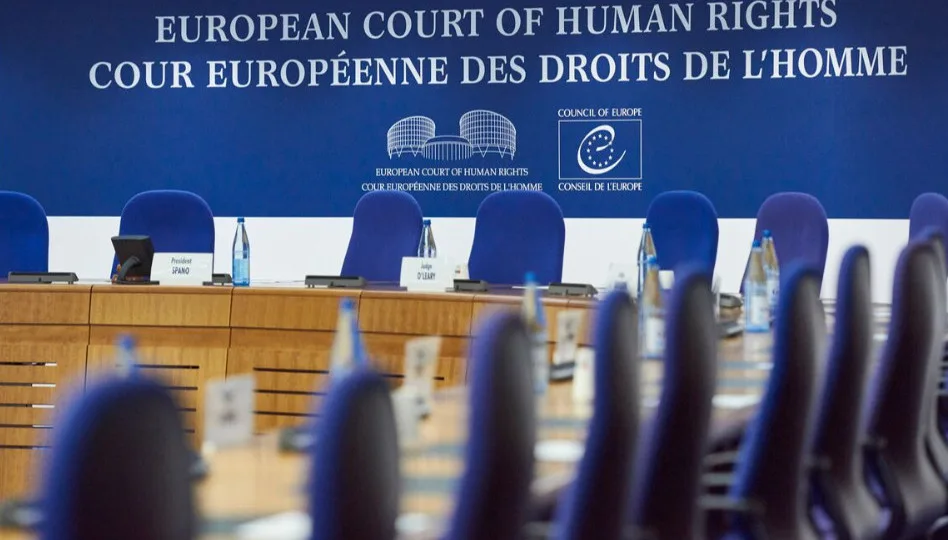










The European Court of Human Rights (ECHR) ruled in the case of "CUCEROV v. THE REPUBLIC OF MOLDOVA" that there had been a violation of Article 6 § 1 of the Convention for the Protection of Human Rights and Fundamental Freedoms. This was due to the national courts' failure to properly assess the applicant's claims of provocation to commit a crime.
The applicant, a former patrol police officer convicted of accepting a bribe and exceeding official powers, had appealed to the ECHR.
According to the investigation, in late December 2012, the patrol police officer unlawfully confiscated a driver's licence from a motorist without processing the required procedural documents, demanding 1,500 Moldovan lei for its return. After completing military service, the driver filed a complaint with the National Anti-Corruption Centre regarding the bribery demand. With the prosecutor's sanction, law enforcement conducted special investigative measures, during which the money transfer and the return of the licence were documented. Subsequently, the police officer was detained.
Moldovan courts found the police officer guilty of accepting a bribe and exceeding official powers. He was sentenced to five years of conditional imprisonment with a three-year probation period, a five-year ban on working in law enforcement agencies, and a fine.
In his complaints, the police officer claimed that after January 2013, he had no contact with the driver for almost ten months and took no actions aimed at obtaining money.
ECHR Decision
The ECHR declared the applicant's complaint under Article 6 § 1 of the Convention admissible.
When assessing the provocation criterion, the ECHR noted the applicant's arguments that, after January 2013, he had no contact with the driver for almost ten months and took no actions aimed at obtaining money. Additionally, the applicant argued that the driver could have obtained a new licence from the State Services Agency without significant expense and therefore had no objective necessity to offer money for the return of the old document.
The Court noted that it was the driver who re-established contact with the applicant after a long break, placing the case in a category where the presence of possible provocation needed to be verified. However, the ECHR could not definitively establish whether the applicant was genuinely incited to commit the crime. The case materials contained contradictory circumstances: on the one hand, the applicant held the driver's licence for almost a year without processing any documents; on the other hand, it was the driver who initiated further contact, unaware if the applicant still possessed the licence or would demand money.
Under these circumstances, the Court concluded that the applicant's claims of provocation were not manifestly unfounded, and therefore the national courts were obliged to properly examine them. The ECHR also reiterated that if the accused raises well-founded arguments about provocation, the prosecution must prove its absence. If such evidence is lacking, the courts themselves must investigate all the factual circumstances of the case and establish whether incitement took place.
However, in this case, courts of all three instances effectively did not consider the applicant's arguments about provocation. The Supreme Court of Moldova refused to analyse this argument, stating that it was allegedly not raised in lower courts, although the case materials showed that the applicant referred to it at every stage of the proceedings.
As a result, the ECHR concluded that the national courts did not verify whether the driver's actions led to the applicant's incitement to commit the crime, nor whether there were indications that the offence would have been committed without such interference. They did not analyse the factual and legal circumstances that would allow distinguishing provocation from a lawful form of operational activity.
Given the use of evidence obtained as a result of actions under police control without proper assessment of the provocation arguments, the ECHR found that the criminal proceedings did not meet the requirements of a fair trial guaranteed by Article 6 § 1 of the Convention. The applicant requested 2,000 euros in compensation for moral damage, but the Court concluded that establishing the fact of the violation itself was sufficient just satisfaction and denied this claim.
Subscribe to our Telegram channel t.me/sudua, follow SUD.UA on Google News , and join us on VIBER, WhatsApp, Facebook and on Instagram to stay informed about the important events.