From Professor at Kyiv-Mohyla Academy to Candidate for the High Council of Justice: Analysis of Lesia Muzyka's Interview












The competition for the High Council of Justice in 2026 became another stage in verifying how well candidates meet high standards of professional ethics and integrity. According to Article 9-1 of the Law of Ukraine "On the High Council of Justice," it is the Ethics Council that evaluates candidates by analyzing their professional activities, reputation, and circumstances that may be relevant for the future exercise of the powers of a member of the HCJ.
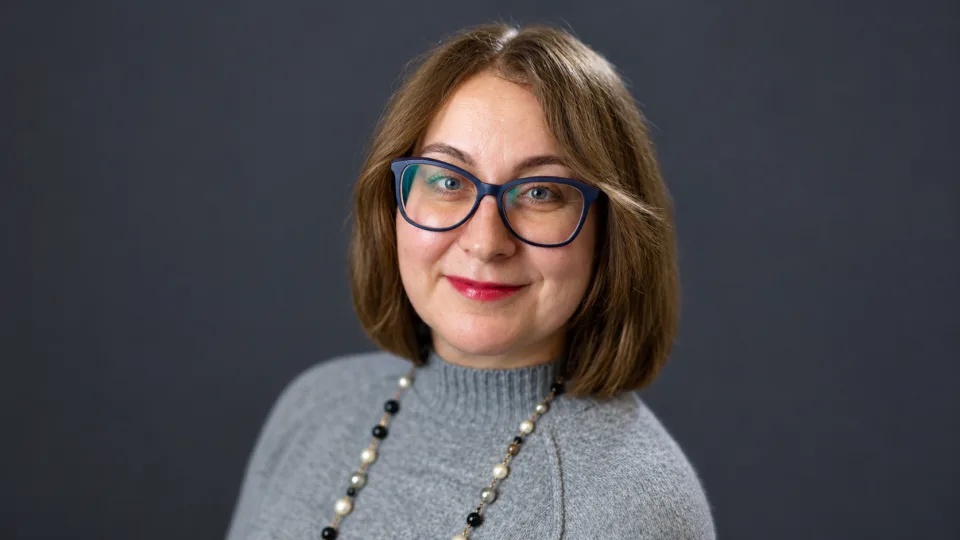
The interview with Lesia Anatoliivna Muzyka, Doctor of Law and professor at NaUKMA, held on July 8, 2026, was one of the most interesting episodes of the competition. Unlike the property cases of other candidates, the main focus here was shifted to academic integrity, conflict of interest in the scientific field, and the completeness of declaration submissions.
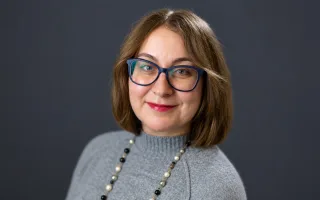
Lesia Anatoliivna Muzyka is a Doctor of Law, professor of the Department of Private Law at the National University "Kyiv-Mohyla Academy." Previously, she worked as an associate professor at the same department, taught at the Academy of Advocacy of Ukraine, and served in the internal affairs bodies. She received her certificate to practice law in 2006.
One of the most controversial issues during the interview was the candidate's scientific activity after the beginning of Russian aggression.
Members of the Ethics Council noted the publication of an article in a Russian scientific journal in 2017, as well as a significant number of Russian-language sources used during the preparation of her doctoral dissertation.
The candidate explained that at the time of preparing the scientific work, the requirements of the Ministry of Education and Science effectively encouraged scientists to publish in international journals, and cooperation with publishers from CIS countries was then a common practice among Ukrainian lawyers.
Regarding the use of Russian-language sources, Lesia Muzyka noted that they were mainly used to analyze the historical development of civil law, as well as during the study of the regulatory framework of the aggressor state in the dissertation sections dedicated to temporarily occupied territories and the consequences of armed aggression.
During the interview, the Ethics Council members focused not only on the fact of such publications but also on the motives for their appearance, the temporal context, and the candidate's explanations regarding the use of the relevant sources. Ultimately, these explanations were taken into account when making the final decision.
A separate block of questions concerned the defense of the doctoral dissertation in 2021 at the V. M. Koretsky Institute of State and Law. The Ethics Council's attention was drawn to the fact that a member of the specialized academic council was the candidate's father.
Lesia Muzyka explained that her father did not actually participate in the defense procedure, did not vote for awarding the scientific degree, and recused himself from any influence on the decision-making. She also noted that the choice of this institution was due to the quarantine restrictions at the time and the reform of the scientific staff certification system, which significantly limited the possibilities for conducting defenses.
To confirm her explanations, the candidate provided archival documents and protocols which, in her opinion, confirmed the absence of her father's participation in the decision-making regarding the dissertation defense.
The documents provided were taken into account by the Ethics Council when evaluating the candidate's explanations regarding a possible conflict of interest.
During the interview, Council members also noted some inaccuracies in the candidate's declaration documents.
In particular, errors in property registration numbers and the absence of information about a sister who is an attorney in the family relations declaration were discussed.
Lesia Muzyka explained that when filling out the declaration, she was guided by her own interpretation of Article 61 of the Law of Ukraine "On the Judiciary and the Status of Judges" and believed she should only indicate those relatives with whom she shared a household.
The chairperson during the interview pointed out that the family relations declaration requires a different approach and demands listing all persons defined by law, regardless of cohabitation.
The candidate admitted that she made a mistake when filling out the declaration, explaining it by a misinterpretation of the legislative requirements rather than an intention to conceal information.
Another area of review was Lesia Muzyka's attorney activity.
Council members noted the absence of information about professional development courses, as well as disciplinary complaints previously considered by the attorney self-government bodies.
The candidate explained that these difficulties arose due to a prolonged conflict between certain regional bar councils and technical problems with registering an electronic account in the Unified Register of Advocates of Ukraine.
According to her, after resolving these issues, she transferred to another bar council, completed the necessary paperwork, and eliminated all shortcomings, and the disciplinary complaints were withdrawn after providing appropriate explanations.
When evaluating these circumstances, the Ethics Council considered not only the fact of the problems but also the candidate's subsequent actions to resolve them.
Practice of forming integrity standards
Lesia Muzyka's interview reflects the standards applied by the Ethics Council during the 2026 competition. The Council evaluated not only the mere presence of an error or controversial circumstance but also the reasons for its occurrence, the candidate's behavior, and willingness to support their explanations with documents.
Moreover, academic activity became a full-fledged subject of verification alongside declarations and property issues. Publications, choice of scientific platforms, use of sources, circumstances of dissertation defense, and possible conflicts of interest were considered components of assessing professional ethics.
The interview demonstrated that certain inaccuracies in declarations alone are not always grounds for a negative decision. The decisive factor is whether, after the candidate's explanations, there remain reasonable doubts about their integrity.
Subscribe to our Telegram channel t.me/sudua and to Google News SUD.UA, as well as to our VIBER and WhatsApp, Facebook page and Instagram to stay informed about the most important events.