Interview of Oleksandr Zhytniy at the Ethics Council: Declarations, Anonymous Appeal, and Professional Reputation












The High Council of Justice, in accordance with the Constitution of Ukraine and the Law of Ukraine "On the High Council of Justice," ensures the independence of the judiciary, participates in the formation of the judicial corps, and exercises disciplinary powers over judges. According to Article 9-1 of the Law of Ukraine "On the High Council of Justice," the Ethics Council, in turn, conducts evaluations of candidates for compliance with the criteria of professional ethics and integrity.
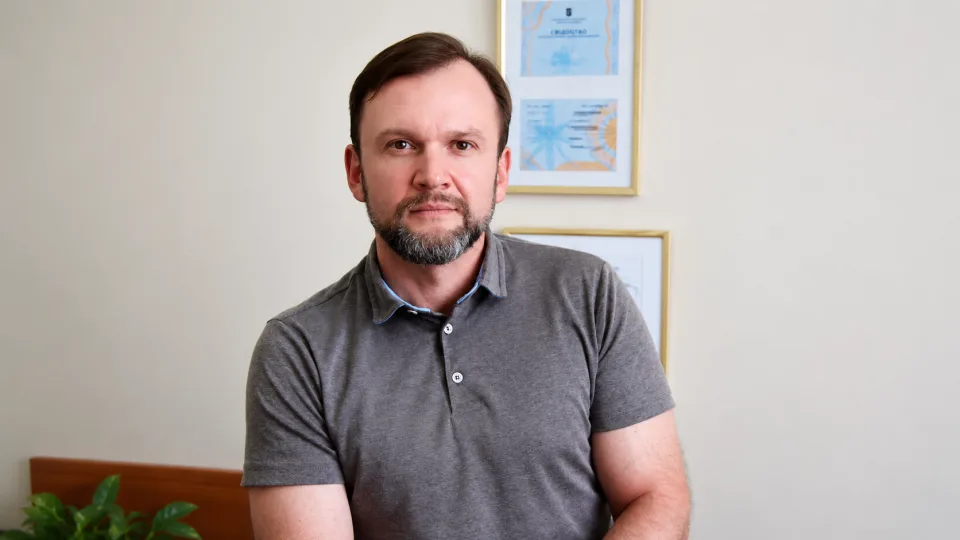
On July 10, 2026, an interview was held with Oleksandr Oleksandrovych Zhytniy — Doctor of Law, professor, head of the Department of Criminal Law Disciplines at the Law Faculty of V. N. Karazin Kharkiv National University. Previously, he was a member of the Qualification and Disciplinary Commission of Prosecutors and had already undergone evaluation by the Ethics Council during a previous competition.
During the interview, Council members primarily checked the circumstances that arose after the previous evaluation, as well as clarified certain information regarding the candidate's professional activity, property status, and integrity.
At the beginning of the interview, the candidate stated that in 2025 he had already undergone evaluation by the Ethics Council and received a positive conclusion regarding compliance with the criteria of professional ethics and integrity. Due to his repeated participation in the competition, the Council focused on new circumstances that arose after the previous evaluation.
In particular, the candidate reported being held administratively liable for speeding, recorded by automatic photo and video fixation devices. He noted that the fine was paid voluntarily and within the legally established period.
During the interview, the Ethics Council clarified the circumstances of this event and assessed its significance for verifying the candidate's compliance with the criteria of professional ethics and integrity. The mere fact of administrative liability does not automatically mean the candidate's non-compliance with the requirements of the Law of Ukraine "On the High Council of Justice." The Ethics Council evaluates such circumstances in conjunction with other materials of the competition dossier and their impact on the candidate's professional reputation.
A separate block of questions concerned an anonymous appeal that was received by the Ethics Council on the eve of the interview.
The appeal contained statements regarding certain decisions made by Oleksandr Zhytniy during his work as part of the Qualification and Disciplinary Commission of Prosecutors, as well as assumptions about an increase in his property status.
The candidate stated that he disagreed with the statements made in the appeal. In response to the Council members' questions, he provided statistics on the judicial review of the QDCP decisions and noted that only a small portion of the draft decisions he prepared were overturned by courts.
Regarding the increase in savings, Oleksandr Zhytniy explained that his income was formed from salary at his main place of work, remuneration for activities in the Qualification and Disciplinary Commission of Prosecutors, scientific activities, and other officially declared sources.
At the same time, the mere receipt of an anonymous appeal by the Ethics Council does not confirm the accuracy of the information contained therein. According to the Law of Ukraine "On the High Council of Justice," the Council independently verifies the received information, evaluates it together with other materials of the competition dossier and the candidate's explanations, and only after that makes a decision.
During the interview, the Ethics Council members also paid attention to the candidate's experience as part of the Qualification and Disciplinary Commission of Prosecutors.
Oleksandr Zhytniy reported that during his time on the Commission, he did not encounter attempts of illegal influence during the consideration of disciplinary proceedings. At the same time, he gave examples from his teaching activities when he had to refuse informal requests regarding student evaluations.
Separately, the candidate presented his own vision of the role of the High Council of Justice, emphasizing the need to ensure a balance between judicial independence and the effectiveness of disciplinary procedures, as well as adherence to international standards in the field of judicial governance.
For the Ethics Council, this block of the interview was primarily important from the perspective of assessing the professional competence, independence, and readiness of the candidate to exercise the powers of a member of the High Council of Justice.
A separate part of the interview concerned information provided by the candidate in declarations. Ethics Council members paid particular attention to the presence of two parking spaces owned by the candidate and asked for explanations regarding their use.
The candidate stated that one parking space is used for storing a car, the other — for storing personal belongings.
During the interview, the Ethics Council verified the compliance of these explanations with the information contained in the competition dossier and the candidate's declaration documents. The mere fact of asking these questions did not mean establishing any violations but was part of the procedure for comprehensive assessment of the candidate's property status in accordance with the requirements of the Law of Ukraine "On the High Council of Justice."
Practice of forming integrity standards
The interview materials indicate that during the competition, the Ethics Council paid attention not only to declarations and the origin of property but also to professional reputation, experience in exercising disciplinary powers, openness in providing explanations, and the ability to respond to questions in a reasoned manner.
At the same time, the interview materials demonstrate that even in the presence of appeals from third parties or information requiring additional verification, the Ethics Council does not make conclusions automatically. The final decision is made only after analyzing all submitted documents, the candidate's explanations, and other materials of the competition dossier.
The interview also confirmed that repeated participation of a candidate in the competition does not mean formal confirmation of the previous conclusion. In each case, the Ethics Council re-evaluates new circumstances that arose after the previous procedure.
Subscribe to our Telegram channel t.me/sudua and to Google News SUD.UA, as well as to our VIBER and WhatsApp, page on Facebook and on Instagram to stay informed about the most important events.