Combatant Without ID: How to Obtain Status if Documents are Lost and the Military Unit Does not Respond


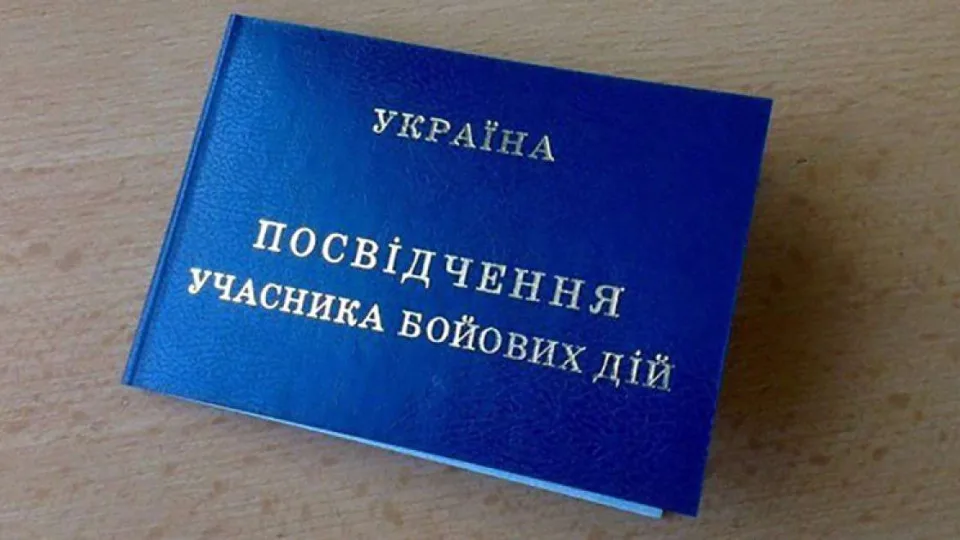










In the context of prolonged armed aggression, the procedure for granting combatant status has evolved. It has transitioned from a complex paperwork process to an automated system integrated with the Unified State Register of War Veterans (EDRVV). However, operational experience in 2025–2026 has revealed several issues: a lack of entries in combat logs, the loss of documents during redeployment, and commanders' refusal to recognise certain tasks as "combat" operations.
Automatic Processing or Personal Application: Where Do Problems Arise?
The process of obtaining combatant status relies on two parallel mechanisms, each with distinct procedural features and critical points of failure.
The automated system is currently designated as the primary mechanism for status acquisition. Its design aims to minimise the serviceman's involvement in document collection.
The status granting process is initiated by the unit commander, who submits a report to an authorised person within the military unit (MU). This individual is obliged to enter data into the Unified State Register of War Veterans (EDRVV) within 5 days of the combat mission's commencement. If this information is entered promptly, the procedure can be completed quickly.
This mode applies to active service personnel, as well as those who are prisoners of war or are missing in action.
Where failures occur:
Authorised personnel frequently fail to adhere to the 5-day deadline for data entry. If the commander does not submit the report, or the authorised person does not create a record in the Register, the automated chain is broken.
Although the system provides notifications via email or the unit's internal portal, in practice, servicemen often remain unaware of their application's status.
The independent path and the fight for status begin if the automated system fails.
In such cases, the serviceman has the right to apply directly to the relevant commission operating under the Ministry of Defence, Ministry of Internal Affairs, Security Service of Ukraine, or another authorised body, or to submit an application through the "Diia" portal. Upon receipt of the documents, the commission must review them and make a decision within 30 calendar days.
For servicemen who have already been discharged, territorial recruitment and social support centres play a crucial role. In these instances, the TRC acts as an intermediary between the applicant and their former military unit. Specifically, the recruitment centre must request from the military unit a certificate verifying the person's direct participation in combat or defence activities, which is a key document for confirming eligibility for combatant status.
Where failures occur:
Certificate No. 6 on direct participation is the main document for granting status. However, military units often refuse to issue it or delay its processing, leaving the serviceman to deal with the problem alone.
Employees of TRCs or new units do not always assist in resolving issues for discharged or transferred servicemen.
Judicial practice shows that even when applying independently to the Ministry of Defence, the application may not be reviewed on time. The Supreme Court in case No. 420/34391/23 emphasised that the Ministry of Defence cannot take a "passive position" — if an application arrives, for example, at the wrong address, it must be forwarded to the proper authority within 5 days, not ignored.
The military unit does not submit documents: when can the commander be forced to act?
As already mentioned, the certificate of direct participation in defence activities of Ukraine confirms the serviceman's performance of tasks that grant the right to obtain combatant status. The unit commander issues such a certificate if there are supporting documents — combat orders, combat logs, combat reports, reports, and other materials.
At the same time, issuing the certificate is not automatic. The Supreme Court in case No. 200/7237/24 noted that the commander's obligation to issue Appendix 6 arises only when the fact of performing combat (service-combat) tasks in areas of military (combat) operations defined by the Commander-in-Chief of the Armed Forces of Ukraine is confirmed.
This means that mere military service or task execution does not guarantee obtaining combatant status. The court assesses whether the specific circumstances meet the requirements of the Law of Ukraine "On the Status of War Veterans, Guarantees of Their Social Protection" and subordinate acts.
The Supreme Court's conclusion is illustrative: performing certain tasks, including air defence or guarding strategic facilities, by itself does not prove the right to combatant status if such tasks were performed outside the combat zones defined by the established procedure. The mere receipt of additional compensation, including 30,000 UAH, is also not an independent basis for granting combatant status.
If the command unjustifiably refuses to issue or submit the necessary documents, the serviceman has the right to challenge such inaction administratively or go to court. However, the success of such a dispute primarily depends on the availability of proper evidence of task performance that meets the criteria defined by law for obtaining combatant status.
How to confirm participation in combat if documents are missing or the military unit does not respond
First of all, it is worth applying to the military unit with a written request for the issuance of a certificate and documents confirming the performance of combat tasks. If there is no response or it is formal, one of the most effective tools may be a lawyer's inquiry. Through it, extracts from combat orders, combat logs, combat directives, reports, and other documents confirming the serviceman's participation in defence activities can be requested.
If the military unit does not respond to requests, does not issue necessary documents, or does not take any action for a long time, it is not worth limiting oneself to repeated reports. Legislation allows appealing to higher military management and control bodies, which can request documents or check the legality of the command's inaction.
Depending on the specific situation, it is advisable to contact:
The Personnel Policy Department of the Ministry of Defence of Ukraine or the relevant military management body (Ground Forces Command, Territorial Defence Forces, Special Operations Forces, or other types or branches of troops) if the issue concerns service or document processing.
The Sectoral State Archive of the Ministry of Defence of Ukraine, if the military unit has been disbanded, reorganised, or its documents transferred for archival storage. This is where orders, combat logs, personal files, and other materials necessary to confirm participation in combat may be stored.
The Command of the Territorial Defence Forces of the Armed Forces of Ukraine, if the serviceman served in Territorial Defence units and the command itself can organise verification of the subordinate military unit's actions.
The Military Law Enforcement Service in the Armed Forces of Ukraine (VSP), with a statement about possible inaction by military unit officials or the improper performance of their duties.
In practice, simultaneous appeals to several competent bodies often help to expedite the obtaining of necessary documents. If, even after this, the military unit continues to ignore requests, such inaction can be challenged in an administrative court with a demand to compel the command to fulfil its duties regarding the preparation and submission of documents for consideration of combatant status.
If the military unit unjustifiably evades fulfilling its duties, such inaction can also be challenged in an administrative court. Claims usually involve recognising the inaction as unlawful and obliging the military unit to issue the Appendix 6 certificate or take other necessary actions.
Inaction by both the military unit and other state authorities can be subject to judicial review, and the mere absence of certain documents does not deprive the serviceman of the right to demand their retrieval and proper consideration of the combatant status issue.
What evidence can confirm participation in combat?
If the military unit did not provide the necessary documents or some evidence is lost, it is advisable to collect all materials that can confirm the actual performance of combat or service-combat tasks. Even if individual documents are not decisive by themselves, collectively they may have evidentiary value during commission or court review.
In particular, it is advisable to keep and submit:
-
Records in the military ID about assignment to the unit, appointment to a position, military rank assignment, weapon allocation, or other service information.
-
Copies or photocopies of reports, combat orders, combat reports, combat logs if made before losing access to documents.
-
Medical documents, including a certificate about injury circumstances (form No. 5), extracts from military hospitals, and conclusions of the military medical commission (VLC). Documents indicating that wounds or injuries were received during the defence of Ukraine, with the place and circumstances noted, have special evidentiary value.
-
Materials of official investigations if conducted related to injury, concussion, or other events during combat tasks.
-
Travel orders or their copies confirming presence in the task area.
-
Photo and video materials made during service duties. If files contain geolocation data (metadata), they can also be used as additional confirmation of presence in the relevant area with the unit.
At the same time, it should be noted that photos, videos, copies of documents, or military ID entries usually do not replace official military unit documents. However, they can be used as additional evidence to confirm actual circumstances, as well as when requesting official documents or judicially challenging the military unit's inaction or commission decisions.
Lost Combatant ID: How to Restore the Document in 2026
If combatant status has already been assigned but the ID is lost, it is not necessary to repeat the status acquisition procedure. In 2026, the procedure for issuing a duplicate remains significantly simpler than the initial processing.
For active servicemen, the basis for restoring the ID is a report submitted to the unit commander. Following its review, documents are prepared for issuing a new ID.
Individuals who have already been discharged can apply with a corresponding statement to the TRC and Social Support office at their place of military registration.
To issue a duplicate, the following documents are usually required:
-
An application (or report)
-
A copy of your passport
-
A copy of your taxpayer identification number (TIN) card
-
Two photographs sized 3x4 cm
-
If available — a copy of the lost ID or other documents confirming the previously assigned
status
One of the important changes in recent years has been the simplification of the restoration procedure. Currently, regulations no longer require mandatory publication of a lost ID announcement in printed media or obtaining a police certificate regarding the loss. However, it is recommended to document the loss if there is a risk of its unlawful use by third parties.
What Evidence to Collect Independently
If there is a dispute regarding the confirmation of participation in combat or the acquisition of combatant status, it is not advisable to limit oneself solely to the certificate in Appendix 6 form. The commission may evaluate the entire set of documents confirming the performance of combat or service-combat tasks.
Practice shows that additional evidence may include:
-
Extracts from orders regarding arrival and departure from combat task areas
-
Certificates detailing injury or wound circumstances (Appendix 5)
-
Extracts from combat logs, watch logs, and service books
-
Flight sheets and other documents recording completed tasks
-
Materials from official investigations, if conducted, related to injury, concussion, or other events during service duties
The more complete the evidentiary base, the higher the chances of confirming the right to combatant status or successfully challenging the military unit's inaction or a commission's decision.
Recent practice indicates that most problems arise not from the lack of entitlement to combatant status but from issues with document processing. Untimely data entry into the Register, command inaction, or the loss of service documents often compel servicemen to defend their rights through lawyer inquiries, complaints, and lawsuits. Therefore, it is crucial to independently collect all possible evidence of participation in combat tasks and monitor document processing at every stage of the procedure.
Subscribe to our Telegram channel t.me/sudua, follow SUD.UA on Google News , and join us on VIBER, WhatsApp, Facebook and on Instagram to stay informed about the important events.