Square meters at the expense of neighbors: when the court will force to return common property, and when it will allow reconstruction


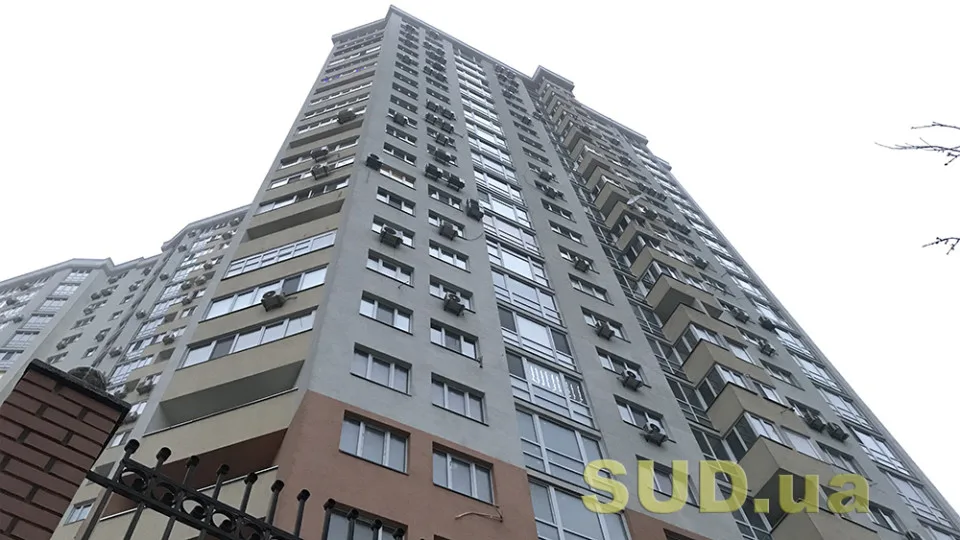










Apartment owners cannot independently attach attics, basements, or other auxiliary premises of a multi-apartment building to their living space, even if changes have been made to the State Register of Property Rights afterwards. This conclusion was reached by the Supreme Court in case No. 761/38626/23, leaving unchanged the decisions of lower courts to cancel the state registration of an apartment whose area was increased at the expense of the common property of co-owners.
The essence of the dispute
One of the Kyiv condominium associations (OSBB) applied to the court, stating that one of the apartment owners actually increased the area of her living space by attaching part of the attic. According to the case data, the apartment was purchased in 2001 with an area of 50 sq.m. Later, after changes were made to the technical documentation, its area first increased to 93.8 sq.m, and then to 159 sq.m. The basis for changing the technical characteristics were new technical passports and certificates of real estate indicators.
At the same time, the Association of Homeowners indicated that the expansion actually took place at the expense of the attic, which is an auxiliary premise of the building and belongs to all co-owners. Therefore, the association requested to cancel the state registration of ownership rights to the apartment with the new area.
What the courts established
During the case consideration, a construction and technical examination was conducted. The expert confirmed that the attic is an auxiliary premise of a multi-apartment building, intended to ensure the operation of the building; the apartment and attic premises are not actually connected; it is impossible to arrange an attic without interfering with the load-bearing structures of the building. The courts also established that the apartment owner did not provide documents confirming the lawful acquisition of ownership rights to the additional square meters or the consent of other co-owners to use part of the attic.
As a result, the court of first instance recognized the state registration of the apartment with the increased area as illegal. The appellate court supported this conclusion.
Arguments presented by the apartment owner
In the cassation appeal, the owner's representative argued that the Association of Homeowners chose an improper method of protection, the state registrar only registered the change in the apartment's technical characteristics, and to cancel the registration it was necessary to first challenge the decision of the general meeting of co-owners.
The applicant also insisted that the courts did not examine certain documents which, in his opinion, were significant for resolving the dispute.
Position of the Supreme Court
The cassation civil court disagreed with these arguments. The Supreme Court noted that auxiliary premises of a multi-apartment building have a special legal regime. According to part 2 of article 382 of the Civil Code of Ukraine, they are common property of all co-owners of the building regardless of whether an Association of Homeowners was created and when the apartment was privatized. Furthermore, part 2 of article 369 of the Civil Code of Ukraine establishes that the disposal of property held in joint ownership is carried out only with the consent of all co-owners.
The court noted that ownership rights to attics, basements, and other auxiliary premises arise for co-owners without the need for separate documentation. Therefore, no apartment owner can unilaterally include such premises as part of their living space.
The Supreme Court emphasized that the law explicitly establishes: auxiliary premises are common property of co-owners, they cannot be allocated in kind to one owner, and disposal of such property is possible only with the consent of co-owners. If reconstruction involves the use of the attic or other common premises, the consent of all co-owners, properly formalized according to the law, is required. In this case, the defendant did not provide such evidence.
Why the Supreme Court left the decision unchanged
The panel of judges agreed with the conclusions of the lower courts that the apartment owner did not confirm the legality of acquiring rights to the additional square meters.
Since the living area was increased at the expense of an auxiliary premise belonging to all co-owners, the state registration of ownership rights to the apartment with the increased area was carried out without proper legal grounds.
The Supreme Court also rejected the arguments about improper protection methods, noting that canceling state registration in such disputes is an effective way to restore the violated rights of co-owners. As a result, the cassation appeal was dismissed, and the decisions of the courts of first and appellate instances remained unchanged.
The significance of this ruling
The Supreme Court's decision confirms the established judicial practice regarding the protection of rights of co-owners of multi-apartment buildings. Effectively, the court reiterated: attics, basements, and other auxiliary premises belong to all co-owners of the building; increasing the apartment area at the expense of such property without proper legal grounds is impossible; even making changes to the State Register of Property Rights or issuing a new technical passport alone does not legalize the attachment of common property.
Opposite practice of the Supreme Court
At the same time, the Supreme Court's practice shows that not all premises in a multi-apartment building automatically belong to the common property of co-owners. The Supreme Court, in a panel of judges of the First Judicial Chamber of the Cassation Civil Court in the ruling dated June 17, 2026, in case No. 755/460/24 clarified under what conditions basement premises are not considered auxiliary.
Co-owners of a multi-apartment building applied to the court, believing that a non-residential premise in the basement is an auxiliary premise and therefore belongs to all co-owners as joint ownership. They requested to recognize that this premise is not an independent real estate object since it is intended for the needs of the building residents.
The Supreme Court dismissed the cassation appeal and agreed with the conclusions of the lower courts. The court stated that the determining criterion for classifying a premise as auxiliary is its functional purpose, as well as the method of use and other characteristics. The plaintiffs did not prove that the disputed premise ensures the operation of the building or serves all co-owners. Instead, the case materials confirmed that it is a separate non-residential premise, and therefore there are no grounds to recognize it as common property of co-owners.
In another case 344/822/18, an apartment owner in a multi-apartment building in Ivano-Frankivsk applied to the court demanding to cancel the privatization of an apartment arranged in the attic, to declare invalid her subsequent purchase-sale agreement, to cancel the state registration of ownership rights and the decision on ownership registration after reconstruction. In her opinion, the attic is an auxiliary premise belonging to all co-owners, so its conversion into a separate apartment, subsequent sale by the previous owner to another person, and reconstruction were illegal and violated the rights of co-owners.
In the ruling dated January 28, 2026, the Supreme Court agreed with the conclusions of the lower courts and noted that the plaintiff did not prove violation of her rights. The court indicated that the disputed apartment is an independent real estate object, not common property of co-owners, and its reconstruction did not create obstacles to using the attic. The Supreme Court also rejected arguments about the illegality of reconstruction due to the building's status as an architectural monument, since urban planning conditions did not contain relevant restrictions. At the same time, the court noted that the first instance court mistakenly referred to the statute of limitations, but this did not affect the correctness of the dispute resolution. As a result, the cassation appeal was dismissed, and the decisions of the courts of first and appellate instances remained unchanged.
In case No. 396/1191/22, a dispute arose between two apartment owners in a multi-apartment building. The owner of apartment No. 5 reconstructed her living space into a store, arranging a separate entrance, a concrete stair landing, and a ramp. The owner of the neighboring apartment applied to the court, claiming that the works were carried out with deviations from the project and without the consent of co-owners, and that the constructed structures violated her property rights. She requested the court to oblige the defendant to dismantle the stair landing and ramp.
The court of first instance satisfied the claim and obliged the defendant to dismantle the concrete structures. The appellate court canceled this decision and denied the claim, noting that the plaintiff did not prove actual violation of her rights, and also awarded over UAH 19,500 in court costs to the defendant.
The Supreme Court agreed with the appellate court's conclusions and left its decision unchanged. The court emphasized that even if deviations from the project or certain building code violations occurred during reconstruction, this is not enough to demolish the structure. The plaintiff must prove that her rights were actually violated by the construction. In this case, none of the expert opinions confirmed that the stair landing and ramp create actual obstacles to using the plaintiff's apartment. Experts only noted that in the future these structures might complicate possible reconstruction of her apartment into a store.
The Supreme Court stressed that potential inconveniences or assumptions about possible future violations do not indicate an already violated civil right. The court also noted that demolition of unauthorized construction is an extreme measure that can only be applied if the plaintiff's rights are proven to be violated and it is impossible to eliminate the violation by less burdensome means.
Since such circumstances were not established in the case, there were no grounds for dismantling the structures. Accordingly, the cassation appeals were dismissed, and the appellate court's ruling and additional ruling on court costs remained unchanged.
Subscribe to our Telegram channel t.me/sudua and to Google News SUD.UA, as well as to our VIBER and WhatsApp, our page on Facebook and on Instagram to stay informed about the most important events.