Court explained why grounds for deferral do not mean exemption from mobilization


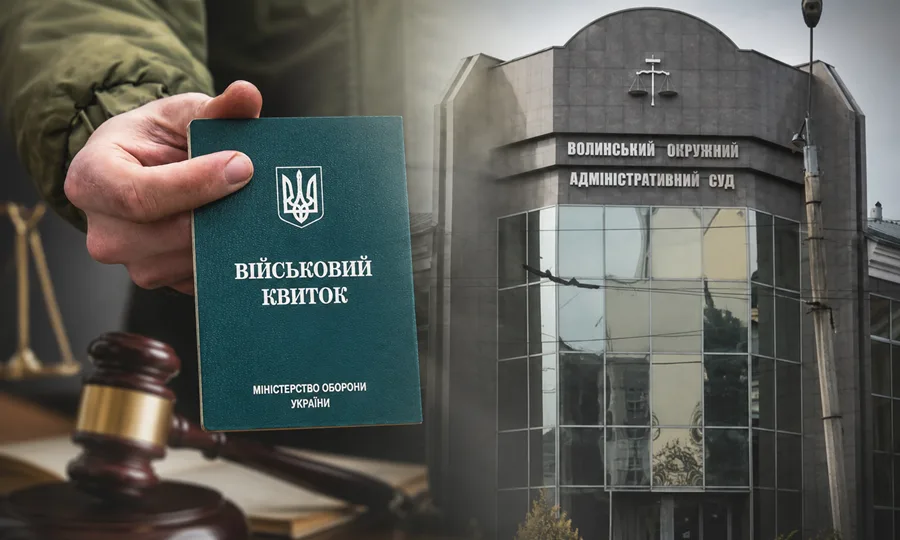










The Volyn District Administrative Court considered administrative case No. 140/1291/26 on the claim of a serviceman against the territorial recruitment and social support center and the military unit regarding the recognition of unlawful actions related to mobilization, cancellation of the conscription order, and the obligation to release him from military service.
The court examined the circumstances of the conscription during mobilization, arguments about violations of the procedure for passing the military medical commission (MMC), the existence of the right to deferral, and the limits of judicial protection in disputes of this category.
Case summary
The plaintiff applied to the court with demands to recognize the actions of the territorial recruitment and social support center as unlawful, to cancel the order on his conscription for military service during mobilization, and to oblige the military unit to make a decision on his release from military service and removal from the personnel list.
The claim was based on the fact that the employees of the territorial recruitment and social support center, according to the plaintiff, committed significant violations of the law during mobilization activities. He claimed that he was forcibly brought to the territorial recruitment and social support center, where he was unjustifiably detained, after which he was sent to the MMC.
According to the plaintiff, no actual medical examination was conducted. He stated that he refused to undergo the MMC due to the absence of necessary medical documents, doctors did not examine him, laboratory tests were not conducted, and the conclusion about his fitness for military service was formal. He also claimed that he did not receive a referral for the military-medical commission, a conscription summons, or a referral to the place of military service under personal signature.
Separately, the plaintiff emphasized the existence of family circumstances which, in his opinion, gave him the right to be released from military service. He noted that his mother suffers from cancer, is undergoing a course of polychemotherapy, and requires constant external care. In addition, according to the conclusion of the medical advisory commission, the plaintiff's grandmother was recognized as needing constant external care.
Due to these circumstances, the plaintiff submitted a report to the military unit command requesting early release from military service for family reasons in accordance with paragraph 3 of part twelve of article 26 of the Law of Ukraine "On Military Duty and Military Service," but did not receive a response.
The plaintiff believed that violations of the mobilization procedure and non-compliance with the legislation requirements regarding the MMC led to illegal conscription, which was the basis for appealing to the administrative court.
The military unit opposed the claim and stated that after receiving the relevant documents from the territorial recruitment and social support center, it acted exclusively within the powers granted by law. The commander of the military unit issued an order to include the plaintiff in the personnel list based on the conscription order and the nominal list received from the recruitment authority. At the same time, the military unit is not authorized to verify the legality of decisions of the territorial recruitment and social support center or to refuse to execute properly issued documents.
Regarding the release report, the defendant noted that after its receipt, a check of the plaintiff's family circumstances was organized in accordance with the Instruction on the organization of the implementation of the Regulation on the military service of citizens of Ukraine in the Armed Forces of Ukraine. Based on the examination results, the competent authority found no confirmation that there are no other persons who, according to the law, can provide care for the plaintiff's mother, and therefore no legal grounds for his release for family reasons were established.
The defendant also disputed the arguments about not undergoing the MMC, stating that the plaintiff independently refused to undergo the medical examination due to the absence of medical documents. Moreover, even if violations during the medical examination were found, these circumstances alone are not grounds for release from military service.
The territorial recruitment and social support center, as a third party, reported that at the date of conscription, there were no records or documents in the Unified State Register of conscripts, reservists, and military personnel or in the personal file materials confirming the plaintiff's right to a deferral or the fact of such deferral being granted. Therefore, the decision on conscription was made in accordance with the requirements of current legislation.
The third party also noted that according to the MMC's certificate, the plaintiff underwent a medical examination, was examined by doctors of all necessary specialties, underwent laboratory and instrumental tests, and was recognized as fit for military service. Thus, the claim about the absence of a medical examination, according to the third party, is not supported by the case materials.
After examining the written evidence, the court established that the plaintiff was recognized by the MMC as fit for military service, was conscripted by order of the head of the territorial recruitment and social support center during mobilization and sent to the military unit, and by order of the military unit commander was included in the personnel list and appointed to the appropriate military position. The legality of these decisions was the subject of judicial review.
Court's position and conclusions
In considering the dispute, the court primarily relied on the provisions of Articles 19 and 65 of the Constitution of Ukraine, the Law of Ukraine "On Military Duty and Military Service," the Law of Ukraine "On Mobilization Preparation and Mobilization," the Regulation on Territorial Recruitment and Social Support Centers approved by the Cabinet of Ministers of Ukraine Resolution No. 154, the Procedure for Conscription of Citizens for Military Service during Mobilization approved by Cabinet Resolution No. 560, as well as the Regulation on Military Medical Expertise in the Armed Forces of Ukraine.
The court noted that during mobilization, those liable for military service who are fit for health and do not have a formalized right to deferral according to Article 23 of the Law of Ukraine "On Mobilization Preparation and Mobilization" are conscripted.
The plaintiff referred to his right to a deferral due to his mother being a person with a Group II disability requiring constant external care, as well as the need to care for his grandmother, who also requires constant external care.
However, the court pointed out that the mere existence of circumstances provided by law does not automatically create the right to a deferral. The legislation provides a special procedure for exercising this right, which involves the military liable submitting an appropriate application and documents confirming the grounds for deferral to the territorial recruitment and social support center. Only after reviewing these documents does the competent authority make a decision to grant or deny the deferral.
Examining the case materials, the court found no evidence that before the conscription the plaintiff applied to the territorial recruitment and social support center with an application for deferral and documents confirming the right to it. The case materials also did not contain evidence that the issue of granting a deferral was under consideration by the relevant commission or that the competent authority had made a decision to grant it.
Under these circumstances, the court concluded that as of the conscription date, the territorial recruitment and social support center had no legal grounds to consider the plaintiff as a person entitled to a deferral.
The court referred to the legal position of the Supreme Court set out in the ruling dated October 1, 2024, in case No. 160/10728/23, according to which the right to a deferral must be exercised by the military liable through active actions and formalized in the manner prescribed by law by the competent authority. The exercise of such a right is possible only before the person acquires the status of a serviceman.
Additionally, the court considered the Supreme Court's conclusion formulated in the ruling dated February 5, 2025, in case No. 160/2592/23, according to which the conscription procedure during mobilization is irreversible. Even if certain procedural violations are established, this alone does not restore the person's status that existed before mobilization.
Assessing the arguments about violations of the procedure for passing the MMC, the court noted that according to the case materials, the plaintiff was examined by the MMC, which issued a certificate of his fitness for military service.
The court examined the medical examination card containing information about the examination by specialized doctors and the results of laboratory and additional tests, including blood, urine analyses, and fluorography. The absence of the plaintiff's signature on the medical examination card, in the court's opinion, does not indicate the invalidity of the military-medical commission's decision, since the commission's decision is valid, was not appealed, and is not subject to review in this case.
The court also took into account the legal position of the Supreme Court, according to which even the fact of not undergoing a medical examination alone is not evidence of a person's unfitness for military service and cannot be an independent ground for release under Article 26 of the Law of Ukraine "On Military Duty and Military Service."
Given the established circumstances, the court concluded that there are no legal grounds to recognize the actions of the territorial recruitment and social support center as unlawful, nor to cancel the order on the plaintiff's conscription during mobilization.
The court separately emphasized that failure to submit an application for deferral according to paragraph 58 of Procedure No. 560 means the territorial recruitment and social support center has no legal grounds to decide on granting it. Accordingly, the defendant cannot be obliged to take actions related to granting a deferral to a person who has not exercised this right in the manner prescribed by law.
Regarding the demand to oblige the military unit to release the plaintiff from military service and remove him from the personnel list, the court noted that this demand is derivative of the claims to recognize the conscription illegal. Since the court did not find the mobilization decision unlawful and found no grounds to cancel the relevant order, the demand for release is also to be denied.
At the same time, the court separately noted that the plaintiff referred to submitting reports on release from military service for family reasons and the lack of proper response from the military unit command. However, the legality of considering these reports, the presence or absence of grounds for release for family reasons, as well as the legality of actions or inactions of officials during their consideration, were not the subject of the stated claims and therefore could not be assessed in this case.
Based on the case review, the Volyn District Administrative Court concluded that the defendants acted within the powers granted by law and in the manner prescribed by legislation, and no grounds for satisfying the administrative claim were found. The claims to recognize the actions unlawful, cancel the conscription order, oblige release from military service, and removal from the personnel list were fully denied.
Subscribe to our Telegram channel t.me/sudua and to Google News SUD.UA, as well as to our VIBER and WhatsApp, Facebook page Facebook and on Instagram to stay updated on the most important events.