The Constitutional Court of Ukraine determined how the court should consider objections against rulings of the investigating judge that are not subject to appeal


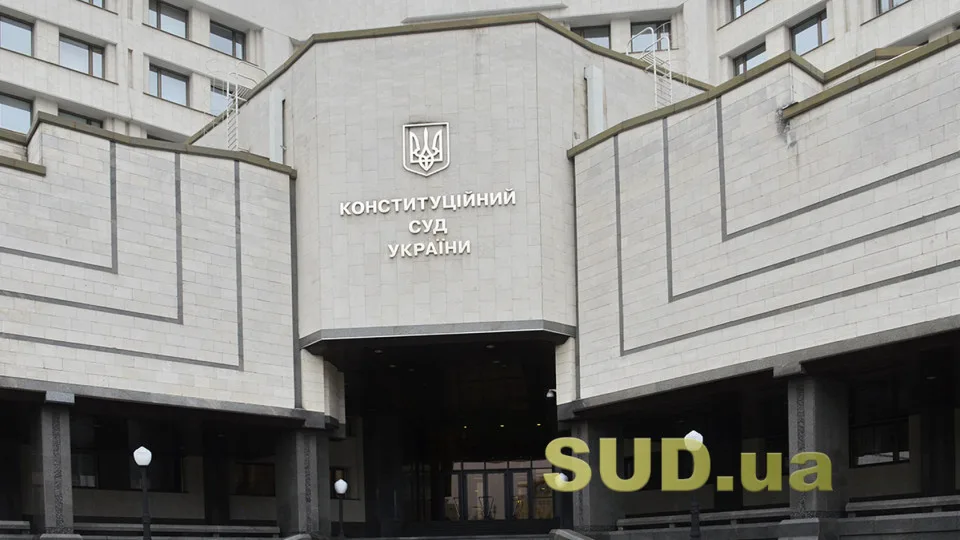










The Constitutional Court reports that the Second Senate at a plenary session considered the case and adopted Decision No. 6-р(ІІ)/2026 on the constitutional complaint of Tetyana Leonidivna Samborska regarding the constitutionality of Article 309, paragraph 2 of part two of Article 428 of the Criminal Procedure Code of Ukraine.
Parts one and two of Article 309 of the Code define the list of rulings of the investigating judge that may be appealed during the pre-trial investigation. According to part three of Article 309 of the Code, "other rulings of the investigating judge are not subject to appeal, and objections against them may be submitted during the preparatory proceedings in court."
According to paragraph 2 of part two of Article 428 of the Code, the cassation court issues a ruling to refuse to open cassation proceedings if "from the cassation complaint, the court decisions submitted to it, and other documents, it appears that there are no grounds to satisfy the complaint."
The subject of the constitutional complaint noted that the Code does not grant the court the authority to cancel the investigating judge's ruling on setting the time limit for familiarization with the materials of the criminal proceedings, issued under part ten of Article 290 of the Code, both at the stage of preparatory court proceedings and during subsequent stages of criminal (judicial) proceedings. Objections against such a ruling may be submitted during the preparatory proceedings in court. According to T.L. Samborska, such objections as a procedural means of protection are ineffective because the Code's provisions do not establish what actions the court should take as a result of considering such objections.
Justifying the claim of inconsistency with the Constitution of Ukraine of paragraph 2 of part two of Article 428 of the Code, the subject of the constitutional complaint indicated, in particular, that the contested norm hinders full procedural activity in the cassation court, as it effectively allows an unlimited procedural space for resolving any case by refusing to open cassation proceedings.
Addressing the issues raised in the constitutional complaint, the Constitutional Court of Ukraine emphasized the importance of previous legal positions formulated by it in cases concerning ensuring the right of a person to appeal judicial decisions. Taking them into account, the Constitutional Court of Ukraine stated in the Decision that paragraph 8 of part two of Article 129 of the Constitution of Ukraine guarantees a person the unconditional right to appellate review of their case on the merits, but does not establish the same content and scope of guarantees of appeal against those procedural judicial decisions that resolve individual issues of criminal proceedings.
At the same time, the Verkhovna Rada of Ukraine cannot arbitrarily determine which rulings of the investigating judge are subject to appeal and which are not. The legislator has the duty to regulate this issue in such a way as to effectively achieve the goals of justice, preventing, in particular, unjustified delays in the consideration of court cases, while not depriving a person of the constitutional right to judicial protection and not violating other human rights.
The Decision emphasizes that a constitutionally permissible legislative prohibition of the right to appeal rulings of the investigating judge is one that: is established with a legitimate purpose related, in particular, to ensuring the proper course of the criminal process, observance of reasonable time limits for court consideration, prevention of excessive fragmentation of court proceedings, and prevention of abuse of procedural rights; is proportionate, i.e., does not lead to arbitrary restriction of the constitutional right of a person to judicial protection and does not violate the essence of this right.
The Court stressed that the absence of the right to appeal rulings of the investigating judge is allowed: regarding those rulings whose legal consequences do not cause irreversible or such significant interference with the constitutional rights and freedoms of a person that it would be impossible to timely and effectively eliminate without appealing to the appellate court; if other (alternative) means of legal protection provided by the criminal procedural law can guarantee the elimination of the consequences of possible violations of the person's rights caused by the ruling of the investigating judge, ensuring their real restoration.
The Court in the Decision examined the issue of the essential connection of the right to familiarize oneself with the materials of the pre-trial investigation with the constitutional right of the suspect, accused to defense, and the conventional right to a fair trial.
The Court emphasized that familiarization with the materials of the pre-trial investigation is not a formal procedural action but constitutes one of the main guarantees of the realization of the right to judicial protection. It is at this stage that the defense side obtains the opportunity to clarify the scope and content of the prosecution's evidence, assess their significance for the criminal proceedings, determine their legal position, prepare necessary procedural motions, etc.
The Decision states that the setting by the investigating judge of the time limit for familiarization with the materials of the pre-trial investigation is a procedural means aimed at ensuring the proper course of criminal proceedings and preventing its unjustified delay. At the same time, the use of this means is permissible only if the set time limit is objectively sufficient considering the volume and complexity of the materials, conditions of access to them, and other circumstances significant for the proper preparation of the defense of the suspect (accused).
Addressing the constitutionality of Article 309 of the Code in the aspects raised in the constitutional complaint of T.L. Samborska, the Court noted that the absence of a normative fixation of the right to appeal the investigating judge's ruling on setting the time limit for familiarization with the materials of the pre-trial investigation does not deprive participants in criminal proceedings of procedural means to seek verification of its legality in another way, since the criminal procedural law provides a set of interrelated means of legal protection, within which the appeal of the investigating judge's ruling is one of the methods of judicial control but not the only one.
One of the methods of such judicial control is the submission, based on part three of Article 309 of the Code, of objections against the mentioned ruling of the investigating judge during the preparatory proceedings in court.
Having carried out a constitutionally consistent (conformant) interpretation of part three of Article 309 of the Code, the Court stated that objections against the ruling of the investigating judge, which is not subject to appeal, are mandatory for consideration and accounting by the court; the right of a person to submit objections against the ruling of the investigating judge corresponds to the court's obligation to properly consider such objections, verify the arguments presented in them, provide them with proper legal assessment, and, if necessary, take the necessary measures to restore the violated right.
Assessing the practical possibility of familiarization with the materials of the pre-trial investigation based on the results of the court's consideration of objections submitted by the accused during the preparatory court session, the Court concluded that the absence of all materials of the pre-trial investigation directly at the court's disposal at the preparatory court session stage does not deprive the court of the possibility to oblige the prosecution to provide the person with access to these materials for familiarization within a time limit set by the court without their mandatory attachment to the materials of the criminal case in the court's possession. At the same time, the choice of specific procedural methods to ensure and practically realize the person's right to familiarize themselves with the materials of the pre-trial investigation based on the results of submitted objections should be decided by the courts of the judicial system of Ukraine during the administration of justice.
The Decision concludes that since the submission of objections against the investigating judge's ruling on setting the time limit for familiarization with the materials of the pre-trial investigation can ensure the protection and restoration of the relevant right of the suspect (accused), there are no grounds to recognize Article 309 of the Code as unconstitutional because it does not provide for the appeal of the mentioned ruling.
Addressing the constitutionality of paragraph 2 of part two of Article 428 of the Code in the aspects raised in the constitutional complaint of T.L. Samborska, the Court noted that it is especially important for assessing the constitutionality of this provision of the Code that the degree of constitutional guarantee of the right to cassation appeal of court decisions resolving individual issues of criminal proceedings is even lower than that of those resolving the case on the merits.
The Court noted that the legal-technical imperfection of the wording "it appears that there are no grounds to satisfy the complaint," used in paragraph 2 of part two of Article 428 of the Code, is not sufficient grounds to conclude its unconstitutionality if the content of such a provision can be correctly established by systematic interpretation of the Code's provisions taking into account constitutional principles of the rule of law, access to justice, and ensuring the right to judicial protection.
The Decision emphasizes that considering the limited level of guarantee of the right to cassation appeal of court decisions, especially those that do not resolve the case on the merits, the absence in paragraph 2 of part two of Article 428 of the Code of detailed criteria for making a decision to refuse to open the relevant cassation proceedings does not prevent the cassation court from properly verifying the correctness of the refusal to grant a person access to appellate review of the investigating judge's ruling.
The Constitutional Court of Ukraine stressed that paragraph 2 of part two of Article 428 of the Code does not give the cassation court the authority to refuse to open cassation proceedings if from the content of the cassation complaint and the documents attached to it it is impossible to reach a convincing and substantiated conclusion about the legality of the relevant ruling of the appellate court. The cassation court is obliged to ensure that the appellate court has properly legally assessed the issue of the admissibility of appealing the relevant ruling of the investigating judge and to clarify whether the right of the person to access appellate review was unjustifiably restricted due to erroneous application of procedural law.
In conclusion, the Court noted that paragraph 2 of part two of Article 428 of the Code performs the function of a procedural filter aimed at ensuring proper administration of justice, procedural economy, and effective functioning of the cassation court. The normative regulation established by it in the aspect of its application as grounds for refusal to open cassation proceedings on a cassation complaint against the ruling of the appellate court refusing to open appellate proceedings is aimed at achieving a legitimate goal, is proportionate and justified, does not infringe on constitutional principles of justice, and does not violate the essence of the right of the suspect, accused to defense.
The Constitutional Court of Ukraine decided:
- to recognize as consistent with the Constitution of Ukraine (constitutional) Article 309 of the Code in that it does not provide for appeal of the investigating judge's ruling on setting the time limit for familiarization with the materials of the pre-trial investigation;
- to recognize as consistent with the Constitution of Ukraine (constitutional) paragraph 2 of part two of Article 428 of the Code as grounds for refusal to open cassation proceedings on a cassation complaint against the ruling of the appellate court refusing to open appellate proceedings.
Subscribe to our Telegram channel t.me/sudua and to Google News SUD.UA, as well as to our VIBER and WhatsApp, Facebook page Facebook and Instagram to stay informed about the most important events.