Faith Does Not Allow Fighting: Court Sentences Serviceman Who Refused to Follow Order


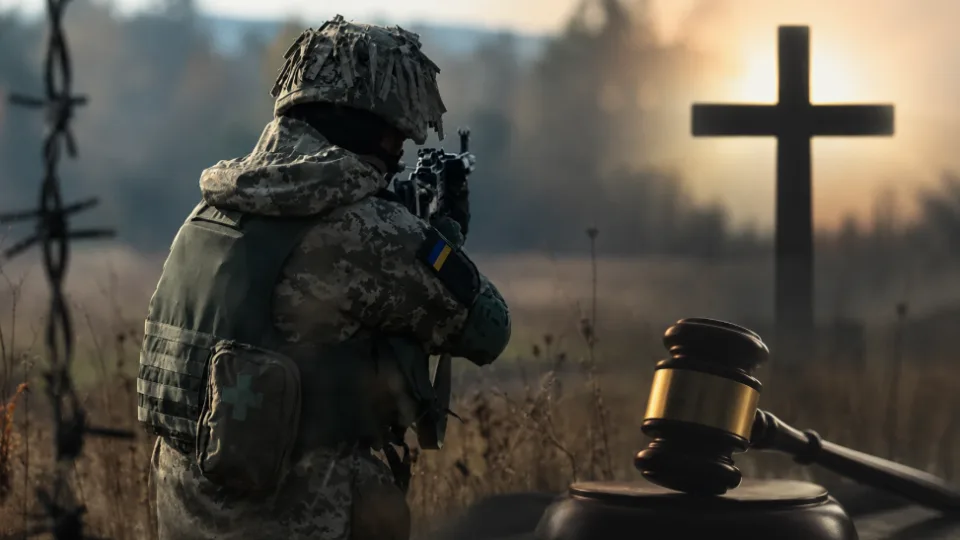










The court in Zakarpattia convicted a serviceman who refused to follow an order to transfer to another military unit. He explained his refusal by religious beliefs, stating that he feared possible involvement in combat operations.
The court concluded that such arguments do not exempt a serviceman from the duty to obey a lawful order, and the fact of disobedience is confirmed by a body of evidence.
The man was sentenced to a final punishment of 5 years and 1 month of imprisonment.
Circumstances of the case
As established by the Mukachevo City District Court, the soldier was serving under mobilization in a military unit, where he held the position of a machine gunner in the security and defense unit.
On October 29, 2024, by order of the Chief of the General Staff of the Armed Forces of Ukraine, he was relieved from his position and appointed as a reserve sailor of the 20th reserve company of another military unit. On November 2, 2024, this order was communicated to the serviceman, but he openly refused to comply. Furthermore, the court found that he also refused to follow the oral order of the chief of staff regarding departure to the new place of service as part of a team.
Position of the accused
In court, the serviceman admitted that he refused to follow the transfer order.
He explained that he referred to his belonging to the Baptist denomination, whose religious beliefs, in his opinion, do not allow participation in killings. According to him, he believed that after the transfer he might be involved in combat operations, so he refused to depart to another military unit.
At the same time, the accused confirmed that during his previous service he stood guard with a weapon. He also acknowledged that he was aware of criminal liability for refusal to follow an order, as he had previously been convicted for a similar offense and was on probation. However, he denied that he was given an oral order to depart to another military unit.
Evidence considered by the court
The court found the circumstances of the accusation proven based on witness testimonies, materials of the official investigation, the order of the Chief of the General Staff of the Armed Forces of Ukraine, reports of officials, information about the communication of the order and criminal liability for its non-compliance, as well as a video recording showing the communication of the order and the serviceman’s refusal to comply.
Why the court rejected the arguments about religious beliefs
The court critically assessed the accused’s reference to religious beliefs.
In case 303/3775/25, it was noted that the defense did not provide evidence confirming the accused’s reference to religious beliefs, except for his own explanations. Additionally, the court noted that during service he performed duties as a machine gunner and stood guard with a weapon, and therefore in cases provided by law had the right and duty to use weapons.
The court also stated that the transfer order did not contain any information about sending the serviceman to a combat military unit or his direct participation in combat operations. The document only provided for appointment as a reserve sailor of a reserve company, so the accused’s claims about future participation in combat operations were based solely on his assumptions.
Separately, the court emphasized that even belonging to a certain religious denomination does not give a serviceman the right to refuse to follow an order to transfer to another military unit.
Punishment
When imposing the sentence, the court took into account that the man had already been convicted in July 2024 for disobedience committed during martial law, with probation applied, and that the new offense was committed during the probation period.
The court recognized the repetition and recidivism of crimes as aggravating circumstances. A mitigating circumstance was active assistance in solving the criminal offense, but sincere remorse was not considered since the accused did not fully admit guilt.
The court sentenced him to 5 years of imprisonment, and considering the totality of sentences, partially joining the unserved punishment from the previous sentence, finally determined 5 years and 1 month of imprisonment.
At the same time, it is worth noting that in the reasoning part of the verdict the court repeatedly states the proven guilt under part 4 of article 402 of the Criminal Code of Ukraine (disobedience committed during martial law). However, the operative part refers to part 2 of article 402 of the Criminal Code of Ukraine. Given the content of the reasoning part and the legal justification provided by the court, this may indicate a technical inaccuracy in the text of the operative part of the verdict.
Subscribe to our Telegram channel t.me/sudua and to Google News SUD.UA, as well as to our VIBER and WhatsApp, Facebook page and Instagram to stay informed about the most important events.