Pension Indexation after Recalculation: The Court Explained When the Pension Fund Has no Right to Refuse


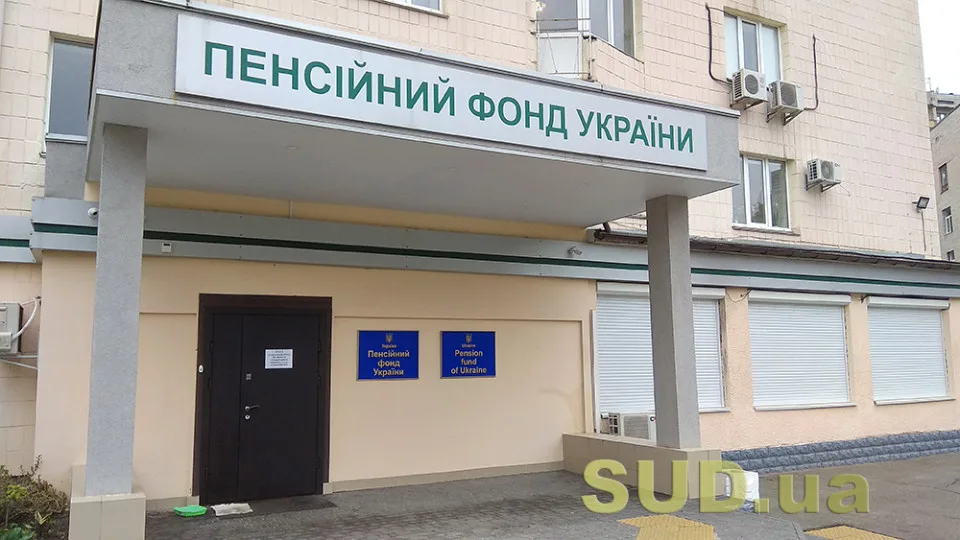










Pension indexation is a state social protection mechanism designed to maintain the purchasing power of pension payments amidst rising consumer prices. In practice, disputes often arise between pensioners and Pension Fund authorities regarding the correct application of legislation during pension recalculation and indexation. One such case was recently heard by the Zhytomyr District Administrative Court.
The court examined a case brought by a pensioner against the Main Department of the Pension Fund of Ukraine in the Zhytomyr region. The claim sought to recognise the Pension Fund's inaction regarding pension indexation as unlawful and to compel them to recalculate the pension.
Essence of the Case
A pensioner filed a claim with the Zhytomyr District Administrative Court against the Main Department of the Pension Fund of Ukraine in the Zhytomyr region. The plaintiff requested that the defendant's failure to index his pension be recognised as unlawful. This failure concerned the non-application of specific coefficients to an increased pension provision indicator (income) of UAH 28,216.89. Specifically, the plaintiff sought the application of a coefficient of 1.0796 for January–February 2025 and a coefficient of 1.1210 from 1 March 2026. The plaintiff also requested that the Pension Fund calculate and pay the corresponding indexation.
The claim was based on a previous administrative court decision that had come into legal force. This decision obliged the Pension Fund to recalculate the plaintiff's pension using an average wage (income) indicator of UAH 28,216.89, from which insurance contributions were paid. Following this decision, the pension was recalculated. However, the defendant subsequently failed to index it using the increase coefficients established for 2025 and 2026.
The plaintiff submitted a request for indexation to the Pension Fund. In response, the Pension Fund stated in a letter that there were no grounds for applying the specified increase coefficients. Their reasoning was that the average wage indicator of UAH 28,216.89 was determined solely to comply with the court decision and was not the average wage indicator used according to part two of Article 42 of the Law of Ukraine "On Compulsory State Pension Insurance."
Disagreeing with the defendant's position, the plaintiff appealed to the administrative court.
The representative of the Main Department of the Pension Fund of Ukraine in the Zhytomyr region submitted a response opposing the satisfaction of the claim. They asserted that indexation is carried out according to legislative requirements and that there were no grounds for applying increase coefficients to the average wage indicator determined by the court decision.
Court's position
After examining case materials No. 240/18608/26, the court first focused on constitutional guarantees of social protection, noting that Article 46 of the Constitution of Ukraine guarantees citizens the right to social protection, including the right to pension provision.
Next, the court analysed the provisions of Law of Ukraine No. 1282-XII, "On Indexation of Monetary Incomes of the Population," which defines the legal, economic, and organisational foundations for maintaining the purchasing power of the population. The court emphasised that indexation is a legislatively established mechanism for increasing the monetary incomes of the population, allowing partial or full compensation for the rise in prices of consumer goods and services.
According to Articles 1 and 2 of this Law, monetary incomes of citizens received in hryvnias within Ukraine, which are not one-off payments, including pensions, are subject to indexation.
The court also referred to Law of Ukraine No. 2017-III, "On State Social Standards and State Social Guarantees," noting that income indexation is one of the state social guarantees. According to Article 19 of this Law, it is mandatory for all state bodies, local self-government bodies, enterprises, institutions, and organisations, regardless of ownership.
The court specifically noted that the economic basis for indexation is the consumer price index exceeding the indexation threshold of 103 per cent, and the procedure for its implementation is determined by the Cabinet of Ministers of Ukraine.
Analysing the amendments introduced by Law No. 2040-IX, the court stated that after its entry into force, part five of Article 2 of Law No. 1282-XII directly provides for pension indexation in the manner determined by the Cabinet of Ministers of Ukraine, applying an increase coefficient determined according to the second and third paragraphs of part two of Article 42 of the Law of Ukraine "On Compulsory State Pension Insurance."
Moreover, the court analysed the provisions of Law No. 2262-XII, "On Pension Provision for Persons Released from Military Service and Some Other Persons," which is a special law in the field of pension provision for servicemen and other specified categories of persons.
Analysing the provisions of Law No. 2262-XII, the court concluded that the state guarantees persons covered by this Law an appropriate level of pension provision through the appointment and recalculation of pensions, as well as by providing other social guarantees.
Referring to Article 43 of Law No. 2262-XII, the court noted that pensions for these persons are calculated based on the amount of monetary provision, considering the official salary, military or special rank salary, length-of-service allowance, monthly additional types of monetary provision, and bonuses in the manner prescribed by law.
The court also analysed Articles 63 and 64 of Law No. 2262-XII. In particular, the court noted that all pensions assigned under this Law are subject to recalculation in the event of an increase in the monetary provision of the respective categories of servicemen. If, in the year of indexation and before its implementation, the pension was not recalculated according to Article 63 of the Law, the mechanism established by the Cabinet of Ministers of Ukraine, using the increase coefficient set by part two of Article 42 of Law No. 1058-IV, is applied to ensure indexation. The amount of indexation is taken into account during subsequent pension recalculations.
Evaluating the provisions of the Law of Ukraine No. 1058-IV, "On Compulsory State Pension Insurance," the court emphasised that this Law defines the principles of the compulsory state pension insurance system, and changes to its norms are possible only through amendments to the Law itself.
The court paid special attention to interpreting Part Two of Article 42 of Law No. 1058-IV. It noted that, to ensure indexation, pensions previously assigned are recalculated annually from 1 March by increasing the average wage indicator considered for their calculation.
According to the court, the phrase "considered for pension calculation" is crucial for the correct application of this provision. It signifies that the object of the increase is not an abstract national average indicator, but specifically the average wage indicator used during the calculation of a particular person's pension, which directly determines its amount.
The court emphasised that the legislative structure clearly separates two independent elements of the indexation mechanism. The first is the individual base for the increase—the earnings indicator applied when a particular person's pension is assigned or recalculated. The second is the increase coefficient, determined by nationwide macroeconomic indicators, including the inflation rate and average wage dynamics in Ukraine.
In the court's opinion, these elements perform different legal functions and are not interchangeable. Using a general indicator instead of the individual base for indexation contradicts the content of Part Two of Article 42 of Law No. 1058-IV and distorts the legally established indexation mechanism.
Additionally, the court referred to the provisions of the Procedure for Pension Recalculation, approved by Cabinet of Ministers of Ukraine Resolution No. 124 dated 20 February 2019. The court noted that this Procedure stipulates that each subsequent recalculation must use the average wage indicator, already increased in previous years, which was applied to calculate a particular person's pension.
According to the court, this provision confirms the continuity of the indexation mechanism and indicates that each subsequent increase must be applied to the actual indicator already used in the specific pensioner's case.
The court also drew attention to the principle of effective judicial protection, as provided by the Code of Administrative Procedure of Ukraine. The decision states that the administrative court is not limited to merely acknowledging a rights violation but must select a method of protection that ensures their genuine restoration and prevents the need for repeated court appeals.
In this context, the court cited legal positions of the Supreme Court expressed in rulings dated 30 January 2018, case No. 804/1457/17; 11 December 2018, case No. 802/295/17-a; 19 February 2019, case No. 824/399/17-a; 23 December 2021, case No. 480/4737/19; and 17 February 2020, case No. 820/1961/18. The court noted that exceeding the scope of the stated claims is permissible only as an exception, if necessary for the full and effective protection of violated rights, and provided it complies with procedural law requirements.
Referring to the legal position of the Supreme Court of Ukraine, as set out in the ruling dated 16 September 2015, case No. 21-1465a15, the court emphasised that a court decision must not only establish the fact of rights violation but also guarantee its actual restoration. It must ensure the possibility of enforcing the court decision and exclude the need for repeated judicial protection due to further unlawful decisions, actions, or inaction by the authority.
Assessing the disputed legal relations, the court concluded that the plaintiff's pension indexation from January 2025 should have been carried out according to the Cabinet of Ministers of Ukraine Resolutions No. 185, No. 209, No. 236, the Procedure for Pension Recalculation approved by Resolution No. 124, and taking into account the requirements of part two of Article 42 of the Law "On Compulsory State Pension Insurance."
At the same time, the court noted that the average wage indicator used to calculate the plaintiff's pension is subject to a consistent increase using the coefficients established by law. In particular, from 1 January 2025, the coefficient 1.0796 should be applied; from 1 March 2025, coefficient 1.115; and from 1 March 2026, coefficient 1.121.
The court noted that a similar approach has already been adopted by the Supreme Court in rulings dated 13 January 2025, case No. 160/28752/23; 27 January 2025, case No. 200/422/24; and 28 January 2025, case No. 400/4663/24. According to part five of Article 242 of the Code of Administrative Procedure of Ukraine, these legal conclusions must be considered by courts when applying legal norms to similar legal relations.
Considering the established circumstances, the court concluded that the plaintiff's pension is subject to indexation using the increase coefficients of the average wage indicator considered for his pension calculation, starting from 1 January 2025, with coefficient 1.0796; from 1 March 2025, coefficient 1.115; and from 1 March 2026, coefficient 1.121.
Evaluating the evidence in the case, the court noted that according to Article 77 of the Code of Administrative Procedure of Ukraine, the burden of proving the lawfulness of decisions, actions, or inaction lies with the authority. In this case, the defendant did not provide sufficient evidence confirming the lawfulness of the refusal to conduct indexation, while the plaintiff confirmed the circumstances on which his claims were based with proper and admissible evidence.
Under these circumstances, the Zhytomyr District Administrative Court concluded that there are legal grounds for full satisfaction of the administrative claim.
Court Decision
The Zhytomyr District Administrative Court found the claims justified and upheld the administrative claim.
The court recognised as unlawful the inaction of the Main Department of the Pension Fund of Ukraine in Zhytomyr Region regarding its failure to index the plaintiff's pension using the increased coefficients of the average wage indicator (income) applied for pension calculation.
Additionally, the court obliged the Main Department of the Pension Fund of Ukraine in Zhytomyr Region to recalculate the pension provision by applying the legally prescribed indexation coefficients, and to carry out the calculation and payment of the due amounts, taking into consideration previously made payments.
The court also ordered the recovery of the court fee paid by the plaintiff from the defendant's budgetary allocations.
Subscribe to our Telegram channel t.me/sudua, follow SUD.UA on Google News, and join us on VIBER, WhatsApp, Facebook and on Instagram to stay informed about the important events.