The Supreme Court determined whether a buyer of an apartment can claim a penalty and moral damages due to the delay in commissioning the building


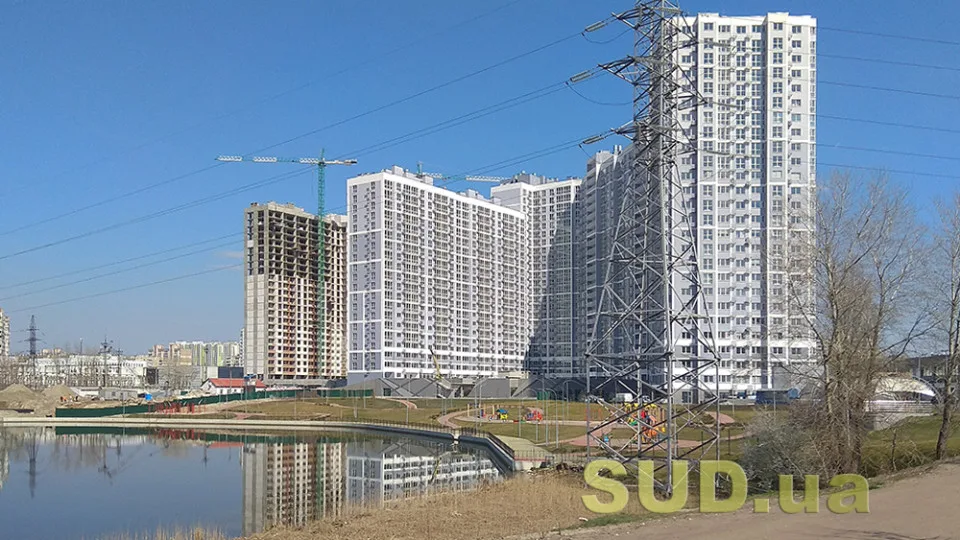










The Supreme Court, sitting as a panel of judges of the First Judicial Chamber of the Cassation Civil Court, reviewed a case brought by a buyer against a municipal enterprise for consumer protection in connection with the failure to commission a residential building within the established deadline, in which the plaintiff had purchased property rights to an apartment.
The cassation court examined the correctness of the conclusions of the lower courts regarding claims for penalties, damages, and moral harm after the purchase agreement for property rights had already been terminated and the buyer was awarded a refund of the paid funds.
Case Summary
In March 2024, the buyer filed a lawsuit against the Municipal Enterprise for Residential Building Construction "Zhytloinvestbud-UKB" for consumer protection. The basis for the claim was the defendant’s failure to fulfill the terms of the purchase agreement for property rights to the apartment.
On September 3, 2021, the parties concluded a notarized purchase agreement for property rights, under which the municipal enterprise undertook to transfer the property rights to the apartment in the residential complex to the buyer. The planned commissioning date was set for the second quarter of 2023. The cost of the property rights was UAH 994,980, and the buyer made payments according to the agreed schedule. To confirm fulfillment of his obligations, he paid UAH 575,000, as confirmed by the enterprise’s certificate.
After the end of the second quarter of 2023, the building was not commissioned. As of January 29, 2024, the buyer had not received any notifications about the reasons for the delay and had not signed any additional agreements with the seller regarding changes to the contract deadlines.
Due to the breach of contract terms, the plaintiff demanded contract termination, refund of paid funds, compensation for damages, payment of penalties for the delay in commissioning, and compensation for moral damages. The enterprise proposed to resolve the contract termination and refund issues.
Justifying his claims, the buyer stated that he fully fulfilled his financial obligations under the contract, but the defendant violated the commissioning deadlines. Therefore, he requested contract termination, refund of UAH 575,000, recovery of UAH 175,000 in damages (claimed as housing rental expenses), recovery of a penalty of UAH 3,674,250 for delay, and compensation of UAH 30,000 for moral damages. The plaintiff explained that due to the delay, he was forced to rent housing, causing both material losses and moral distress.
Decisions of the First and Appellate Courts
The Solomyansky District Court of Kyiv, whose decision was upheld by the Kyiv Court of Appeal, partially satisfied the claim. The court terminated the purchase agreement and ordered the municipal enterprise to refund UAH 575,000 to the buyer. The rest of the claims were denied.
In granting contract termination and refund, the court found that the defendant materially breached the contract. The parties had stipulated the buyer’s right to terminate the contract, and the enterprise did not object to this resolution and sent relevant letters to the buyer. This part of the decision was not appealed.
In denying the penalty claims, the courts noted that the parties concluded a purchase agreement for property rights, not a contract for work or services, so the provisions of part five of Article 10 of the Law of Ukraine "On Consumer Protection" do not apply.
The courts also denied claims for damages and moral harm, stating the plaintiff did not provide sufficient evidence of damages or moral harm and that the commissioning date was approximate, while the contract did not set a specific transfer date.
Legal Position of the Supreme Court
Reviewing case No. 686/6647/24 in cassation, the Supreme Court partially satisfied the cassation appeal. It found that the lower courts' decisions in the appealed part did not fully comply with the law, as some substantive law provisions were misapplied.
Regarding the penalty claim, the Supreme Court noted that part five of Article 10 of the Law "On Consumer Protection" regulates only relations arising from contracts for work or services. This provision establishes the executor’s liability for delay and the obligation to pay a penalty for each day of delay.
The Court emphasized that the Law clearly distinguishes between seller, executor, work, and service. An executor performs work or provides services, while a seller sells goods to a consumer. Work aims to achieve a material result, and a service involves performing an activity consumed during provision.
Examining the contract, the Supreme Court found it concerned the sale of property rights to an apartment. The contract defines the transfer procedure and corresponds to a purchase agreement. It is not a contract for work or services, and the parties agreed on the nature of their legal relations.
Therefore, the Supreme Court agreed with the lower courts that part five of Article 10 of the Consumer Protection Law does not apply. Since the defendant acted as a seller, not an executor of work or service provider, the penalty under this provision is not recoverable. This approach aligns with established Supreme Court and United Chamber practice.
Regarding damages, the Court noted that civil liability requires proof of unlawful conduct, harm, causation, and fault. The claimant must prove these elements with admissible evidence.
The plaintiff claimed he had to rent housing after the commissioning deadline, incurring extra costs. However, the Supreme Court agreed with lower courts that the case materials lack sufficient evidence linking the rental directly to the delay. The absence of causation excludes compensation for these damages.
The Supreme Court reached a different conclusion on moral damages.
Articles 23 and 611 of the Civil Code of Ukraine provide the right to compensation for moral harm, and Articles 4 and 22 of the Consumer Protection Law guarantee this right in relations with producers, sellers, executors, and service providers. Moral damages may be compensated even if not explicitly provided in the contract but derived from law. This aligns with the Supreme Court’s Grand Chamber position.
The Court noted that the purchase agreement was terminated due to the defendant’s material breach, which justified protecting the plaintiff’s consumer rights and refunding payments. This established a violation of the plaintiff’s rights, entitling him to moral damages compensation.
The cassation court also noted that the lower courts erred in finding the defendant’s unlawful conduct unproven. The Supreme Court emphasized that in moral damages cases, the defendant’s unlawful conduct is presumed, and the burden to rebut this presumption lies with the defendant. This approach is consistent with prior Supreme Court practice.
Considering the nature of the violated right, case circumstances, the plaintiff’s emotional distress, and principles of reasonableness and fairness, the Supreme Court partially granted the moral damages claim and set the amount at UAH 3,000. This part of the lower courts' decisions was overturned with a new ruling, while other parts remained unchanged.
The cassation court’s ruling takes effect upon issuance, is final, and not subject to appeal.
Subscribe to our Telegram channel t.me/sudua, Google News SUD.UA, as well as our VIBER and WhatsApp, Facebook page and Instagram account to stay updated on important events.