After leaving temporarily occupied territories, pensions can be lost — without mandatory identification, payments will not be made


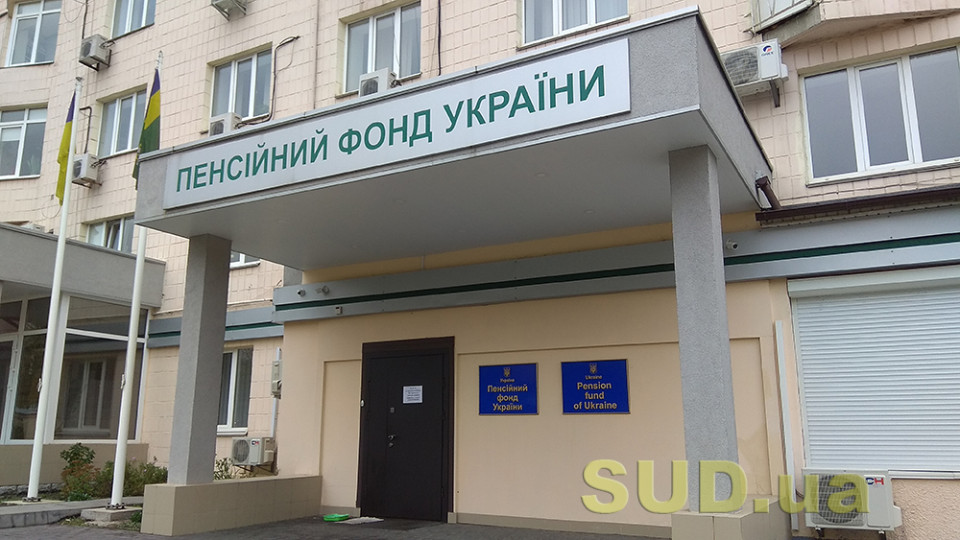










Pensioners who have left temporarily occupied territories, are abroad, or live in the TOT risk suspension of payments if they do not undergo mandatory identification. The Pension Fund of Ukraine reminds that for certain categories of citizens, there is a requirement for annual identity confirmation, and failure to comply may be grounds for temporary suspension of the pension. At the same time, the right to payments is not lost — after completing the procedure, the pension can be restored along with accrued arrears. We explain who the identification concerns, how to undergo it, and what to do if payments have already been stopped.
Who is subject to mandatory identification
This primarily concerns citizens who are abroad, in temporarily occupied territories, or left them during the occupation. If identification is not completed within the established deadlines, payments may be suspended but can be restored after completing the required procedures.
The Pension Fund emphasizes that the annual identification requirement applies not to all pensioners but only to certain categories of recipients: persons permanently or temporarily residing outside Ukraine; citizens in temporarily occupied territories; persons who left to Ukrainian-controlled territory during the occupation; recipients of pension or insurance payments for whom identity or proof of life must be confirmed.
The purpose of the procedure is to confirm that the payments are received by the person to whom they are intended and to prevent fraud and duplication of social payments.
How the mechanism works in 2026
The general approach in 2026 remains unchanged: pension payments are made subject to annual physical identification by December 31. Failure to meet this requirement may result in temporary suspension of payments. However, after identification, accruals are usually restored from the suspension date, including arrears.
In addition to identification, certain categories of citizens (including those from TOT) have an additional requirement — to submit a notification of non-receipt of a pension from the Russian Federation.
Ways to undergo identification
The Pension Fund has provided several options for identity confirmation to make the procedure accessible even in difficult life circumstances.
- Online via "Diia.Sign"
The fastest way is authorization in the PFU personal account using a qualified electronic signature or "Diia.Sign." After login, the user undergoes automated verification.
- Video identification
A pensioner can apply for a video conference with a PFU employee. During the session, it is necessary to present a passport or other document, answer clarifying questions, and confirm current personal data.
- Personal visit
The classic method is visiting a PFU service center or an authorized bank. The procedure is conducted upon presentation of an identity document.
- For persons abroad
Citizens can contact Ukrainian consular institutions to obtain a document confirming they are alive. This document, together with an application, is then sent to the PFU or submitted via electronic services.
What happens if identification is missed
If identification is not completed within the established period, the Pension Fund has the right to temporarily suspend payments. However, this does not mean losing the right to a pension. After completing the procedure: payments are restored; the amount for the entire delay period is accrued; the pension case is reinstated without the need for a new appointment of payments.
In fact, identification is a technical condition for the continuity of payments, not a reason for their cancellation.
How to restore payments after suspension
If payments were suspended, the procedure is as follows: undergo physical identification by any available method; submit an application for payment restoration (if necessary); confirm non-receipt of a pension from another state (for certain categories); wait for automatic resumption of accruals. In most cases, payments are restored after successful identification without additional requests.
What changes for citizens: before/after
BEFORE - lack of a single clear annual identity confirmation mechanism for all categories; limited identification methods; complicated procedures for citizens abroad; often lengthy payment restoration after suspension. AFTER - introduction of a systematic annual identification by December 31; expanded online tools (Diia.Sign, video communication);
alternative mechanisms for persons abroad; payments after identification are automatically restored with compensation for the delay period; strengthened control over receiving duplicate social payments.
Thus, the mechanism introduced in 2026 for mandatory annual identification of certain categories of pensioners has effectively become one of the key tools for controlling state pension payments amid martial law, population displacement, and loss of access to parts of Ukraine's territory.
On one hand, the state strengthens verification of payment recipients, explained by the need to minimize risks of fraud, duplication of pension cases, and payments to persons who do not actually have the right or are already under another state's jurisdiction. In this context, annual identity confirmation appears as a logical step toward digitalization and streamlining social expenditures.
On the other hand, for citizens themselves — especially those who left temporarily occupied territories or are abroad — the new requirements remain an additional administrative barrier. Despite expanded online tools and the possibility of video identification, in practice, the procedure may cause difficulties for the most vulnerable pensioner categories: elderly people, those without access to digital services, or those lacking stable communication with Ukrainian institutions.
At the same time, it is important that the legislator does not permanently deprive the right to a pension in case of missed identification. It concerns only temporary suspension of payments, which can be fully restored after completing the procedure. This allows balancing the state's fiscal discipline and citizens' social guarantees.
Thus, the 2026 model can be characterized as transitional: the state gradually moves toward a stricter control and digital verification system while trying to maintain service accessibility for the most vulnerable population groups. Further development of this system will likely depend on how effectively the control over payments can be combined with citizens' real ability to meet established requirements without risking loss of social protection.
Recall that earlier "Judicial and Legal Newspaper" reported on how to confirm years of work abroad and obtain the right to a pension.
Subscribe to our Telegram channel t.me/sudua and to Google News SUD.UA, as well as to our VIBER and WhatsApp, Facebook page and Instagram to stay updated on the most important events.