Illegal mobilization is not a verdict: analysis of a successful case where the court ordered to exclude a serviceman from the lists












The legal regime of martial law in Ukraine does not cancel the fundamental human rights and freedoms enshrined in the Constitution. However, as practice shows, the state demands the fulfillment of the constitutional duty through violations of constitutional rights.
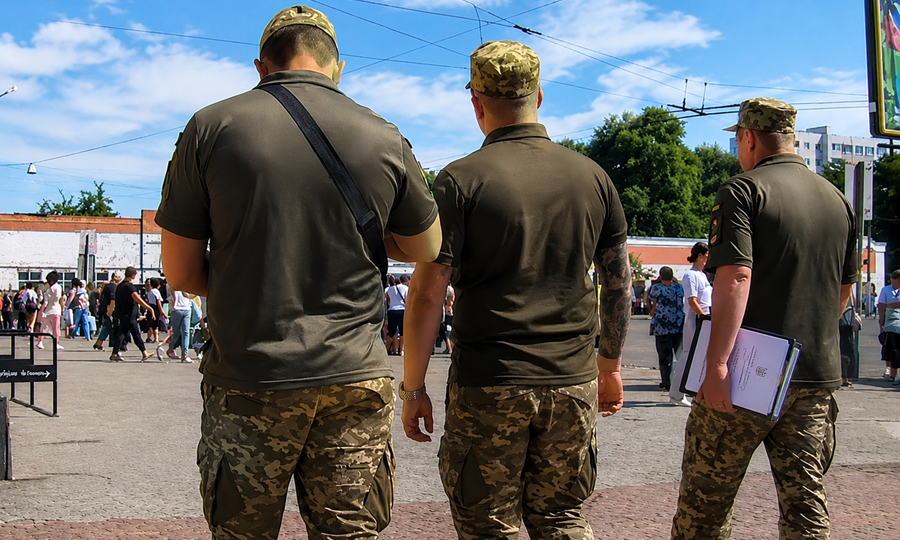
Let us consider one of hundreds of similar stories of a conscript who was forcibly detained by representatives of the Territorial Recruitment Center (TRC), held for four days ignoring court orders for his release, and after a fictitious medical commission forcibly mobilized. The court, as usual in such cases, recognized the conscription as illegal but faced a legal collision regarding further service. Despite recognizing the TRC's actions as unlawful, the plaintiff remains a serviceman due to the specifics of the Supreme Court's practice regarding the “irreversibility of conscription.” However, this conscript's case can be considered successful, so we analyze how this legal paradox works and what position should be taken when challenging the irreversibility of mobilization.
Three days of uncertainty and ignoring justice
The citizen was forcibly taken by unknown persons to the premises of the district TRC. For four days, the man was held inside without communication means—the mobile phone was confiscated by TRC employees.
Even after the intervention of a lawyer and receiving the ruling of the Industrial District Court dated 26.11.2024, which obliged the immediate release of the plaintiff, TRC officials ignored this order. Only the arrival of the police investigative-operational group confirmed the fact of illegal detention, which became grounds for opening criminal proceedings under Article 146 (illegal deprivation of liberty) and Article 382 (non-execution of a court decision) of the Criminal Code of Ukraine.
The plaintiff claimed that he did not actually undergo a medical examination because he did not have medical documents and refused the procedure. The court, examining the materials, established that the TRC did not provide evidence of proper referral of the plaintiff to the medical commission. The procedure for obtaining health data from the electronic health system or outpatient records before the examination was also violated.
The defendant could not prove on what grounds the plaintiff was held in the district TRC premises from November 23 to 27 until the conscription order was issued.
The court concluded that in the absence of a mobilization order or summons, the plaintiff had no obligation to appear at the assembly point, and forced delivery contradicted Articles 19 and 29 of the Constitution of Ukraine.
Dnipropetrovsk District Administrative Court in case No. 160/6554/25 concluded: if the authority cannot provide documents preceding the conscription, namely summons or orders, further mobilization actions are unlawful.
The district TRC had no right to independently send a person to a military unit, as by law this falls within the competence of regional TRCs.
“Effect of irreversibility”
The most controversial part of the decision is its partial implementation. The court recognized the TRC's actions as unlawful but denied the claims to exclude the plaintiff from the military unit's personnel lists.
Relying on the Supreme Court's legal position set out in the ruling dated 05.02.2025 in case No. 160/2592/23, the court stated that the conscription procedure is irreversible. After a person is entered into the unit's lists, they acquire the status of a serviceman, and release is possible only on grounds provided by Article 26 of the Law of Ukraine “On Military Duty and Military Service.” Thus, recognizing the illegality of conscription does not lead to automatic demobilization, creating a complex precedent for further lawsuits for release from service.
Victory of law over irreversibility
The Third Administrative Court of Appeal, in a panel reviewing this case, went further, stating that the judicial system cannot leave a citizen in the status of a serviceman if the conscription process itself was a chain of violations.
The appellate court confirmed that the citizen was delivered to the TRC by unknown persons on November 23, 2024, and held there for 4 days without communication. The court clearly stated: TRC has no right to detain citizens, this is the exclusive competence of the police.
The appeal also noted that the medical examination was conducted without tests and review of the medical record. The court emphasized that such an examination contradicts Regulation No. 402. Moreover, the formation of the team for dispatch took place at 10:00 the same day, indicating a pre-prepared examination result.
The most important part of the decision concerns the irreversibility of mobilization. The military unit relied on the Supreme Court's position that conscription is irreversible. However, the appellate court rejected these arguments, stating:
The first instance court's decision in this case was limited to recognizing the TRC's actions as unlawful but refused to cancel the conscription order and release the person from service. The court reasoned that since the plaintiff is already serving, the military unit's obligation to release him goes beyond the dispute about the conscription procedure. The appellate court recognized this approach as erroneous, stating that the court must ensure not just formal legality but the real restoration of violated rights.
The appellate court ordered the military unit to make a decision on the release of the person and exclude him from the personnel lists.
The court noted that military service is a “direct consequence of the mobilization order.” If the source, namely the TRC order, is declared illegal, its consequence cannot remain valid.
The panel of judges recognized that although the Law of Ukraine “On Military Duty and Military Service” does not explicitly provide for release on the grounds of “illegal mobilization,” priority is given to the norms of the Constitution and the Convention guaranteeing the right to freedom.
The court justified the need to release the person through a complex of international and national norms:
- Article 13 of the Convention: everyone has the right to a remedy that allows a national authority not only to establish the fact of violation but also to provide appropriate compensation or stop the violation. In this case, the only way to stop the violation is demobilization.
- Article 29 of the Constitution and Article 5 of the Convention: these norms guarantee the right to liberty and personal inviolability. The court pointed out that holding a person in service that began with illegal deprivation of liberty (detention by TRC without police involvement) and a fictitious conscription procedure is a continuing violation of the right to freedom.
- Article 8 of the Constitution: the court emphasized that authorities cannot act arbitrarily and issue obviously unlawful acts.
The court refused to accept references to the “irreversibility of conscription,” noting that each case has its own specifics and individual circumstances.
In previous cases where the Supreme Court spoke about irreversibility, plaintiffs usually challenged only the actions of the medical commission, not the conscription order itself. In case No. 160/6554/25, the subject was precisely an individual act.
Thus, according to this ruling, full restoration of rights (restitutio in integrum) is possible only with simultaneous cancellation of the conscription order and imposition on the military unit of the obligation to release the illegally conscripted person. This decision became final after the Supreme Court, by ruling dated 26.01.2026, returned the military unit's cassation appeal.
The military unit's cassation appeal was submitted to the Supreme Court at the end of 2025. However, the first review revealed deficiencies: lack of a document confirming payment of the court fee and evidence of sending copies to other participants.
The Supreme Court separately recorded that the ruling on extension of deadlines was delivered to the appellant's (military unit's) electronic cabinet on December 11, 2025, at 20:44. Despite this, as of January 26, 2026, no applications, motions, or evidence of fee payment had been received by the court.
Although the Supreme Court did not express a position on the fact of illegal conscription itself, its ruling left in force the decision of the Third Administrative Court of Appeal dated 02.10.2025, which canceled the conscription order due to forcible detention and violation of the medical commission procedure and obliged the military unit to release the citizen from service and exclude him from the lists.
Subscribe to our Telegram channel t.me/sudua and to Google News SUD.UA, as well as to our VIBER and WhatsApp, Facebook page and Instagram account to stay updated on the most important events.