Ignoring Territorial Recruitment Center Summons Does Not Automatically Mean Employee Dismissal: What Employers Need to Know


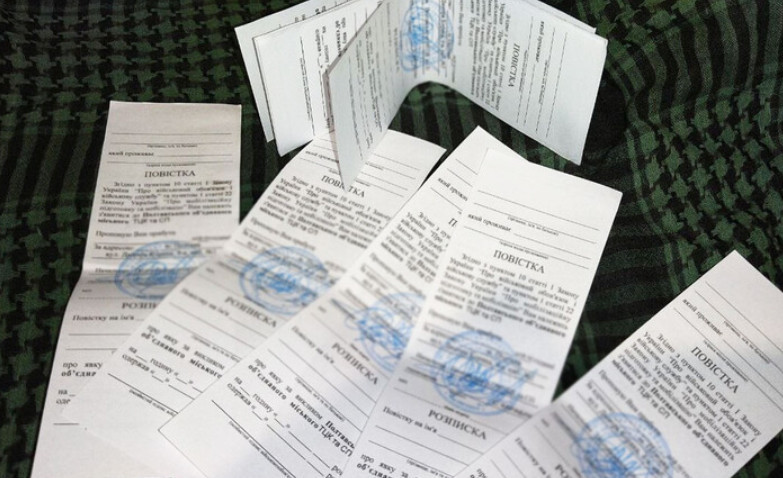










Recently, employers have had questions regarding employees who receive summons from the Territorial Recruitment Center (TRC) but do not appear when called. It is often assumed that if an employee systematically ignores summons, they can be dismissed. However, from the perspective of labor legislation, this is not the case. Further, "Judicial and Legal Newspaper" explains in detail the legislative norms and the rights and obligations of both employers and employees.
TRC Summons and Work: Is There a Ground for Dismissal?
The Labor Code of Ukraine contains a clear and closed list of grounds for employee dismissal. These are defined in Articles 36, 40, and 41 of the Labor Code. This list does not include grounds such as failure to appear at the Territorial Recruitment Center or ignoring a summons. Thus, the mere fact that an employee does not comply with TRC requirements does not give the employer the legal right to terminate the employment contract.
It should also be noted that the employer is not the body responsible for controlling the fulfillment of military duty and cannot apply labor sanctions for this.
At the same time, on October 31, 2025, the President of Ukraine signed Law No. 4630-IX, which amends laws regarding the organization of labor relations under martial law and clarifies the rules for reserving and employing military-registered employees of critically important enterprises, particularly in the defense industry.
The document provides for the possibility of temporary reservation of employees even in the presence of military registration violations — absence or improper documentation, failure to update data, or being wanted — for up to 45 days from the date of employment. If violations are corrected, the employee is subject to further reservation on general grounds; however, reservation does not exempt from responsibility for violations of military registration rules.
If the employee does not correct the violation within 45 days, the employer may initiate termination of employment relations according to the updated legislative norms.
The Ministry of Economy notes that dismissal of an employee who has not brought military registration documents into compliance during the probation period is the employer's right, not an obligation.
Under martial law, dismissal is also allowed:
- during sick leave or vacation (except for maternity leave and childcare leave up to 3 years)
- without agreement with the trade union (except for dismissal of trade union members)
Who Is Responsible for Failure to Appear at the TRC
Military registration issues are regulated by special legislation — in particular, the Law of Ukraine "On Military Duty and Military Service" No. 2232-XII and the Law of Ukraine "On Mobilization Preparation and Mobilization." These acts define the citizen's obligation to appear when summoned by the TRC.
Control over compliance with these requirements is exercised by authorized bodies — TRC, police, and courts.
Despite the absence of a direct ground for dismissal due to TRC summons, employment relations may be terminated on general grounds defined by the Labor Code. Most often these are: paragraph 4 part 1 article 40 of the Labor Code — absenteeism without valid reasons; paragraph 3 part 1 article 40 — systematic failure to perform labor duties; other grounds provided in Articles 36 and 41. However, in all cases, the employer must prove the violation of labor discipline itself, not the fact of the employee's interaction with the TRC.
Can Dismissal Occur Due to "Absenteeism"?
There is an option sometimes applied in practice — dismissal for absenteeism. According to paragraph 4 part 1 article 40 of the Labor Code of Ukraine, absenteeism is absence from work without valid reasons, including absence for more than three hours during a working day without valid reasons. But the key point is the concept of "valid reasons."
If an employee is absent because they were summoned to the TRC and has confirmation of this (a summons, order, or other document), such a reason may be recognized as valid.
Thus, the mere fact of ignoring a summons does not automatically equal absenteeism. The employer is obliged to assess each situation individually and have confirmation of absence without valid reasons.
However, an employee cannot be dismissed for absenteeism if their workplace is in an active combat zone and the absence is related to these circumstances.
Separately, situations with so-called TRC orders are considered. A TRC order itself is not a ground for releasing an employee from work with retention of the job and average salary. This follows from the provisions of part 2 article 21 of Law No. 2232-XII, which refers to release from work in cases of performing duties related to military registration or medical examinations, but with proper documentary confirmation.
It should be emphasized that an order does not mean mobilization and does not confirm enrollment in military service. Therefore, there are no grounds for applying guarantees provided by article 119 of the Labor Code in such cases.
Employer Obligations: What Needs to Be Done in Practice
The employer has no right to dismiss an employee solely because of a TRC summons or order. However, they have other obligations related to military registration. In particular, the enterprise must:
- deliver summons received from the TRC to employees,
- record refusal to receive or failure to appear,
- notify the TRC of such cases.
These obligations directly arise from the legislation on military registration.
If a summons arrives at the enterprise: The employer issues a notification order, familiarizes the employee with it under signature, ensures their appearance (releases from work), and reports to the TRC.
If the employee refuses to sign the summons: The employer draws up a commission report on the refusal and submits it to the TRC. At this point, the employer's mission is complete — dismissal for this is not allowed.
Violations of military registration rules are fined exclusively by the TRC under article 210-1 of the Code of Administrative Offenses (fines for enterprise officials currently range from 17,000 to 25,500 UAH).
What to Do If You Believe Your Dismissal Is Illegal
Dismissal is illegal if it is carried out without legal grounds or in violation of legislative requirements. That is, both the reason for dismissal and the procedure must comply with the law.
Cases where dismissal may be illegal include:
- absence of a legal ground — for example, dismissal at own will without the employee's corresponding application
- violation of dismissal procedure — for example, failure to observe notice periods, absence of trade union consent (if required), etc.
- violation of guarantees for certain categories of employees (pregnant women, single mothers, minors, etc.)
- dismissal is discriminatory or repressive — for example, due to a complaint against the employer.
In case of doubts about the legality of dismissal, one can seek clarification from the State Labor Service of Ukraine.
How to Act in Case of Illegal Dismissal
There are two ways to be reinstated at work:
- pre-trial
- judicial.
You can start with pre-trial settlement or immediately go to court.
An employee may appeal to:
- the employer — with a demand to voluntarily reinstate them at work
- the territorial office of the State Labor Service — which can inspect the employer and issue an order to eliminate violations
- the trade union (if established) — which can represent the employee's interests in resolving labor disputes with the employer.
A labor dispute can also be resolved through mediation. Based on its results, the parties may record the reached agreements in a written contract.
In case of illegal dismissal, the employee can file a lawsuit for reinstatement and recovery of average earnings for the forced absence period. The lawsuit must be filed within 1 month from the date of receipt of the dismissal order copy.
Plaintiffs in reinstatement cases are exempt from paying court fees.
If the claim is satisfied, the court issues a decision on:
- reinstatement at work
- and payment of average earnings for the forced absence period or the difference in earnings for performing lower-paid work.
The court decision on reinstatement is subject to immediate execution.
In conclusion, the issue of responsibility for summons is regulated not by labor law but by administrative and criminal legislation. In particular: articles 210, 210-1 of the Code of Administrative Offenses provide fines for violations of military registration rules; article 336 of the Criminal Code of Ukraine provides liability for evasion of conscription during mobilization. These measures are applied exclusively by authorized state bodies. The employer has no right to record military registration violations or apply sanctions for them.
Ignoring TRC summons by an employee alone does not create grounds for dismissal. The employer cannot substitute state bodies and resolve military registration issues of employees. Their actions must be limited to labor legislation: recording absence, assessing the validity of reasons, and applying procedures provided by the Labor Code.
If the employee's absence is not related to the TRC but is an actual violation of labor discipline, then general grounds for dismissal may apply. Such differentiation helps avoid employer errors and labor disputes, which become especially sensitive under martial law.
Subscribe to our Telegram channel t.me/sudua and to Google News SUD.UA, as well as our VIBER and WhatsApp, pages on Facebook and Instagram to stay updated on the most important events.