The problem of staff shortage in appellate courts: The High Council of Justice refused to bring judges Tetiana Tiutiun and Ivan Mosiondz to disciplinary responsibility


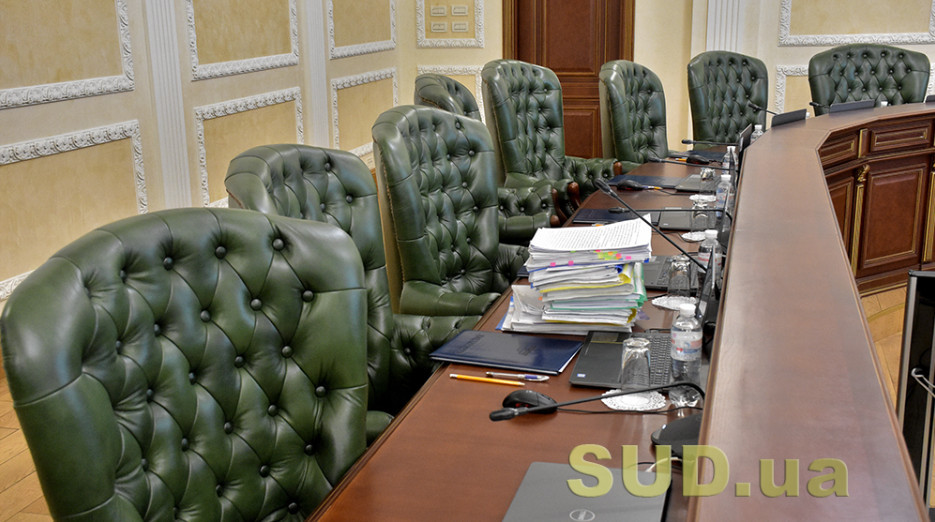










The Second Disciplinary Chamber of the High Council of Justice considered a combined disciplinary case regarding judges of the Kyiv Appellate Court Tetiana Tiutiun and Ivan Mosiondz. The basis were disciplinary complaints filed by lawyer Illia Serafimov in the interests of Oksana Subotovych, as well as other complaints concerning delays in preparing full texts of court decisions.
Circumstances of the case
The complaints concerned the consideration of appellate complaints in criminal proceedings. In one of them, the appellate proceeding was opened in autumn 2023, the decision to change the verdict of the Shevchenkivskyi District Court of Kyiv was made in January 2025. The full text of the decision was prepared only in November 2025 — with a delay of almost 10 months. A similar situation occurred in another case, where the ruling to cancel the decision of the investigating judge was registered in the Unified Register of Court Decisions with a significant delay.
Tetiana Tiutiun acted as the reporting judge in these cases. The complainants, in particular lawyer Illia Serafimov in the interests of Oksana Subotovych, indicated that delays in preparing full texts of decisions violate the requirements of Article 376 of the Criminal Procedure Code of Ukraine, depriving participants in the process of the opportunity to timely execute the verdict and claim compensation for damages.
Judges' position
The judges explained the delays by the excessive workload of the Kyiv Appellate Court. The staff number of judges in the criminal chamber significantly exceeds the actual number (according to the judges — by several times). Tetiana Tiutiun and Ivan Mosiondz noted that they consider dozens of cases weekly, work including on weekends, take vacations to temporarily reduce the workload, and also face a shortage of court staff (lack of secretaries and assistants). The judges emphasized objective reasons — martial law, air raid alerts, complexity of cases, and the necessity of quality motivation of decisions rather than a formal approach.
Tetiana Tiutiun pointed out that she had previously received a warning (decision of the Third Disciplinary Chamber dated June 4, 2025), but the misconduct has a continuing nature due to systemic workload.
Decision of the Second Disciplinary Chamber
The rapporteur proposed to bring Tetiana Tiutiun to responsibility in the form of a reprimand with deprivation of salary supplements for one month and to refuse to bring Ivan Mosiondz to disciplinary responsibility. After discussion and voting, the chamber rejected this proposal.
As a result of the consideration, the Second Disciplinary Chamber of the High Council of Justice refused to bring judges of the Kyiv Appellate Court Tetiana Tiutiun and Ivan Mosiondz to disciplinary responsibility and terminated the disciplinary proceedings against them.
It is worth noting that the consideration of these disciplinary complaints highlighted the acute problem of excessive workload on appellate court judges, especially under martial law conditions and significant staff shortages. The actual number of judges in criminal chambers often amounts to less than half of the staff number, leading to systemic overload, work on weekends, and forced postponement of deadlines for preparing motivated decisions. The disciplinary body in this case took into account objective circumstances when assessing misconduct related to the timing of preparing motivated decisions, which may become an important precedent for similar cases in the future.
Subscribe to our Telegram channel t.me/sudua and to Google News SUD.UA, as well as to our VIBER and WhatsApp, our page on Facebook and on Instagram to stay informed about the most important events.