The Supreme Court published a review of the ECtHR practice for May


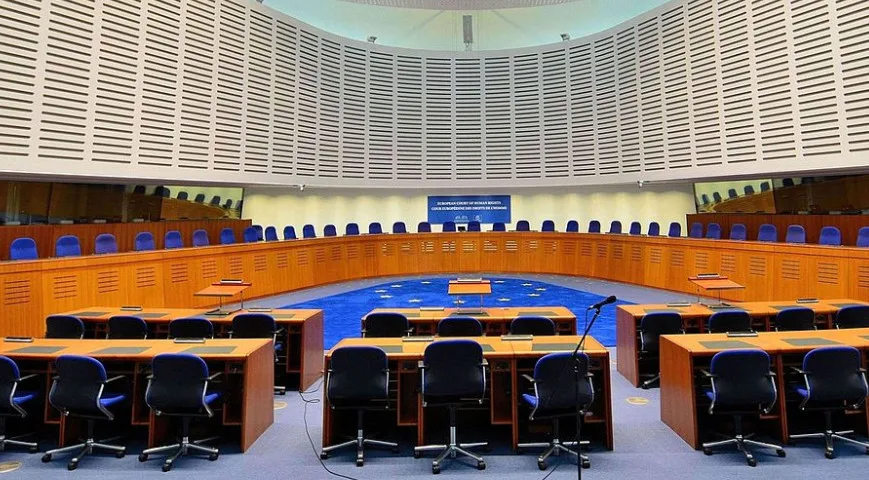










The Supreme Court has published a review of the practice of the European Court of Human Rights based on decisions made in May 2026.
This review, in particular, reflects a number of ECtHR decisions regarding the compliance of Member States with the requirements guaranteed by the Convention for the Protection of Human Rights and Fundamental Freedoms.
In the case of Miladze v. Georgia, the applicant was held administratively liable for a video published on TikTok in which he criticized the new transport policy of Tbilisi. The video contained coarse profanity and personal insults directed at the mayor of the city and police officers. National courts found the applicant guilty of disturbing public order under the Code of Administrative Offenses and imposed a fine. The courts considered that since social networks play an important role in public life, they should be regarded as a "space where public order may be disturbed," and concluded that the applicant’s profanity constituted an unjustified insult to specific public officials, contributing to no public debate, and therefore was not protected under Article 10 of the Convention.
The ECtHR noted that a significant part of the video consisted of verbal aggression without any informational value, and Article 10 of the Convention does not protect against unjustified personal insults. Furthermore, the speed of the video’s spread on the TikTok platform, which is oriented towards minors, intensified the negative impact of the applicant’s statements. Considering that the national courts conducted a structured analysis of the balance of interests and the imposed punishment was limited to a minimal fine, the ECtHR concluded that the interference was proportionate and necessary in a democratic society. Under these circumstances, the ECtHR found no violation of Article 10 of the Convention.
The case of Idris Akhundov v. Azerbaijan concerned the termination of pension payments to the applicant, a former police officer, due to old age. The payments were stopped at the initiative of the Ministry of Internal Affairs of Azerbaijan because the applicant allegedly received political asylum in Germany. National courts upheld this decision, stating that a person cannot simultaneously benefit from social security systems of two states.
The ECtHR found that the termination of payments constituted an interference with the applicant’s right to peaceful enjoyment of possessions. The key issue was the legality of such interference. The Court noted that the first and most important requirement of Article 1 of Protocol No. 1 to the Convention is the existence of a basis in national law; however, neither the national courts nor the Government cited any provision of national law that could serve as a legal basis for terminating the pension payments. Under these circumstances, the Court concluded that the interference did not comply with the principle of "legality" and found a violation of Article 1 of Protocol No. 1 to the Convention.
Subscribe to our Telegram channel t.me/sudua and to Google News SUD.UA, as well as to our VIBER and WhatsApp pages, and follow us on Facebook and Instagram to stay informed about the most important events.