Representation of the state's interests by the prosecutor in case of their improper protection by authorities: ruling of the Administrative Court of Cassation of the Supreme Court


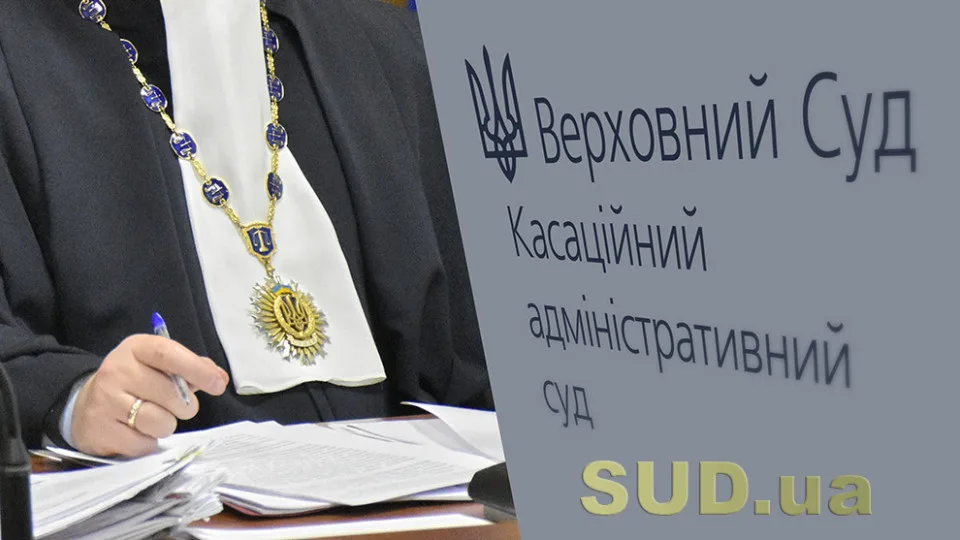










The Administrative Court of Cassation of the Supreme Court considered a case regarding the recognition of the unlawful inaction of the village council concerning the failure to order the development and approval of the historical and architectural reference plan of a historic settlement.
The disputed issue is whether the prosecutor has the authority to represent the interests of the state in court given the existence of state authorities (the Ministry of Culture and the Department of Culture and Tourism of the Ternopil Regional Military Administration), which are independent legal entities with corresponding procedural capacity and implement state policy in the field of cultural heritage protection. This was reported by the Fifth Administrative Court of Appeal.
Part 3 of Article 23 of the Law of Ukraine dated 14.10.2014 No. 1697-VII "On the Prosecutor’s Office" defines exclusive cases of such representation by the prosecutor of the state’s interests in court: in case of violation or threat of violation of the state’s interests if the protection of these interests is not carried out or is improperly carried out by a state authority, local self-government body, or another subject of authority to which the relevant powers are assigned, as well as in the absence of such an authority.
The prosecutor who applies to the court in the interests of the state must substantiate in the claim or other application, complaint, the nature of the violation of the state’s interests, the necessity of their protection, the grounds defined by law for the prosecutor’s appeal to the court, and also indicate the authority empowered by the state to perform the relevant functions in the disputed legal relations. Failure to comply with these requirements results in the application of the provisions of Article 169 of the Code of Administrative Procedure of Ukraine.
The Administrative Court of Cassation of the Supreme Court noted that the prosecutor may represent the interests of the state in an administrative case if the competent authority does not protect or improperly protects these interests, as well as in the absence of such an authority.
By addressing the relevant competent authority before filing a claim in the manner provided by Article 23 of Law No. 1697-VII and Part 4 of Article 53 of the Code of Administrative Procedure of Ukraine, the prosecutor effectively gives it the opportunity to respond to the alleged violation of the state’s interests, in particular by appointing an inspection of the facts of the violation of the law identified by the prosecutor, taking actions to correct the situation, namely filing a claim or submitting a reasoned notice by the prosecutor about the absence of such a violation.
The failure of the competent authority to take any measures within a reasonable period after it became or should have become aware of a possible violation of the state’s interests must be qualified as inaction of the respective authority. The reasonableness of the period is determined by the court taking into account whether the state’s interests required urgent protection, as well as factors such as the significance of the violation of the state’s interests, the possibility of irreversible negative consequences due to the inaction of the competent authority, the presence of objective reasons that prevented such an appeal, etc.
The Administrative Court of Cassation of the Supreme Court also drew attention to the fact that the Constitutional Court of Ukraine, by its decision dated 03.12.2025 No. 6-r(II)/2025, declared unconstitutional certain provisions of paragraph 1 of part 3 of Article 23 of Law No. 1697-VII in that they grant the prosecutor the possibility to represent the state’s interests in court due to the non-performance or improper performance of the protection of these interests by a state authority, local self-government body, or another subject of authority to which the relevant powers are assigned.
Points 3 and 4 of the operative part of the Constitutional Court’s decision also state that certain provisions of paragraph 1 of part 3 of Article 23 of Law No. 1697-VII, which were declared unconstitutional, will lose effect from 01.01.2027, and that this decision does not apply to legal relations regarding the prosecutor’s representation of the state’s interests in court that arose during the validity of the provisions of part 3 of Article 23 of Law No. 1697-VII declared unconstitutional and continue to exist after their expiration.
The Administrative Court of Cassation of the Supreme Court established that the authorities empowered by the state to perform the relevant functions in the disputed legal relations, knowing about the ongoing violation of the state’s interests in the field of cultural heritage protection at least since 2020-2021, limited themselves to correspondence with the defendant, which did not lead to the elimination of the violation, and after receiving the prosecutor’s notifications, within a reasonable period, did not independently apply to the court with a claim against the village council and directly confirmed the absence of intention to take such actions in the future.
Thus, at the time the prosecutor applied to the court with this claim, the Ministry of Culture and the Department of Culture and Tourism of the Ternopil Regional Military Administration were effectively not protecting the state’s interests in court, which according to part 3 of Article 23 of Law No. 1697-VII is grounds for the prosecutor to represent the lawful interests of the state on behalf of these authorities. Moreover, in this case, the prosecutor substantiated not an abstract interest of the state but a specific public interest in ensuring the legal regime of protection of a historic settlement included in the List of Historic Settlements of Ukraine.
Under these circumstances, the Administrative Court of Cassation of the Supreme Court considers that the appellate court reached an unfounded conclusion about the prosecutor’s failure to confirm the right to apply to the court in the interests of the state, and therefore had no grounds to leave the claim without consideration under paragraph 1 of part 1 of Article 240 of the Code of Administrative Procedure of Ukraine.
The ruling of the Administrative Court of Cassation of the Supreme Court dated 17.06.2026 in case No. 500/5037/24 can be found at this link.
Subscribe to our Telegram channel t.me/sudua and to Google News SUD.UA, as well as to our VIBER and WhatsApp, our pages on Facebook and Instagram to stay informed about the most important events.