American grant, prosecutor tests and 80% to FOPs: what the investigation checked in the case regarding CPC












After the recent visit of the Prosecutor General of Ukraine to the United States, the legal community and law enforcement agencies intensified discussions of a number of high-profile criminal proceedings related to the use of international technical assistance funds.
According to sources familiar with the negotiations, law enforcement agencies resumed investigative actions on which further procedural decisions in a number of high-profile proceedings concerning the use of international technical assistance funds for prosecution reform may depend, including the high-profile criminal proceeding No. 42016000000000688.
This raises a number of critical questions for legal practice regarding procedural independence, statutes of limitations, and the nature of international cooperation in criminal cases.
Did the American side really change its position and did the Ukrainian Prosecutor General receive the green light to resume the investigation? The editorial office has no official confirmation of this information from the Office of the Prosecutor General or the American side. According to sources of Sudovo-Yurydychna Gazeta, during contacts between the Ukrainian and American sides, the issue of further investigation of the criminal proceeding was discussed.
The case remains one of the longest among investigations related to the use of international technical assistance and grant programs in Ukraine. After more than ten years, a final point has not yet been put, and the further development of events will depend on the decisions of law enforcement agencies, the court, and international partners.
Procedural “stop” in 2016 and resumption in 2026
The history of the proceeding has a clear political-legal break. The proceeding was opened back in March 2016 on signs of possible embezzlement of international technical assistance funds allocated for the reform of criminal justice in Ukraine. However, in May of the same year, after Yuriy Lutsenko was appointed Prosecutor General, investigative actions were suddenly stopped. The prosecutor publicly called the case one that disgraced the Prosecutor General's Office.
Rulings indicating the resumption of investigative actions
This is the most relevant group of decisions indicating the procedural renewal of a decade-old case.
In March 2026, the investigative judge of the Pechersky Court considered a prosecutor's motion for temporary access to things and documents. However, the prosecutor filed a motion to return the application for revision, which was granted by the court. This indicates some preparatory activity by the prosecution.
By the ruling dated 12.03.2026, the Pechersky District Court of Kyiv granted the motion of the Prosecutor General's Office prosecutor and allowed temporary access to documents of the U.S. Department of State and the INL Bureau regarding the international technical assistance project No. 3313. The investigation is seeking reports on the results of the project implementation, acts of completed works, invoices, and payment orders to verify the legality of using $4.4 million.
Case history: Project No. 3313 and funding of criminal justice reform
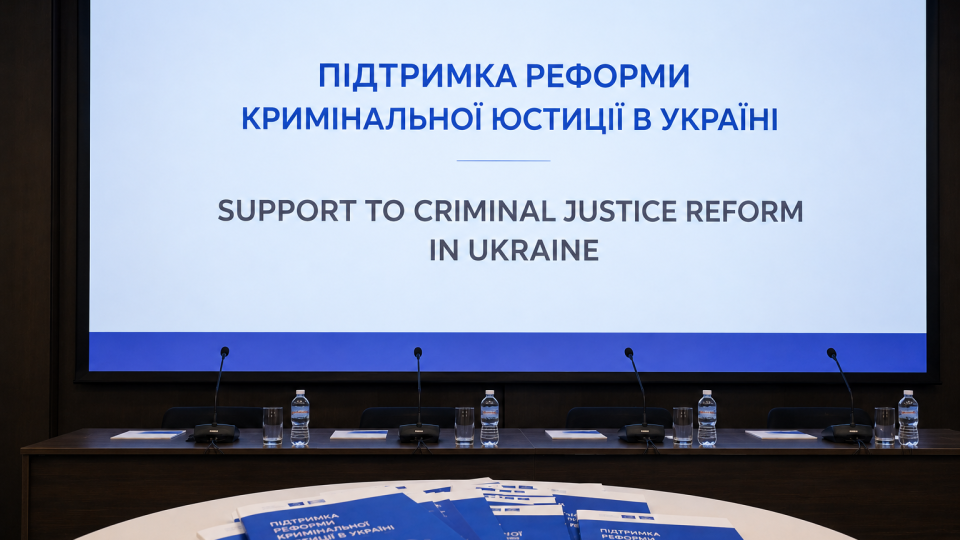
To understand the essence of the legal dispute, it is necessary to refer to the origins of the funding. During 2014–2016, Project No. 3313 “Support for Criminal Justice Reform in Ukraine” was implemented in Ukraine, with a total cost of $4.4 million.
The main donors of the project were the U.S. Government and the Bureau of International Narcotics and Law Enforcement Affairs (INL) of the U.S. Department of State.
The official beneficiary and recipient of state assistance was the Prosecutor General's Office of Ukraine (PGO), where David Sakvarelidze was designated as the responsible person for the beneficiary, and Hennadiy Kachibay was the project contact person. The Academy of the Prosecutor's Office of Ukraine was also involved in reviewing tests for prosecutors. At the same time, non-governmental organizations played an important role in implementing related tasks, in particular the NGO “Anti-Corruption Center” (CPC).
The criminal proceeding was initiated on March 16, 2016, under Part 5 of Article 191 of the Criminal Code of Ukraine — embezzlement or misappropriation of property by abuse of official position in especially large amounts. The reason for opening the case was an official parliamentary appeal by People's Deputy Ihor Suslov.
According to the investigation, project funds were used through the mechanism of involving public organizations and individual entrepreneurs (FOPs).
In March 2016, the Pechersky Court of Kyiv granted the PGO investigators access to the bank accounts of the NGO “Anti-Corruption Center.” The justification stated that the PGO as beneficiary did not receive funds and did not conclude contracts, and the assistance might have been used improperly.
Overall, in March and May 2016, investigators obtained more than 27 permits for access to documents in the Treasury, the National Bank of Ukraine, and commercial banks.
Scheme of fund movement and position of investigative bodies
According to the verification materials analyzed by law enforcement, the financial interaction model between donors and implementers looked as follows:
U.S. Government / INL — Project No. 3313 — NGO “CPC” — Individual Entrepreneurs (FOPs)
Analytical notes of law enforcement agencies stated that:
- Approximately 80% of the funds received by the NGO “CPC” were transferred to the accounts of individual entrepreneurs (FOPs) based on civil law contracts for the provision of various services (expert research, analytics, IT solutions development, etc.).
- The materials separately mention Vitaliy Shabunin, co-founder of the NGO “CPC,” who, according to the report, as an FOP received approximately UAH 800,000 for work/services performed. The mere fact of receiving funds does not indicate a violation of the law and is subject to evaluation by law enforcement agencies.
On their part, the involved expert group (including M. Buromensky, O. Serdyuk, L. Moskvich, S. Hizimchuk, S. Pohrebnyak, A. Lapkin, T. Kalmykov, I. Yakovets, K. Husarov, S. Syrotenko) provided purely scientific and methodological support for the project, including the creation and validation of testing tools for personnel renewal in the prosecution.
Did international partners influence the course of the investigation into grants for prosecution reform?
To ensure objectivity and comprehensiveness of the legal analysis, it is necessary to record the position of the party that provided financial assistance. Official Washington took a clear and unequivocal position in the Project No. 3313 case.
The U.S. Embassy in Ukraine, represented by then-Ambassador Geoffrey Pyatt, repeatedly emphasized that “there are no claims regarding the use of assistance.” The American side stressed that the allocated funds were strictly controlled according to U.S. internal audit standards, and there are no grounds to consider the targeted grants “embezzled” or “misappropriated” within the meaning of the Ukrainian Criminal Code.
Thus, a serious legal collision arises: can embezzlement or misappropriation be charged if the owner (donor) declares no losses and full compliance with the contract terms, and did international partners influence the course of the investigation into grants for prosecution reform?
Key questions that remain open for society and the investigation
Regardless of the discussions, important legal and procedural questions remain.
If the investigation has objective, proper, and sufficient evidence of possible violations of national legislation when transferring funds to FOPs, society and the legal community have the right to expect appropriate procedural decisions such as the announcement of suspicions or referral of the case to court.
If such evidence is insufficient or the U.S. Embassy’s position negates the crime element, society has a legitimate right to know the reasons why this criminal proceeding has remained open for over ten years.
Analysis of criminal proceeding No. 42016000000000688 demonstrates a complex balance between the internal jurisdiction of the state and international obligations in the field of technical assistance. Sources suggest that the activation or, conversely, potential closure of this case after international visits by the leadership of the Office of the Prosecutor General may indicate a search for legal consensus.
However, from a legal standpoint, the final decision in this case must be made exclusively by the court. Any political interpretations must give way to legal analysis of evidence. Only absolute transparency, observance of reasonable time limits, and completion of the process can eliminate numerous assumptions accumulated around this case.
The editorial notes that at the time of publication, no person has been notified of suspicion in the mentioned criminal proceeding, and information about a guilty verdict is absent. The circumstances presented in the material are at the pre-trial investigation stage and require final legal evaluation by authorized bodies.
Author: Volodymyr Pravo
Subscribe to our Telegram channel t.me/sudua and to Google News SUD.UA, as well as to our VIBER and WhatsApp, page on Facebook and on Instagram to stay updated on the most important events.