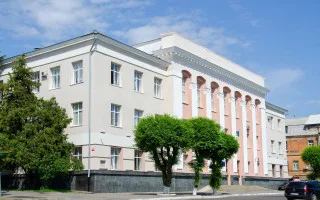
Ihor Dashutin explained why the Cassation Administrative Court of the Supreme Court reduces the number of judges in panels to three


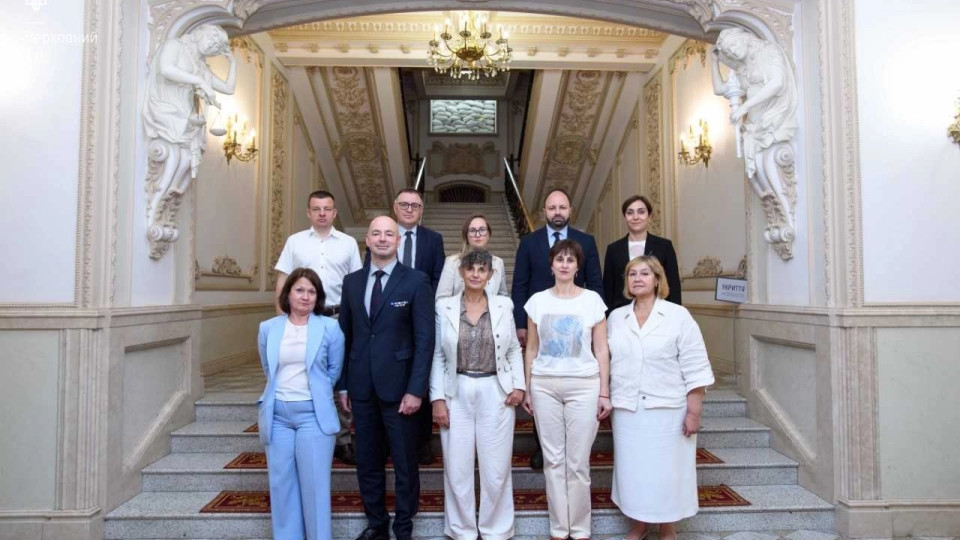










A meeting was held at the Supreme Court with a delegation from the Secretariat of the European Council dedicated to the implementation of the European Court of Human Rights decisions regarding Ukraine, judicial independence, the duration of court proceedings, and the review of Supreme Court cases following ECHR rulings.
During the meeting, the parties focused on discussing systemic problems grouped into case clusters:
- "Merit / Svitlana Naumenko v. Ukraine" (excessive length of case consideration in courts);
- "Denisov / Holovchuk v. Ukraine" (judicial independence);
- "Alakhverdyan v. Ukraine" (reinstatement and re-examination of cases after ECHR decisions);
- "Ignatov / Korneikova v. Ukraine" (detention conditions not meeting convention requirements).
The Supreme Court emphasized that for Ukraine, implementing ECHR decisions is not just an international obligation but a critical component of European integration, particularly within negotiation chapter 23 "Judicial Power and Fundamental Rights."
Among the reasons leading to the ECHR finding violations by Ukrainian courts of convention norms in case consideration, the Supreme Court named a shortage of personnel in courts and lengthy competitive selection procedures to fill vacant judicial positions. A significant challenge is also the full-scale Russian armed aggression, which has destroyed or damaged many courts, complicated judicial processes due to security threats, and led to the deployment of judges from courts located in temporarily occupied territories, which also increases the workload on national courts.
Deputy Chair of the Cassation Criminal Court within the Supreme Court, Natalia Antonyuk, drew attention to problems arising specifically in criminal jurisdiction that affect the duration of proceedings. The first problem is the abuse of procedural rights, especially in proceedings concerning corruption crimes. This segment requires legislative regulation to minimize opportunities for procedural rights abuse by parties in the case.
As one of the ways to optimize case review times, Natalia Antonyuk also mentioned the possibility of cassation review of certain cases in written proceedings without the appearance of participants, including in criminal jurisdiction. She reminded that the cassation instance is a court of law, not fact, so in many cases, the cassation court has enough documents in the case materials to make a decision. Relevant amendments to the Criminal Procedure Code of Ukraine have already been proposed within the Roadmap on the Rule of Law.
The parties paid special attention to optimizing court hearing times and implementing tools that can increase judicial efficiency.
The Chair of the Cassation Administrative Court within the Supreme Court, Ihor Dashutin, shared the practice of applying written proceedings in administrative cases.
He noted that usually there are enough materials in cases to decide on the merits in written proceedings, making this format optimal.
Continuing, the Chair of the CAS of the Supreme Court spoke about the initiative to reduce the number of judges in panels from five to three in cases that the CAS of the Supreme Court considers as a court of first instance. In his opinion, such a change will simplify case management and shorten case review times.
Subscribe to our Telegram channel t.me/sudua and to Google News SUD.UA, as well as to our VIBER and WhatsApp, our page on Facebook and on Instagram to stay informed about the most important events.