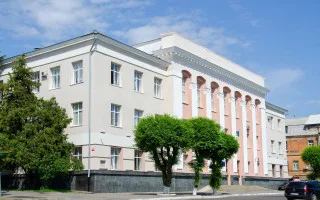
Court in Chernivtsi Confirms 15 Years Imprisonment for Woman for Transmitting Coordinates of the Armed Forces of Ukraine to the Russian Federation


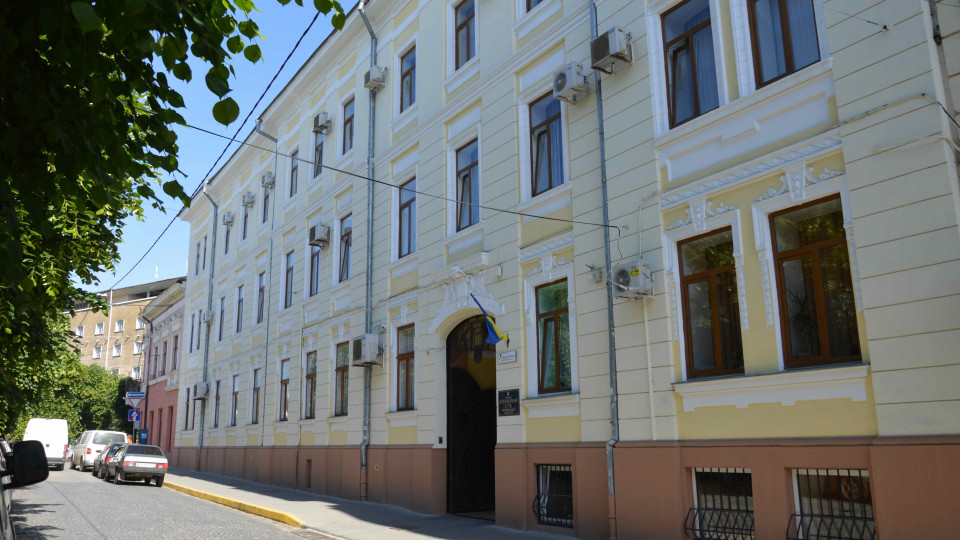










The Court of Appeal upheld the verdict regarding the transmission of information about the locations of units of the Armed Forces of Ukraine to representatives of the Russian Federation.
Case Details
The Chernivtsi Court of Appeal reviewed the appeals filed by the accused and her defense attorney against the verdict of the Shevchenkivskyi District Court of Chernivtsi in a criminal proceeding on charges of state treason committed under martial law conditions (Part 2, Article 111 of the Criminal Code of Ukraine).
By the verdict of the court of first instance, a resident of Donetsk region was found guilty of assisting representatives of a foreign state in conducting subversive activities against Ukraine and was sentenced to 15 years imprisonment with confiscation of all her property.
As established by the verdict of the court of first instance, from April 2023 to November 2024, the accused, while on the territory of Sloviansk and Kramatorsk in Donetsk region, intentionally searched for and collected information about the locations of personnel and military equipment of the Armed Forces of Ukraine and other military formations, and transmitted this information to a Russian citizen who worked at the military hospital of the Russian Ministry of Defense and, according to the criminal case materials, had stable contacts with representatives of Russian military intelligence. The information was transmitted via the Telegram messenger and a specialized chatbot controlled by Russian special services.
According to the court's conclusions, the accused voluntarily agreed to provide information about the locations and movements of personnel and military equipment of the Armed Forces of Ukraine to assist the Russian armed forces in inflicting fire damage on Ukrainian units. Her actions were intentional, motivated by ideology, and aimed at harming Ukraine's sovereignty, territorial integrity, defense capability, and national security.
Additionally, the criminal case materials indicated the accused's pro-Russian stance.
The court considered her correspondence with the Russian representative, which included greetings on Russia Day and positive reactions to the results of the Russian presidential elections.
The panel of judges noted that the transmission of information was not an isolated incident but had a systematic nature. Over a long period, the accused maintained contact with the Russian citizen and repeatedly transmitted information about the locations of Ukrainian Armed Forces units.
The Court of Appeal also took into account that the accused acted voluntarily, was aware of the nature of her actions and the possible consequences of the use of the transmitted information by representatives of the aggressor state. This was evidenced by the content of the correspondence, the covert method of collecting information, transmission of photo and video materials from the locations of Ukrainian military personnel, and the use of concealment measures after transmitting information by deleting messages and video recordings on the recommendation of the person with whom she was in contact.
One circumstance confirming the accused's awareness of the possible consequences of her actions was the content of her correspondence after transmitting information about the locations of Ukrainian military personnel.
Moreover, during the appeal hearing, the panel directly examined the results of data extraction from electronic information systems, which recorded the accused's conversations about the need to delete call history, clean the phone, and hide contacts, confirming her awareness of the illegality of her actions.
During the trial, the accused initially fully admitted guilt and confirmed the circumstances stated in the indictment, but later changed her position, denied involvement in the alleged criminal offense, and questioned the admissibility of some evidence. Disagreeing with the verdict, the accused and her defense attorney filed appeals challenging the admissibility of certain evidence, the results of covert investigative actions, the proof of guilt, and claimed that previous testimonies were given under psychological pressure.
The panel found no evidence supporting the accused's claims of psychological pressure, noting that these claims were checked by competent authorities, and the criminal case materials contained no objective data on violation of her right to defense.
After reviewing the defense arguments, the Court of Appeal concluded that they were unsubstantiated and contradicted by a set of proper, admissible, reliable, and interconnected evidence.
The panel also took into account the legal position of the Supreme Court, according to which in criminal proceedings concerning crimes against national security, evidence may include photo and video materials, mobile phone data, correspondence in private messengers, Telegram channels, and other electronic information carriers.
Court Decision
The Court of Appeal in case No. 243/5212/25 concluded that the verdict of the court of first instance is lawful, substantiated, and motivated, and the imposed punishment corresponds to the severity of the criminal offense, the nature of the committed acts, and the requirements of criminal law.
As a result of the appeal review, the Chernivtsi Court of Appeal left the verdict of the Shevchenkivskyi District Court of Chernivtsi unchanged, and the appeals of the accused and her defense attorney were dismissed.
The ruling of the Chernivtsi Court of Appeal came into legal force from the moment of its announcement and may be appealed in cassation within three months.
Subscribe to our Telegram channel t.me/sudua, Google News SUD.UA here, as well as our VIBER and WhatsApp, Facebook page and Instagram account to stay updated on the most important events.