Retiree Demanded That Non-Payment of Indexed Pensions Be Recognized as a “Criminal Offense” and Sought UAH 24 Million: What the Supreme Court Decided


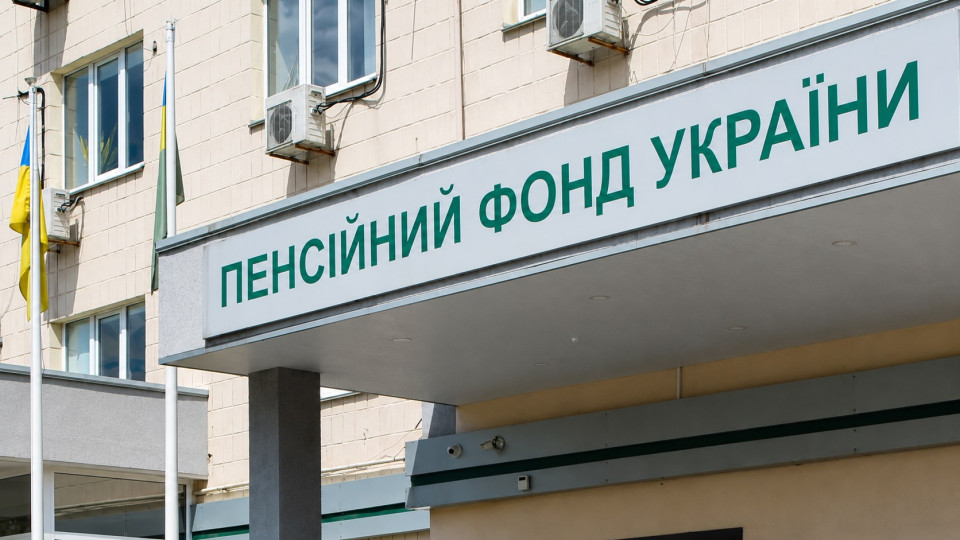










The Grand Chamber of the Supreme Court dismissed the appeal of a citizen who tried to recognize the state's inaction regarding the investigation of alleged crimes related to pension indexation, the activities of the Pension Fund, and other authorities as unlawful through an administrative court. The court agreed that such claims are not subject to consideration under administrative proceedings. This decision was made by the Grand Chamber in case No. 990/552/25.
According to the case details, the plaintiff filed a lawsuit against the state of Ukraine represented by the President of Ukraine. The plaintiff claimed that the creation of systematic debt to pensioners due to failure to fulfill the obligation of pension indexation constitutes a criminal offense. He also alleged the exposure of a large-scale corruption scheme in the pension provision sector and requested the court to recognize him as a whistleblower and to recover 24 million hryvnias in rewards from the state.
The Cassation Administrative Court within the Supreme Court refused to open proceedings. The court noted that the claims do not actually concern the challenge of executive decisions or actions of the President of Ukraine but are aimed at urging the head of state to exercise his constitutional powers as a subject of legislative initiative.
Disagreeing with this decision, the plaintiff filed an appeal to the Grand Chamber of the Supreme Court. The plaintiff believes that the contested ruling does not comply with substantive law and was made in violation of procedural law. According to the plaintiff, the first-instance court's reference to lack of jurisdiction is erroneous, and the refusal to open proceedings due to an improper defendant without proving this fact and without involving the proper defendant is illegal. The conclusion of the first-instance court that the head of state cannot be a defendant and the refusal to open proceedings on this basis are legally null and void and indicate incompetence or deliberate violation of legal norms by the court.
Position of the Grand Chamber
The Grand Chamber emphasized that according to part two of Article 55 of the Constitution of Ukraine, everyone is guaranteed the right to challenge in court decisions, actions, or inaction of state authorities and officials; however, the exercise of this right is carried out within established procedural forms. Administrative proceedings, as stated in Article 2 of the Code of Administrative Procedure of Ukraine, are aimed at resolving disputes in the field of public-law relations to protect the rights and interests of individuals from violations by subjects of executive powers.
At the same time, according to points 1 and 2 of part one of Article 4 of the Code of Administrative Procedure of Ukraine, an administrative case is a public-law dispute in which at least one party exercises public executive functions or provides administrative services based on law, and the dispute arises in connection with the performance or non-performance of such functions.
According to point 1 of part one of Article 19 of the Code of Administrative Procedure of Ukraine, the jurisdiction of administrative courts extends to disputes of individuals with subjects of executive powers regarding the challenge of their decisions, actions, or inaction, except in cases where another procedure for consideration of such disputes is established.
The Grand Chamber noted that under administrative proceedings, acts, actions, or inaction of the President of Ukraine can be challenged only when they are related to the exercise of his executive powers. However, the content of the claim indicates the plaintiff's disagreement with how the head of state exercises his constitutional powers in various spheres of social relations, including social security. Such claims do not constitute an administrative dispute.
Therefore, the Grand Chamber agreed with the first-instance court's conclusion that the claims do not concern the challenge of decisions, actions, or inaction of the President of Ukraine as a subject of executive powers but are aimed at urging the head of state to exercise his constitutional powers as a subject of legislative initiative and the right to constitutional submission, which is not covered by the tasks of administrative proceedings.
Additionally, the Grand Chamber rejected the appellant's arguments regarding the violation of the right to access to court, referring to the practice of the European Court of Human Rights, according to which the right to a court is not absolute and may be limited by admissibility conditions if such restrictions are proportionate and pursue a legitimate aim.
Considering the above, the Grand Chamber of the Supreme Court dismissed the appeal and left the ruling of the Cassation Administrative Court within the Supreme Court dated November 17, 2025, unchanged.
Subscribe to our Telegram channel t.me/sudua, Google News SUD.UA here, as well as our VIBER and WhatsApp pages, and follow us on Facebook and Instagram to stay updated on the most important events.