Andriy Levkovets on the real EU standards and pitfalls of the prosecutor's office reform: no European country allows foreign entities to form its state bodies


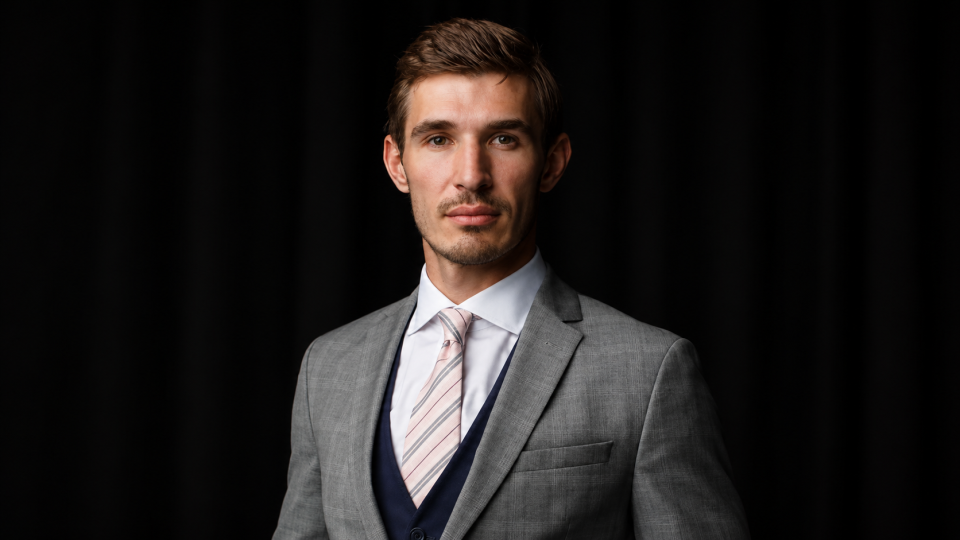










"Judicial and Legal Newspaper" spoke with Andriy Levkovets — an accredited parliamentary assistant, consultant to a Member of the European Parliament, and a specialist in European integration issues about the real European standards in the management of prosecutor's offices, risks of new draft laws, and the backstage of personnel reforms.
The discussion around changing the procedure for appointing the Prosecutor General of Ukraine has reached a new level. Legislative initiatives proposing to transfer key selection filters to a competition commission with decisive votes of foreign experts are often presented as an "imperative requirement of European partners." However, behind loud slogans often lie provisions that directly contradict the architecture of the Constitution of Ukraine and the basic principles of the rule of law.
Does Europe really require Ukraine to conduct such a competition? Why does the vagueness of the "integrity" criterion and the legislative ban on judicial appeal of the commission's conclusions open the door to large-scale manipulations? And how does the creation of a Secretariat controlled by international donors change the balance of power in personnel selection?
- Article 131-1 of the Constitution of Ukraine clearly states that the appointment and dismissal of the Prosecutor General are carried out by the President and the Verkhovna Rada, without mention of any competition commissions. In your opinion, does draft law No. 15343 create a situation where the law effectively changes the constitutional model, turning the President into a "technical executor" of the commission's decisions?
Andriy Levkovets: The Constitution indeed provides the powers of the President and the Verkhovna Rada to appoint the Prosecutor General, but it does not and cannot detail the procedure for exercising these powers. Therefore, one must look at the substance of the proposed procedure.
Formally, the law does not deprive the President and Verkhovna Rada of the powers granted by the Constitution, but the role of the commission in this case should be auxiliary, since it is not mentioned in the law as a subject of this process. Its role should only be supportive so that the President and Verkhovna Rada can properly exercise their functions, not decisive as proposed by the deputies.
- One of the key arguments of the draft's authors is the reference to "EU requirements" and European practice of competitive procedures for prosecutors. How do you assess this construction from the point of view of European standards: is this a real implementation of EU practices or rather a political compromise that creates a risk of "external veto" on the appointment of the Prosecutor General?
Andriy Levkovets: I would like to note that the EU does not require holding a competition. The EU states that Ukraine needs to review the procedure for appointing the Prosecutor General but does not specify that it must necessarily be a competition. Therefore, the information from the draft initiators is not accurate.
Moreover, the EU indicates that this procedure should be reviewed with the involvement of the Venice Commission. However, the draft law has not been sent to the Venice Commission for an opinion regarding its compliance with European or best practices.
Thus, there is a violation of obligations in general. If the law is adopted without the Venice Commission's opinion, it will violate the commitments Ukraine has undertaken under the Ukraine Facility Plan.
Regarding compliance with practices, for example, the Opinion No. 19 of the Consultative Council of European Prosecutors at the Council of Europe from 2024 states that Europe may have different practices depending on the state system, legal system, etc., and there is no single approach. Therefore, it cannot be asserted that a competition is the best practice.
Furthermore, as far as I know, no European country allows foreign entities to participate in forming state bodies — at least no democratic country. So there are serious questions about whether this law truly corresponds to European practices.
- The draft establishes extremely broad and subjective powers for the competition commission: does such a configuration comply with the Council of Europe's standards regarding the status of prosecutors and guarantees against arbitrary decisions of selection bodies?
Andriy Levkovets: Analyzing the provisions of the draft law through the lens of Opinion No. 19 of the Consultative Council of European Prosecutors (CCEP) shows that the procedure must be based on transparent and objective factors with safeguards against arbitrariness and politicization of the process.
The powers granted to the competition commission, in my opinion, exceed these criteria because the commission itself determines the criteria for evaluating candidates, for example, regarding integrity. Moreover, the concept of integrity itself is quite vague, allowing for possible manipulations and abuses.
The criteria for selecting prosecutors, according to the opinion of the Consultative Council of Prosecutors of the Council of Europe, should be accepted by both the professional community and society at large.
However, regarding the issue of integrity and its definition and evaluation criteria, the legal community has repeatedly expressed concerns that such definitions and procedures, including the lack of appeal possibilities, are non-transparent and allow for very strong manipulations.
Therefore, in this regard, the draft law also does not comply with best practices.
The draft explicitly prohibits appealing the commission's conclusions, including those regarding integrity, meaning the commission can do whatever it wants and simply declare any candidate as lacking integrity without any explanation, and this cannot be challenged.
The commission effectively becomes an uncontrolled body whose decisions do not require justification. Considering previous reforms' experience, when candidates were eliminated based on unsubstantiated media publications without proper legal weight, granting such absolute power to the commission poses a critical risk to the democratic nature of the process.
Therefore, in this matter, the commission's powers are too broad, and since its role is not provided by the Constitution, the commission will be taking over the powers of constitutional bodies of Ukraine, which definitely does not correspond to European practices.
It should also be noted that the proposed law contains obvious inconsistencies with the practical realities of conducting such competitions.
The text declares that previous decisions regarding candidates' integrity or lack thereof should not be taken into account. However, in practice — and we have repeatedly witnessed this — civil society representatives actively use retrospective references to past competitions, old conclusions, and even court decisions that have long been overturned. This is done instrumentally to create an artificial impression of alleged "lack of integrity" of a particular candidate.
Moreover, the draft contradicts itself at the level of elementary logic. While stating that old decisions should not be considered, it simultaneously allows any information about a candidate to be taken into account without any time limits. Thus, the law falls into its own trap: one norm tries to protect the process from old decisions, while another completely nullifies this prohibition, opening the door for permanent abuses.
- In your opinion, to what extent is the competition commission model in draft No. 15343 the result of a systematic analysis of European practices, and to what extent is it a product of the influence of a narrow group of activists and grant structures who have their own vision of the "correct" prosecutor's office?
Andriy Levkovets: The answer complements the previous one because, firstly, the commission is given the powers to assess candidates' integrity, compliance, and competence, while decisive roles are assigned to foreign experts.
However, foreign experts do not have a perfect command of Ukrainian legislation, nor do they understand the realities and challenges faced by the judicial system, law enforcement, and prosecution. Accordingly, they cannot handle this independently and will need assistance, which is usually provided by professional reformers who are professionally engaged in this activity and have the resources. Therefore, it is easy for them, effectively coordinating, to impose one or another decision on foreign entities.
Thus, suspicions that this draft law was introduced as a result of agreements among interested parties to implement their worldview and vision of how the prosecutor's office should look are not unfounded.
- Competitions for prosecutor positions, commission members, and heads of anti-corruption bodies often become a burden for international grants: funding analytics, monitoring, training, everything except reform. In your opinion, to what extent is the introduction of a new competition commission under draft No. 15343 a legally justified need of the system, and to what extent is it part of a grant ecosystem that operates under the logic: "there is reform — there is money for its support"?
Andriy Levkovets: This question is also related to the previous one because, as I mentioned, organizations involved in conducting such competitions usually receive funding for this. This is their direct interest and a direct result of the projects for which they receive money — to show their activity and participation in reforms. However, participating in reforms is one thing, and orchestrating these reforms is another.
The draft law explicitly provides that a secretariat is created for the commission's work, which can be funded by international technical assistance. This is a direct provision that will allow receiving money for this. Most likely, this is deliberately included to secure funding for certain organizations that will be engaged in this reform — not even the reform itself, but this competition.
At the same time, the draft does not define who and how should form this secretariat. Thus, there are opportunities for abuse to form the secretariat from the right people, representatives of the right organizations, who will convey the necessary opinions and views to foreign experts who do not understand Ukrainian legislation or realities.
Subscribe to our Telegram channel t.me/sudua and to Google News SUD.UA, as well as to our VIBER and WhatsApp, Facebook page and Instagram to stay informed about the most important events.