The Supreme Court confirmed the right to citizenship without documents: The State Migration Service cannot block passport issuance through the court


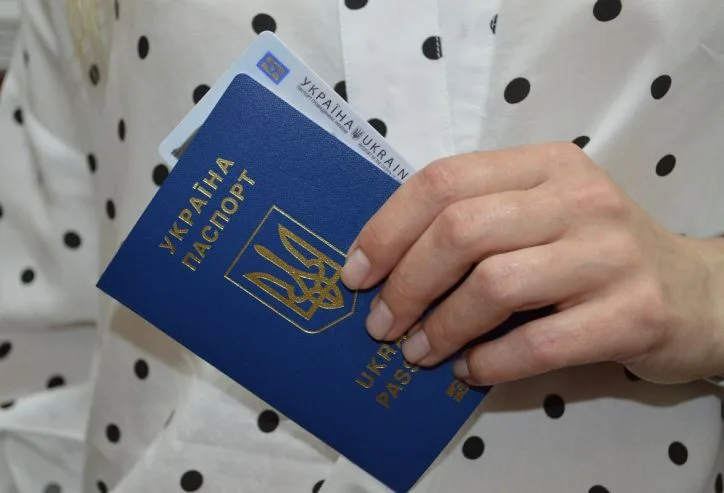










For the Ukrainian legal system, the issue of identifying individuals and confirming their legal connection to the state remains important, especially in the context of integrating certain social groups and communities whose members, due to various life circumstances, may remain without identity documents for a long time.
The Supreme Court ruling in case No. 947/13725/24 is an example of how the judiciary implements the task of civil proceedings — a fair and impartial consideration for the effective protection of an individual’s interests. The case concerns a man who has lived his entire life in Ukraine, yet without a passport, raising children and seeking to legalize his status, facing formal resistance from migration authorities.
The applicant was born in Odessa in 1990. His life story is typical for members of certain communities leading a closed lifestyle: he did not attend school, except for a short period in 2004, was not officially employed, and never had a Ukrainian citizen’s passport. He did not know his mother, as she left the family when he was 9 months old and was later declared missing.
The problem became acute when the applicant was unable to officially register his marriage with his partner, and their two children were registered under the mother’s surname according to Article 135 of the Family Code of Ukraine. An attempt to obtain a passport through the district department of the State Migration Service ended in refusal: the applicant’s identity could not be established through the administrative procedure. The only option was to appeal to the court through a separate proceeding.
Procedural path and change of positions
The court of first instance fully satisfied the claim, establishing the fact of the applicant’s residence in Ukraine as of August 24, 1991, and November 13, 1991 (the date of entry into force of the Law of Ukraine "On Citizenship of Ukraine").
The appellate court changed the decision, excluding the reference to November 13, 1991. The court reasoned that for the applicant’s purpose, namely acquisition of citizenship by territorial origin, it is sufficient to confirm residence at the time of the declaration of independence — August 24, 1991.
The State Migration Service appealed these decisions to the Supreme Court, insisting on the lack of evidence and arguing that the case involves a dispute over a right that cannot be considered in a separate proceeding.
The Supreme Court dismissed the State Migration Service’s cassation appeal. The Supreme Court noted that the question of the legal significance of a fact is resolved depending on the purpose set by the applicant. In this case, the purpose is to obtain a passport and formalize belonging to Ukrainian citizenship according to Article 3 of the Law "On Citizenship of Ukraine."
According to paragraph 1 of part 1 of Article 3 of the Law, citizens of Ukraine are all citizens of the former USSR who permanently resided on the territory of Ukraine as of August 24, 1991. Procedure No. 215 explicitly provides that in the absence of documents for citizenship registration, a corresponding court decision is submitted.
The court rejected the State Migration Service’s arguments that the case should be considered in a lawsuit proceeding. Establishing the fact of residence is only a prerequisite for further appeal to migration authorities, not a challenge to their actions or a demand to recognize the right to citizenship directly by the court.
The court recognized as proper evidence the birth certificate issued in Odessa in 1990, a school certificate of attendance in 2004, and testimony that the applicant was raised by his father, who permanently resided in Ukraine.
When adopting the ruling, the Supreme Court took into account the legal conclusions of the United Chamber of the Cassation Civil Court, set out in the ruling dated March 25, 2024, in case No. 161/9609/22. The court confirmed that in cases of acquiring Ukrainian citizenship by territorial origin, the legal significance lies in establishing the fact of permanent residence of a person on the territory of Ukraine as of August 24, 1991, while establishing residence as of November 13, 1991, is not necessary for this basis of citizenship acquisition. Furthermore, the Supreme Court referred to established judicial practice according to which cases of establishing such legal facts in the absence of a dispute over the right are subject to consideration in a separate proceeding (in particular, in cases No. 521/21665/18, No. 523/16431/22, and others).
The Supreme Court confirmed that a separate proceeding is an appropriate procedural mechanism for establishing legal facts necessary for persons who cannot exercise their rights administratively due to the absence of documents.
The existence or results of the administrative procedure of identity establishment do not by themselves exclude the possibility of judicial establishment of legal facts if there are grounds provided by law.
The Supreme Court’s ruling is final and not subject to appeal. It is significant not only for resolving the specific dispute but also for ensuring the unity of judicial practice in cases of this category and can serve as a guideline for lower courts, the State Migration Service, and individuals applying to the court with similar claims.
Subscribe to our Telegram channel t.me/sudua and to Google News SUD.UA, as well as to our VIBER and WhatsApp, Facebook page and Instagram to stay informed about the most important events.