One soldier — one vehicle: is it possible to keep humanitarian transport after discharge and what happens if it is sold


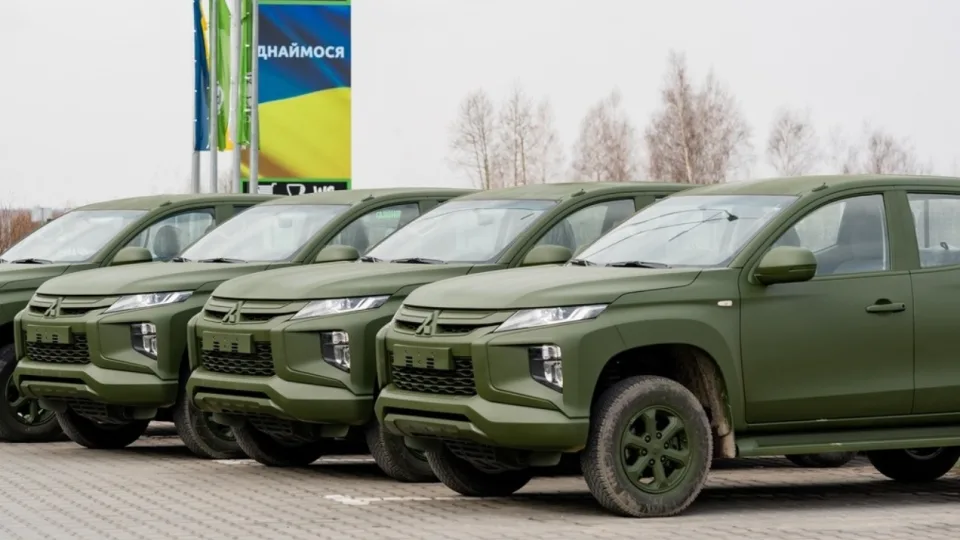










Receiving cars and motorcycles as humanitarian aid for the needs of Ukrainian military personnel has long become a common practice. Volunteer organizations and charitable foundations regularly deliver transport to the front, but many questions still arise regarding its registration and further use.
Is it possible to register both a car and a motorcycle simultaneously if both were given to one serviceman? Does a soldier have the right to keep or sell the vehicle after discharge? And what consequences may arise if a humanitarian vehicle is used improperly?
The Ministry of Internal Affairs provided an official explanation regarding the rules for temporary state registration of vehicles imported into Ukraine as humanitarian aid for servicemen. At the same time, certain provisions of current legislation raise additional questions, particularly concerning the right to dispose of such property after discharge from military service and liability for violating the established procedure.
One soldier – one humanitarian vehicle
The procedure for temporary state registration of vehicles imported as humanitarian aid for servicemen is defined by the Cabinet of Ministers of Ukraine Resolution dated May 10, 2022, No. 584 (as amended by Resolution No. 1235).
These regulatory acts establish a special procedure for registering such transport and define the circle of persons who may use it. The Ministry of Internal Affairs emphasized that regardless of what kind of transport a serviceman received as humanitarian aid – a passenger car, motorcycle, or other vehicle – only one vehicle can be temporarily state-registered per person.
That is, if a charitable foundation transferred both a car and a motorcycle to a serviceman simultaneously, the legislation does not allow registering both vehicles under that serviceman. The restriction concerns not the type of transport but the number of vehicles that can be temporarily state-registered under one recipient of humanitarian aid.
If the Unified State Vehicle Register already contains information about a car or other vehicle temporarily registered to a specific serviceman, the service center will refuse to register another humanitarian vehicle.
How to put a vehicle on temporary state registration?
To receive the service, one must visit any convenient MIA service center and submit:
- a serviceman’s application – the recipient of the vehicle (printed at the MIA service center according to the established form);
- a passport with a residence registration mark (or ID card and extract of residence);
- a document proving the serviceman’s identity (military ID, officer’s certificate);
- a document confirming the recipient’s military service (certificate from the military unit);
- an acceptance-transfer act of the vehicle as humanitarian aid (according to the annex to CMU Resolution No. 584 dated 10.05.2022);
- an electronic declaration listing goods recognized as humanitarian aid (approved by CMU Resolution No. 953 dated 05.09.2023 or CMU Resolution No. 174 dated 01.03.2022).
After completing the procedure, the vehicle receives license plates and a temporary registration certificate.
Thus, if a serviceman received both a car and a motorcycle or several vehicles of other categories as humanitarian aid, temporary state registration can be done only for one of them. This is a requirement of current legislation.
What happens to a humanitarian vehicle after discharge from the Armed Forces of Ukraine
It is a common misconception that after discharge from military service, a humanitarian vehicle automatically becomes the property of the serviceman. In fact, this is not the case. According to the explanation of the Main Service Center of the MIA and the provisions of Cabinet of Ministers Resolution No. 584, a vehicle imported into Ukraine as humanitarian aid for a serviceman does not acquire the status of private property merely by being temporarily state-registered. Such registration only grants the right to legally use the vehicle during military service.
Therefore, after discharge from the Armed Forces of Ukraine, a soldier cannot simply keep the vehicle and use it as personal property. Resolution No. 584 defines an exhaustive list of grounds for which a vehicle is removed from temporary state registration. These include: discharge from military service, death of the recipient, destruction of the vehicle, captivity, being declared missing, suspension of military service, treatment for more than one month, being wanted for unauthorized absence or desertion, voluntary refusal of the vehicle in favor of another serviceman.
The military unit notifies the MIA service center of such circumstances, after which the vehicle is removed from temporary state registration. After that, the vehicle cannot remain with the former serviceman. As a general rule, it may only be transferred to another serviceman listed in the acceptance-transfer act of humanitarian aid (up to five persons may be listed).
Exceptions include cases when the vehicle is transferred to departmental registration of state security and defense agencies or when the vehicle is discarded due to complete destruction.
Additionally, the resolution provides another important rule. After the termination or cancellation of martial law, all vehicles remaining on temporary state registration as humanitarian aid must undergo departmental registration with the relevant state security and defense agencies within three months. Failure to do so will result in cancellation of temporary registration, and the vehicle will be considered unregistered.
Is it possible to sell a humanitarian vehicle?
The answer to this question is also unequivocal – no. The reason is that a vehicle imported as humanitarian aid has a special legal regime. The Law of Ukraine "On Humanitarian Aid" defines humanitarian aid as targeted gratuitous assistance that must be used exclusively for the purpose for which it was provided.
Changing the recipient of humanitarian aid is allowed only in cases provided by law and with the donor’s consent, unless otherwise established by law. Therefore, a humanitarian vehicle cannot be equated with ordinary property that a person can freely dispose of: sell, gift, or exchange at their discretion.
If documents confirming misuse of the vehicle are submitted to the MIA service center, the temporary state registration of such a vehicle is canceled. Copies of the relevant materials are simultaneously sent to the Ministry of Social Policy of Ukraine, which monitors the targeted use of humanitarian aid.
Misuse may include, in particular: selling a humanitarian vehicle, transferring it to third parties contrary to established procedure, using the vehicle for profit, or other transactions regarding humanitarian property that contradict its intended purpose. In some cases, such actions may have not only administrative consequences but also signs of a criminal offense.
Thus, Article 201-2 of the Criminal Code of Ukraine provides liability for selling humanitarian aid goods, using charitable donations or gratuitous aid, as well as concluding other transactions regarding such property for profit. Depending on the value of the offense and other circumstances, the offender may face punishment up to imprisonment with confiscation of property.
Judicial practice: how courts assess illegal use of humanitarian aid
Although the special procedure for registering humanitarian vehicles for servicemen has been in effect relatively recently, the practice of applying Article 201-2 of the Criminal Code of Ukraine is actively developing. Law enforcement agencies most often open criminal proceedings in cases of selling vehicles imported as humanitarian aid or using such property for profit.
Example 1. Suspicion of selling humanitarian vehicles worth over UAH 600,000
In July 2024, the Kyiv Court of Appeal upheld preventive measures against persons suspected of selling vehicles imported into Ukraine as humanitarian aid. According to the investigation, the defendants in case 947/20821/24 sold cars intended for military needs, obtaining illegal profit exceeding UAH 600,000.
Their actions were qualified under part three of Article 201-2 of the Criminal Code of Ukraine as selling humanitarian aid for profit, committed by a group of persons by prior conspiracy during martial law. The court agreed that at this stage there are sufficient grounds for such suspicion.
Example 2. Judicial practice #2: sale of three humanitarian vehicles ended with a guilty verdict
In November 2025, the Boryspil City District Court of Kyiv region issued a verdict in case 359/12864/25 regarding the sale of vehicles imported into Ukraine as humanitarian aid for the military. The court found that the accused, aware of the humanitarian status of the vehicles, organized the sale of three cars (KIA Sorento and Suzuki Grand Vitara XL-7) imported to meet the needs of servicemen.
The total value of the vehicles exceeded the "significant amount" threshold defined in the note to Article 201-2 of the Criminal Code of Ukraine. The actions were qualified under part three of Article 201-2 of the Criminal Code as selling humanitarian aid items for profit during martial law. The court approved a plea agreement and issued a guilty verdict.
These examples demonstrate that law enforcement agencies increasingly pay attention to the misuse of humanitarian vehicles. Therefore, servicemen should remember: temporary state registration of a humanitarian vehicle does not grant the right to freely dispose of it, and attempts to sell or otherwise profit from such property may result not only in cancellation of temporary registration but also in criminal prosecution.
Subscribe to our Telegram channel t.me/sudua and to Google News SUD.UA, as well as to our VIBER and WhatsApp, Facebook page and Instagram account to stay updated on the most important events.