Authorities cannot punish solely for the mere fact of protesting: ECHR defends participants of a peaceful rally


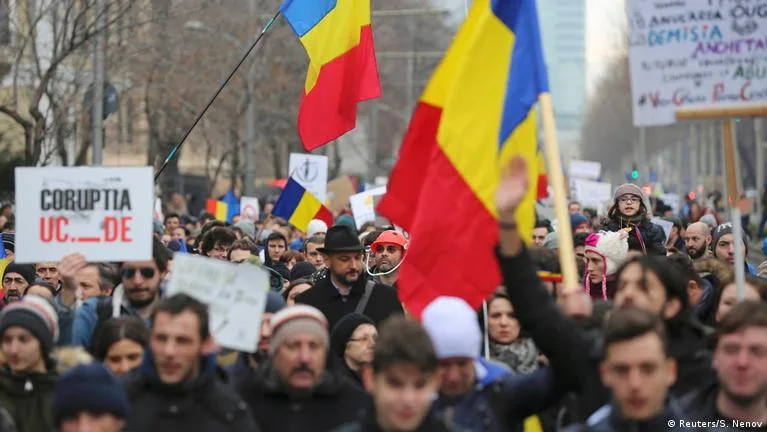










The European Court of Human Rights issued a judgment in the case of Rădulescu Dobrogea and Ciurea v. Romania (applications No. 63972/19 and No. 16056/20), which examined the balance between the right to peaceful assembly and freedom of expression guaranteed by Articles 11 and 10 of the Convention for the Protection of Human Rights and Fundamental Freedoms.
The decision reinforces the ECHR’s practice of heightened protection standards for peaceful political protests and emphasizes that even minor sanctions must be properly justified and comply with the principle of proportionality.
Circumstances of the case
The applicants were supporters of a public organization advocating for transparency in government activities and fighting corruption. In 2017–2018, they participated in a series of protests against government actions and political institutions which, according to the protesters, undermined the rule of law.
On March 10, 2018, an extraordinary congress of a political party belonging to the ruling coalition was held near the Palace of the Chambers in Bucharest. The organizers notified the authorities about the event in advance and agreed on additional security measures.
At the same time, the applicants and others organized a peaceful protest near the congress venue. They held placards and chanted slogans expressing disagreement with the party leadership’s activities. The police separated the congress participants and protesters, preventing any clashes.
Despite the peaceful nature of the action, the applicants were fined for participating in a counter-demonstration held simultaneously at the same location as the officially declared public event.
After the fines were annulled by first-instance courts, the appellate court reinstated them, finding that the formal conditions of the offense were met.
Position of the ECHR
The ECHR noted that the right to freedom of peaceful assembly is one of the fundamental principles of a democratic society and should not be interpreted restrictively.
Protecting this right requires a constant search for a fair balance between the legitimate interests of the state and the freedom of citizens to openly express their views in the public space.
The Court emphasized that Article 11 of the Convention protects only peaceful assemblies. At the same time, even a real risk of disorder arising from circumstances beyond the protest organizers’ control does not deprive such an assembly of Convention protection. Any restrictions must comply with the requirements of Article 11 § 2 of the Convention.
The ECHR stated that freedom of expression extends not only to information or ideas that are favorably or indifferently received but also to those that may offend, shock, or disturb others. This is required by pluralism, tolerance, and broadmindedness, without which a democratic society cannot exist.
The Court stressed that in the field of political speech and matters of public interest, the state’s possibilities to restrict freedom of expression are particularly narrow.
Since the applicants’ protest concerned the activities of the ruling political party and issues of the rule of law and anti-corruption, especially compelling reasons were required to justify interference.
The ECHR noted that the protest took place on a publicly accessible street section. The authorities did not effectively restrict protesters’ access to this area; the participants remained peaceful, stayed in one place, only chanted slogans and displayed placards. The case materials did not indicate any use of violence or calls for it.
The Court emphasized that the case materials did not confirm that the protest created any additional obstacles to public life beyond those already associated with the party congress itself.
The authorities were notified in advance about the protest and had sufficient time to organize security measures, and the protesters expressed their views freely throughout the day.
The ECHR stated that authorities must show an appropriate level of tolerance towards peaceful counter-demonstrations. The mere risk of conflict between two groups cannot automatically justify banning or punishing protest participants.
Before applying restrictions, state authorities must assess the real scale of possible public order violations and the nature of actual obstacles created by the counter-demonstration.
The Court stressed that the national appellate court did not examine what level of obstacles the applicants’ actions created. It merely concluded that the formal signs of an administrative offense were present, and therefore the police were obliged to apply sanctions. Such an approach does not meet the requirements of Article 11 of the Convention.
The ECHR noted that the principle of proportionality requires balancing the protection of public order with the right of individuals to peacefully express their beliefs. The state has a positive obligation to enable peaceful assemblies of both groups and, as far as possible, to apply the least restrictive measures that allow both events to take place. Instead, the national court gave predominant importance only to the formal illegality of the counter-demonstration.
The Court emphasized that even a minimal administrative fine imposed for political expression within a socially significant discussion can have a deterrent effect on the exercise of freedom of speech and peaceful assembly. Therefore, such sanctions require particularly thorough justification, which the national courts did not provide in this case.
Thus, the ECHR unanimously found a violation of Article 11 of the Convention, interpreted in light of Article 10, concerning both applicants.
The Court concluded that the interference with their right to peaceful assembly was not necessary in a democratic society because the national courts failed to properly balance the freedom of peaceful protest with the protection of the rights of political congress participants, did not assess the real level of obstacles created by the protest, and effectively limited themselves to the formal application of the legislative ban on counter-demonstrations.
Additionally, read another position where the ECHR decided that before detaining a journalist, authorities must consider freedom of the press and public order interests.
Subscribe to our Telegram channel t.me/sudua and to Google News SUD.UA, as well as to our VIBER and WhatsApp, Facebook page and Instagram page to stay informed about the most important events.