Illegal refusal to grant ATO participant status is insufficient for claiming property damage — Supreme Court


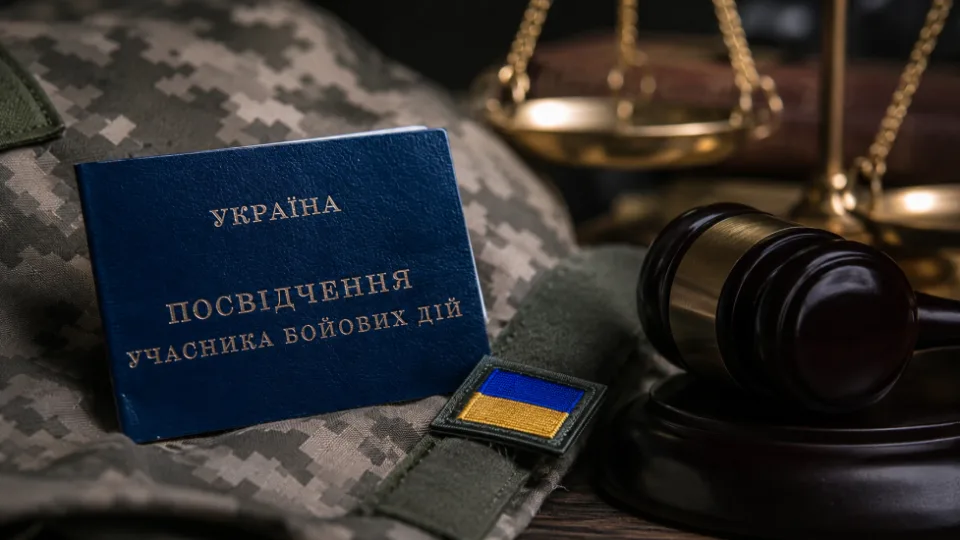










The mere fact of recognizing a government body’s decision as illegal does not automatically mean that a person has the right to compensation for property damage. It is necessary to prove not only the unlawfulness of the actions of the authority but also the fact of damage, its amount, and the causal link between the illegal decision and the damage caused. If after obtaining the status of a combatant the person did not exercise the legally provided mechanism for receiving the due payments and benefits, this may indicate the absence of proven property damage.
This conclusion was reached by the Civil Cassation Court of the Supreme Court in case No. 761/42970/23. At the same time, the Court agreed with the conclusions of the lower courts that the illegal refusal to grant the status of a combatant was grounds for compensation for moral damage, as it caused the plaintiff prolonged mental suffering.
Case circumstances
The plaintiff filed a lawsuit against the Foreign Intelligence Service of Ukraine seeking compensation for property and moral damage. The basis was that in 2020 the FIS commission refused to grant him the status of a combatant.
Subsequently, the administrative court recognized this refusal as unlawful, canceled the commission’s decision, and obliged to grant the plaintiff the status of a combatant from April 29, 2016. He received the combatant certificate at the end of 2022.
The plaintiff argued that due to the illegal refusal, he was deprived for several years of the opportunity to use the social guarantees provided by law. Therefore, he requested compensation for property damage in the form of unpaid one-time financial assistance, compensation for additional paid leave, as well as compensation for the cost of benefits for housing and communal services, electricity, and water supply. In addition, he requested 6 million UAH for moral damages.
The court of first instance, whose conclusions were upheld by the appellate court, partially satisfied the claim, ordering the State Budget of Ukraine to pay 10,000 UAH for moral damages. Compensation for property damage was denied.
Supreme Court decision
The Civil Cassation Court dismissed the cassation appeal and left the decisions of the lower courts unchanged.
Regarding property damage
The Supreme Court reminded that to impose on the state the obligation to compensate property damage, all elements of civil liability must be established: unlawfulness of the decision or actions of the authority, existence of damage, its amount, and the causal link between illegal actions and the damage caused.
The Court noted that the illegality of the commission’s decision to refuse the combatant status was already established by the administrative court’s decision, which became final, so this circumstance did not require re-proving. At the same time, the mere fact of recognizing such a decision as unlawful does not indicate that the plaintiff suffered property damage.
The Civil Cassation Court agreed with the conclusions of the lower courts that after obtaining the combatant status, the plaintiff did not apply in the legally prescribed manner to the relevant government bodies with requests for one-time financial assistance and other due compensations, nor to the providers of housing and communal services for recalculation.
The Supreme Court emphasized that such applications are not a pre-trial dispute resolution procedure. It concerns the exercise by the person of their rights arising after acquiring the combatant status. Therefore, the courts reasonably concluded that the plaintiff did not prove with proper and admissible evidence either the fact of the claimed property damage or the causal link between it and the defendant’s illegal decision.
Regarding moral damage
At the same time, the Supreme Court agreed with the conclusions of the lower courts about the grounds for compensation for moral damage.
The Court took into account that the illegal refusal to grant the combatant status was established by the administrative court’s decision, which became final. Because of this, the plaintiff was unable to exercise his rights for a long time, was forced to defend them in court, and suffered constant stress, feelings of injustice, anxiety, and other negative experiences.
The Civil Cassation Court agreed with the lower courts' determination of moral damage compensation amounting to 10,000 UAH. The Court noted that in determining the compensation amount, the nature and duration of moral suffering, forced changes in the plaintiff’s life, as well as the principles of reasonableness, fairness, and proportionality were taken into account.
The arguments of the cassation appeal for the necessity to recover 6 million UAH in moral damages were rejected by the Supreme Court, noting that they essentially amounted to disagreement with the evaluation of evidence, which cannot be subject to review by the cassation court.
As a result, the Supreme Court left the cassation appeal without satisfaction and the decisions of the courts of first and appellate instances unchanged.
Subscribe to our Telegram channel t.me/sudua and to Google News SUD.UA, as well as to our VIBER and WhatsApp, Facebook page and Instagram page to stay informed about the most important events.