Dispute over the confiscation of a jackhammer that damaged a car reached the Supreme Court – what the court decided


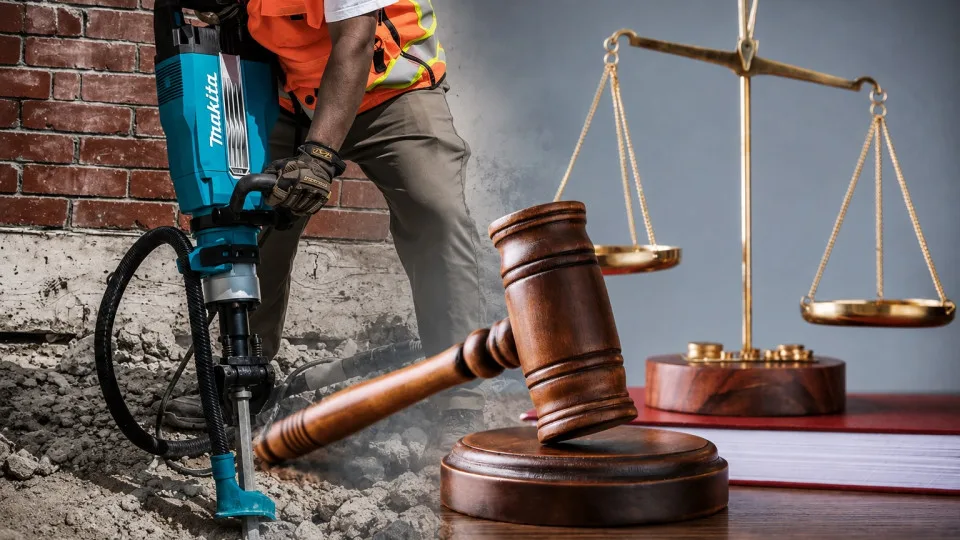










The jackhammer used as an instrument of a criminal offense is physical evidence in the criminal proceedings and is subject to confiscation in favor of the state.
Positions of the courts of first and appellate instances
The local court exempted the person from criminal liability under Part 1 of Article 296 of the Criminal Code based on Article 45 of the Criminal Code due to active repentance and closed the criminal proceedings. It resolved the issue regarding physical evidence in the criminal proceedings, in particular, returning the jackhammer to the owner. The appellate court changed the decision of the court of first instance regarding the fate of the physical evidence and ruled, based on Part 9 of Article 100 of the Criminal Procedure Code, to confiscate the instrument of the criminal offense – the jackhammer – in favor of the state.
In the cassation appeal, the defendant indicates the unlawfulness of the appellate court’s ruling regarding the confiscation of the physical evidence – the jackhammer – in favor of the state.
The Supreme Court left the appellate court’s ruling unchanged.
What the Criminal Cassation Court drew attention to
The panel of judges of the Criminal Cassation Court indicated that according to the rules of Part 9 of Article 100 of the Criminal Procedure Code, the issue of the fate of physical evidence is decided by the court when issuing the court decision that concludes the criminal proceedings. At the same time, paragraph 1 of this provision stipulates that money, valuables, and other property that were sought, manufactured, adapted, or used as means or instruments of committing a criminal offense and/or retain traces of it are confiscated, except in cases where the owner (lawful possessor) did not know and could not have known about their illegal use.
According to the case materials, the jackhammer with which the defendant damaged a car during hooligan actions was recognized as physical evidence in the criminal proceedings. Therefore, the appellate court, guided by the mentioned legislative provisions, reached a justified conclusion about the confiscation of the jackhammer, which was used as an instrument of the criminal offense, in favor of the state.
At the same time, considering that as a result of the offense, the victim suffered material damage amounting to UAH 235,328, the confiscation of the jackhammer belonging to the defendant did not impose an excessive burden on him and is proportional to the offense committed.
Despite the defendant’s claims in the cassation appeal, the seizure of the mentioned instrument in favor of the state is not a special confiscation. The material and legal grounds for its application defined by Articles 96-1 and 96-2 of the Criminal Code were not established in this case. Instead, the appellate court, based on the imperative provisions of paragraph 1 of Part 9 of Article 100 of the Criminal Procedure Code, resolved the issue of the fate of physical evidence, properly motivating its decision.
Resolution of the panel of judges of the Second Judicial Chamber of the Criminal Cassation Court of the Supreme Court dated June 16, 2026, in case No. 938/665/25 (proceeding No. 51-44km26).
Subscribe to our Telegram channel t.me/sudua and to Google News SUD.UA, as well as to our VIBER and WhatsApp, our page on Facebook and on Instagram to stay informed about the most important events.