The Supreme Court explained whether a combat clash is required for border guards to receive 100 thousand hryvnias


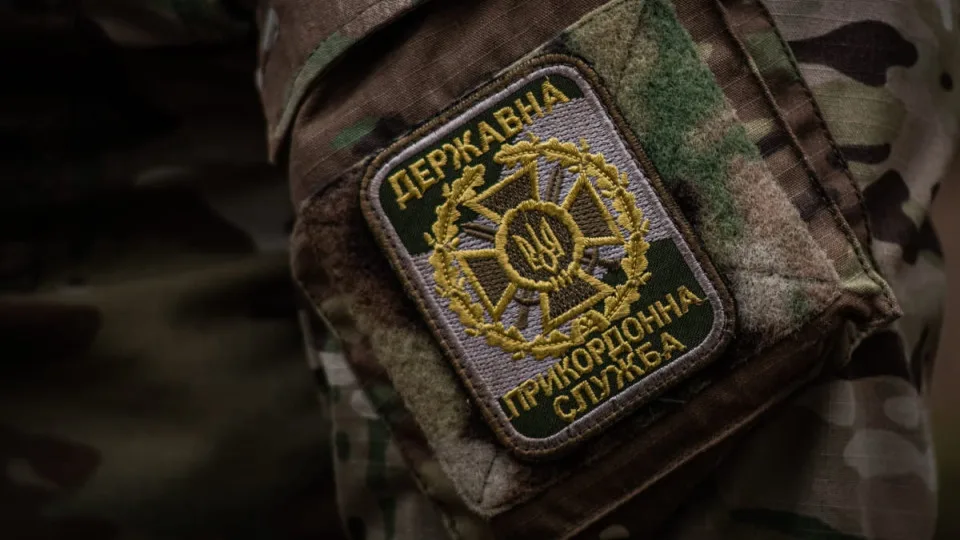










The Supreme Court, in a panel of judges of the Administrative Cassation Court, considered a dispute regarding the payment to a serviceman of the State Border Guard Service of an increased additional reward of up to 100 thousand hryvnias, provided by Cabinet of Ministers Resolution No. 168, for direct participation in combat operations and ensuring national security and defense measures. The Court also expressed a legal position regarding the correlation between the provisions of Cabinet of Ministers Resolution No. 168 and the order of the State Border Guard Service Administration No. 628-AG when determining the grounds for such payment.
Case Summary
In January 2024, a serviceman of the State Border Guard Service filed a lawsuit with the administrative court against a military unit, requesting to recognize as unlawful the inaction regarding the non-accrual and non-payment of an additional reward to him in accordance with the Cabinet of Ministers Resolution dated February 28, 2022, No. 168 "On certain payments to servicemen, rank-and-file and commanding personnel, police officers and their families during martial law" for direct participation in combat operations or ensuring national security and defense measures, repelling and deterring armed aggression.
The plaintiff also requested the military unit to be obliged to accrue and pay him an additional reward calculated up to 100 thousand hryvnias per month proportionally to the time of participation in such actions and measures for 22 days of December 2022 and 31 days of January 2023, taking into account amounts already paid.
The claims were justified by the fact that the serviceman served in the State Border Guard Service from November 2020 to April 2023 and directly participated in combat operations, ensuring national security and defense measures, repelling and deterring armed aggression by the Russian Federation. These circumstances were confirmed by a certificate from the military unit.
Moreover, the first deputy commander of the border detachment prepared reports on the payment of an additional reward to the serviceman in the amount of 70 thousand hryvnias per month proportionally to the number of days performing combat missions in December 2022 and January 2023. Despite this, the military unit actually paid the increased reward only for nine days of December 2022, and for the remaining 22 days of December and 31 days of January 2023, the increased reward was neither accrued nor paid. These circumstances became the basis for the appeal to the court.
The courts established that the serviceman served in the relevant border detachment of the State Border Guard Service and from February 24, 2022, to April 4, 2023, directly participated in combat operations or ensuring national security and defense measures, repelling and deterring military aggression in Donetsk and Luhansk regions. These circumstances were confirmed by certificates from the military unit.
It was also established that, according to Cabinet of Ministers Resolution No. 168 and the order of the State Border Guard Service Administration No. 628-AG, the chief of staff prepared reports on the payment of an additional reward to the serviceman in the amount of 70 thousand hryvnias for the full period of December 2022 and January 2023.
At the same time, the military unit’s orders decided to pay him a basic additional reward of 30 thousand hryvnias for December 2022 and January 2023, as well as an additional 20,322.58 hryvnias only for nine days of participation in combat operations in December 2022.
The case materials also contained extracts from combat orders for the relevant periods of December 2022 and January 2023, confirming the serviceman’s performance of combat missions. The plaintiff insisted that, given these documents, he was entitled to receive the increased additional reward for the entire confirmed period of participation in combat operations and national security and defense measures.
Decisions of the courts of first and appellate instances
The Khmelnytskyi District Administrative Court, by its decision dated April 19, 2024, which was upheld by the Seventh Administrative Court of Appeal, satisfied the claim.
The courts recognized as unlawful the partial failure of the military unit to resolve the issue of paying the serviceman the increased additional reward in accordance with Cabinet of Ministers Resolution No. 168 for all days of his participation in combat operations or ensuring national security and defense measures, repelling and deterring armed aggression in December 2022 and January 2023, according to the reports of the chief of staff of the border detachment.
The courts also obliged the military unit to pay the increased additional reward for all confirmed days of the serviceman’s participation in combat operations and national security and defense measures in December 2022 and January 2023, taking into account amounts already paid.
In justifying their decisions, the court of first instance, whose conclusions were agreed upon by the appellate court, relied on the provisions of Cabinet of Ministers Resolution No. 168, the Separate Instruction of the Minister of Defense of Ukraine dated June 23, 2022, No. 912/z/29, and subparagraph 3 of paragraph 3 of the order of the State Border Guard Service Administration No. 628-AG.
The courts established that the reports on the payment of the increased additional reward were only partially executed by the military unit. At the same time, the defendant did not provide proper evidence to refute the information contained in the documents submitted by the plaintiff, particularly regarding his participation in combat operations and the performance of relevant measures.
The courts noted that the authenticity of documents confirming the serviceman’s participation in combat operations or national security and defense measures may be questioned only if there is direct and proper evidence of the unreliability of such participation information. The defendant did not provide such evidence.
Legal conclusions of the Supreme Court
Reviewing case No. 560/965/24 in cassation proceedings, the Supreme Court noted that the dispute arose due to the non-payment to the serviceman of the State Border Guard Service of an increased additional reward up to 100 thousand hryvnias, provided by paragraph 1 of Cabinet of Ministers Resolution No. 168.
The Court thoroughly analyzed the legislative regulation of the disputed legal relations, in particular the provisions of the Laws of Ukraine "On the State Border of Ukraine," "On the State Border Guard Service of Ukraine," "On Social and Legal Protection of Servicemen and Their Families," Cabinet of Ministers Resolution No. 168, as well as the order of the State Border Guard Service Administration No. 628-AG.
The Supreme Court emphasized that it is precisely Cabinet of Ministers Resolution No. 168 that defines the grounds for the serviceman’s right to an increased additional reward, while the order of the State Border Guard Service Administration establishes the procedure for its documentary confirmation and payment process.
The panel of judges noted that it had already formulated relevant legal conclusions in the resolution dated February 26, 2025, in case No. 560/3312/23. The Supreme Court stressed that paragraph 2-1 of Cabinet of Ministers Resolution No. 168 empowers the heads of relevant ministries and state bodies only to determine the procedure and conditions for paying the additional reward but not to change the grounds for the right to receive it.
The term "conditions" should be understood as the list of documents confirming the presence of grounds for payment defined by the Cabinet of Ministers Resolution, and "procedure" as the process of reviewing such documents, making a decision on payment or refusal. Neither the procedure nor the conditions can change, limit, or expand the grounds established by a normative legal act of higher legal force.
The Supreme Court emphasized that Cabinet of Ministers Resolution No. 168 provides two independent grounds for paying the increased additional reward: direct participation in combat operations or ensuring the implementation of national security and defense measures, repelling and deterring armed aggression directly in the areas where such measures are conducted.
The first ground implies participation in combat clashes with the enemy, while the second is related to ensuring the relevant measures in the areas of their implementation and does not require mandatory direct combat clash, although it does not exclude it.
The Supreme Court noted that supplementing the grounds for paying the increased additional reward with requirements for mandatory "fire damage" or "direct clash with the enemy" in all cases effectively changes the content of Cabinet of Ministers Resolution No. 168. Such requirements are not conditions or procedures for payment but effectively narrow the grounds defined by the government for the serviceman’s right to receive it.
The Court stressed that lower legal acts cannot change or limit the provisions of a normative legal act of higher legal force. Therefore, in case of a conflict between Cabinet of Ministers Resolution No. 168 and the order of the State Border Guard Service Administration, the provisions of the Cabinet of Ministers Resolution shall apply.
Moreover, the Supreme Court referred to its own legal conclusion set out in the resolution dated August 6, 2024, in case No. 360/290/23, according to which confirmation of the serviceman’s direct participation in combat operations or relevant measures is carried out based on a set of information contained in the documents provided for by the order. At the same time, the list of documents defined by paragraph 3 of order No. 628-AG is alternative and does not require the mandatory presence of all documents simultaneously.
Applying these legal approaches to the circumstances of this case, the Supreme Court established that the serviceman served in the relevant border detachment and from February 24, 2022, to April 4, 2023, directly participated in combat operations or ensuring national security and defense measures, repelling and deterring military aggression by the Russian Federation in Donetsk and Luhansk regions.
These circumstances were confirmed by certificates from the military unit, reports of the chief of staff on the payment of additional rewards for December 2022 and January 2023, as well as extracts from combat orders submitted in accordance with the requirements of order No. 628-AG.
The Supreme Court agreed with the conclusions of the lower courts that the defendant did not prove with proper evidence the legality of paying the serviceman a smaller amount of additional reward. The case materials confirmed that the reports prepared by the chief of staff on the payment of the increased reward were only partially executed, while the defendant did not provide evidence of the unreliability of documents confirming the serviceman’s participation in combat operations or national security and defense measures.
At the same time, the Supreme Court concluded that the courts of first and appellate instances made an incorrect application of substantive law norms in the reasoning part of their decisions. In particular, they did not apply other provisions of order No. 628-AG that should have been applied when determining the correlation of its norms with Cabinet of Ministers Resolution No. 168, and also unjustifiably applied the Separate Instruction of the Minister of Defense of Ukraine, which does not regulate the disputed legal relations concerning servicemen of the State Border Guard Service.
The Supreme Court also rejected the military unit’s arguments regarding the violation of the plaintiff’s deadline for filing a lawsuit. The Court noted that the defendant did not raise this issue during the consideration of the case by the courts of first and appellate instances, and therefore these arguments were not subject to their examination and did not become grounds for opening cassation proceedings.
In conclusion, the Supreme Court found that the lower courts correctly resolved the dispute on the merits and established all the circumstances necessary for its resolution. At the same time, the errors they made in applying substantive law norms did not affect the legality of the case’s outcome.
Therefore, the Supreme Court amended the decision of the court of first instance and the ruling of the appellate court only in the part of the reasoning for satisfying the claim, presenting the reasoning parts of the court decisions in the wording of its ruling. In other parts, the decisions of the courts of first and appellate instances remain unchanged.
Subscribe to our Telegram channel t.me/sudua and on Google News SUD.UA, as well as on our VIBER and WhatsApp, pages on Facebook and Instagram to stay informed about the most important events.