After the Accident: No Alcohol Detected Initially, but 3.71‰ Appears Seven Months Later – Serviceman Denied Disability Payments


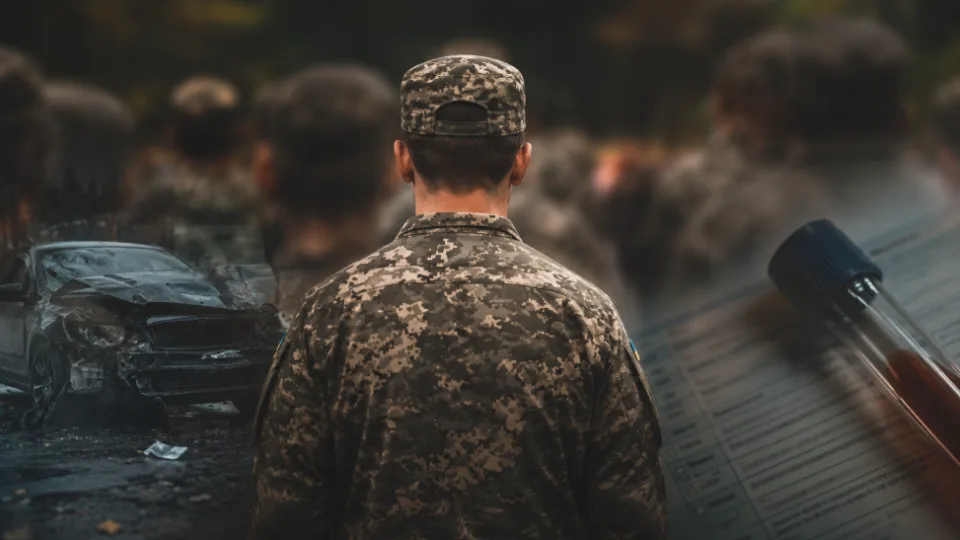










The Odesa District Administrative Court considered a dispute between a former serviceman of the State Border Guard Service of Ukraine and his border detachment. The detachment had refused to forward documents for a one-off financial aid payment for disability, citing the military unit’s position that the injury resulted from the serviceman’s actions while intoxicated.
The court did not determine whether the plaintiff was entitled to the one-off financial aid or whether alcohol intoxication genuinely precluded its award. The core of the dispute was whether the military unit had the authority to independently refuse the applicant the opportunity to undergo the payment procedure. The court concluded that the border detachment lacked such authority.
Circumstances of the Case
The plaintiff served in the State Border Guard Service of Ukraine. In July 2024, while on annual leave, he was involved in a road traffic accident on his motorcycle and sustained serious injuries. Subsequently, he was assigned Group I disability, and the military medical commission confirmed the injury was related to military service.
Following the accident, an official investigation was conducted. In July 2024, the commission established that the accident occurred off-duty, not during the performance of military duties, and the serviceman’s blood alcohol test was negative.
However, seven months later, after receiving toxicological research results, the border detachment approved the accident investigation report. This report stated that ethanol was detected in the serviceman’s blood at a concentration of 3.71‰. The commission attributed the accident’s causes to glare from an oncoming vehicle’s headlights and the driver’s state of alcohol intoxication. On this basis, it was decided not to draw up an accident report in the prescribed form, as the Instruction stipulates that such a report is not issued if the accident is a consequence of actions while intoxicated.
In August 2025, the serviceman applied for one-off financial aid due to disability and submitted the necessary documents, including an extract confirming Group I disability, the military medical commission’s conclusion, copies of his passport, tax identification number, and bank details.
In response, the border detachment informed him that he had not provided a document confirming the injury was not a consequence of actions while intoxicated. Furthermore, the letter stated that, according to the accident investigation report, the injury was caused by alcohol intoxication, thus precluding grounds for the one-off financial aid.
Disagreeing with this stance, the serviceman initiated legal proceedings. He contended that the border detachment had exceeded its powers, as the decision to grant or deny the one-off aid should be made by the authorised budget funds manager, not the military unit. The plaintiff also highlighted contradictions between the initial official investigation, which did not establish intoxication, and the accident report compiled several months later.
The Court’s Decision
The court noted that the Law "On Social and Legal Protection of Servicemen and Their Families" and Procedure No. 975 clearly define the process for awarding one-off financial aid.
The border detachment’s role is solely to accept documents from the applicant, prepare the relevant conclusion, and forward the materials to the budget funds manager of the State Border Guard Service of Ukraine. This body is authorised to make decisions on granting aid, refusing it, or returning documents for revision.
According to the court, the border detachment, by informing the applicant about the lack of grounds for payment and failing to take further actions as stipulated by Procedure No. 975, acted beyond its legally granted powers. Therefore, such a refusal was deemed unlawful.
Concurrently, in case 420/41874/25, the court specifically emphasised that it did not resolve whether the conclusions of the accident investigation report regarding the plaintiff’s intoxication were justified, or whether these circumstances precluded the right to one-off financial aid. These issues were not the subject of this particular case. The court exclusively considered the matter of adherence to procedure and the limits of the border detachment’s authority.
Accordingly, the court partially upheld the claim. It recognised the border detachment’s refusal to grant the one-off financial aid as unlawful and obliged it to reconsider the serviceman’s application and act in accordance with Procedure No. 975. This means the military unit must follow the legally prescribed procedure, after which the decision on granting or refusing payment must be made by the authorised budget funds manager.
Regarding the claim for material assistance to resolve social and domestic issues, the court denied satisfaction. It noted that such assistance is provided to servicemen upon report during service. As the plaintiff applied after discharge, the court found no grounds for payment.
Subscribe to our Telegram channel t.me/sudua, follow SUD.UA on Google News , and join us on VIBER, WhatsApp, Facebook and on Instagram to stay informed about the important events.