Children born after the death of their father at the front have the right to a share of 15 million even if the money has already been paid to others, — Supreme Court


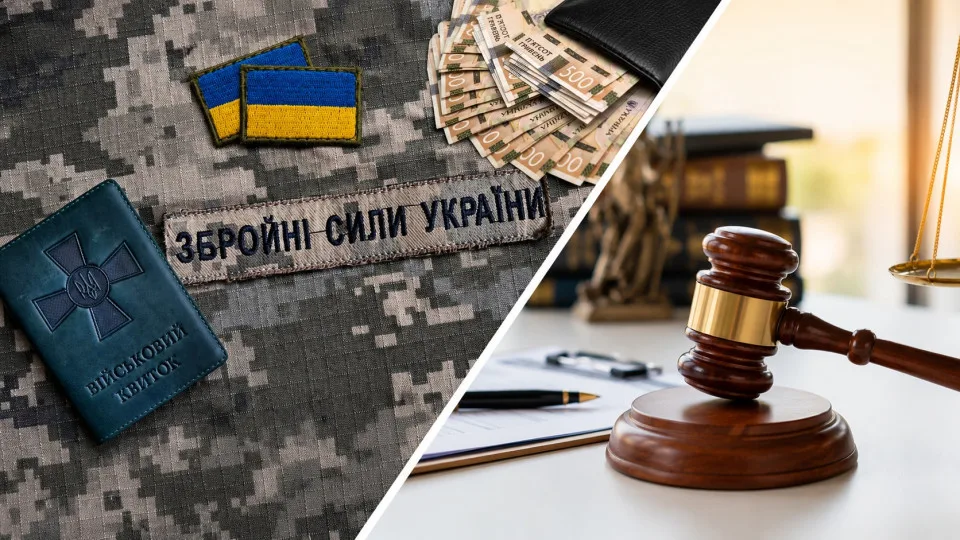










Ukrainian legislation guarantees a one-time financial aid to family members of fallen servicemen, but certain life situations have long remained outside clear legal regulation. For example, it was disputed whether a child conceived before the death of a serviceman but born after his death has the right to the payment.
In recent years, the Ministry of Defense of Ukraine built its defense on a formal interpretation of the norm: the right arises on the day of death, and since the child did not yet exist — there is no right. However, recent practice of the Supreme Court, particularly in cases No. 160/22242/24 and No. 400/6411/24, changed this direction, prioritizing the interests of the child over bureaucratic algorithms.
Case No. 160/22242/24
Consider one of the latest Supreme Court cases dated July 16. The plaintiff applied to the court in the interest of her minor daughter. The child’s father, a serviceman, died during a combat mission in November 2022. At the time of his death, the child was conceived but was born only a few weeks later — in December 2022.
The Ministry of Defense commission refused to assign a share of the aid to the child, reasoning that on the date of death the child was not yet born and therefore did not belong to the circle of persons defined by Article 16-1 of Law No. 2011-XII. The courts of first and appellate instances initially supported this position.
The panel of judges of the Administrative Cassation Court disagreed with these conclusions, providing extensive reasoning based on national and international law.
The Court referred to the Preamble and Article 3 of the Convention on the Rights of the Child, which emphasize that a child requires special protection both before and after birth, and primary attention must be given to the best interests of the child.
Article 25 of the Civil Code explicitly states that in cases established by law, the interests of a conceived but not yet born child are protected, and Article 122 of the Family Code confirms the child’s origin from the spouses if conceived during marriage.
The Court stressed that discrimination against a child based on the time of birth is unacceptable. Excluding a child from the circle of aid recipients solely because they were born after the father’s death contradicts the purpose of the law, which is compensatory for family members who lost their breadwinner.
Application of Law No. 3515-IX and retrospective effect
A key point was the consideration of legislative changes. On March 29, 2024, Law No. 3515-IX came into force, amending Article 16-1 of the Law "On Social and Legal Protection of Servicemen and Their Families."
Now the law explicitly includes among those entitled to one-time financial aid children conceived during the life of the deceased and born after their death.
The Supreme Court drew attention to the Final and Transitional Provisions of this Law, which allow applying these norms to legal relations that arose before its entry into force, if the aid has not yet been fully assigned to other persons.
Does a child born after the father’s death have the right to aid?
Yes, absolutely. The Supreme Court emphasized that a child conceived during the serviceman’s life belongs to his family members and has an unconditional right to one-time financial aid.
The Supreme Court concluded that the aid is compensatory to support the family after the loss of the breadwinner, so excluding a child because of their birth date contradicts the law’s purpose and is discriminatory.
Why does the Ministry of Defense continue to refuse?
The ministry’s position is based on a literal reading of paragraph 2 of Cabinet Resolution No. 168 and Procedure No. 975, which state that the right to aid arises on the date of death indicated in the certificate. The Ministry argued that since on that date the child did not have civil legal capacity, which arises from birth, they could not acquire the right to payment.
However, this approach ignores the principles of non-discrimination and equality of children’s rights regardless of birth circumstances. Moreover, from March 29, 2024, changes (Law No. 3515-IX) came into force that explicitly included children conceived during the life of the deceased serviceman and born after his death among recipients.
Procedure for exercising the right if aid has already been paid to others
This is the most complex procedural issue, where the Supreme Court distinguishes two situations:
Aid has not yet been fully paid or the case is in court. In case No. 160/22242/24, the mother applied to the Ministry of Defense in time, before all payments were completed. In this case, the Court obliges the Ministry to reconsider the application and include the child in the distribution of shares.
Aid has already been fully paid to other family members (15 million UAH). The Supreme Court in case No. 560/12192/24 explained: if the state has already fulfilled its obligation and paid the full amount to primary recipients, for example, the deceased’s parents, it should not pay again from the budget.
Law No. 3515-IX explicitly enshrined the right of children conceived during the serviceman’s life and born after his death to the aid. However, the Transitional Provisions of this law contain an important reservation.
The state is obliged to assign aid to such a child only if the aid has not yet been assigned to any persons entitled to it.
If the aid has already been paid to others, the child still has the right to their share but can realize it exclusively by presenting a claim to the recipients for redistribution. The issue is resolved either by mutual agreement of relatives or in court among the recipients.
The Supreme Court emphasizes that such a dispute is of a private law nature. Since the money has already left the state budget and become the property of individuals, the claim for redistribution of shares is considered in civil proceedings.
Forming the approach
The Supreme Court applied a comprehensive approach to protecting the rights of children born after the death of their serviceman father, relying on established judicial practice and recent legislative changes.
In case No. 400/6411/24, the Supreme Court confirmed an important priority: establishing the child’s right to aid precedes any redistribution of the aid amount.
The Court pointed out that the child’s right to receive money cannot depend on whether these funds have already been actually distributed among other relatives (mother, wife, etc.).
If a state body unlawfully refused the child aid at the document review stage, it is obliged to return to consider this application based on the child’s right.
The Supreme Court clearly distinguished the circumstances of case No. 160/22242/24 and case No. 560/12192/24, which is important for the method of protecting the child’s rights.
In case No. 560/12192/24, the application regarding the child and establishment of paternity occurred after the state fully assigned and paid aid to other family members (parents of the deceased).
Since the state has already fulfilled its financial obligation in full, the child can realize their right only by presenting a claim to the actual recipients for redistribution of shares by mutual agreement or in court.
In case No. 160/22242/24, the child’s mother applied to the Ministry of Defense in time — before the commission made final decisions on all shares.
The Ministry unlawfully refused to assign aid to the child at the protocol formation stage. Since the violation was committed by the state body during the assignment procedure, the proper remedy is to cancel the commission’s decision and oblige the Ministry to reconsider the application taking into account the child’s rights.
Thus, the Court confirmed that the state must consider the rights of unborn children if declared during the payment procedure, and not shift the burden of redistributing funds onto the child who was unlawfully denied by the authorities.
Subscribe to our Telegram channel t.me/sudua and to Google News SUD.UA, as well as to our VIBER and WhatsApp, Facebook page and Instagram to stay informed about the most important events.