The National Police Will Search for Assets Acquired Dubiously by Civil Servants in Categories "B" and "V"


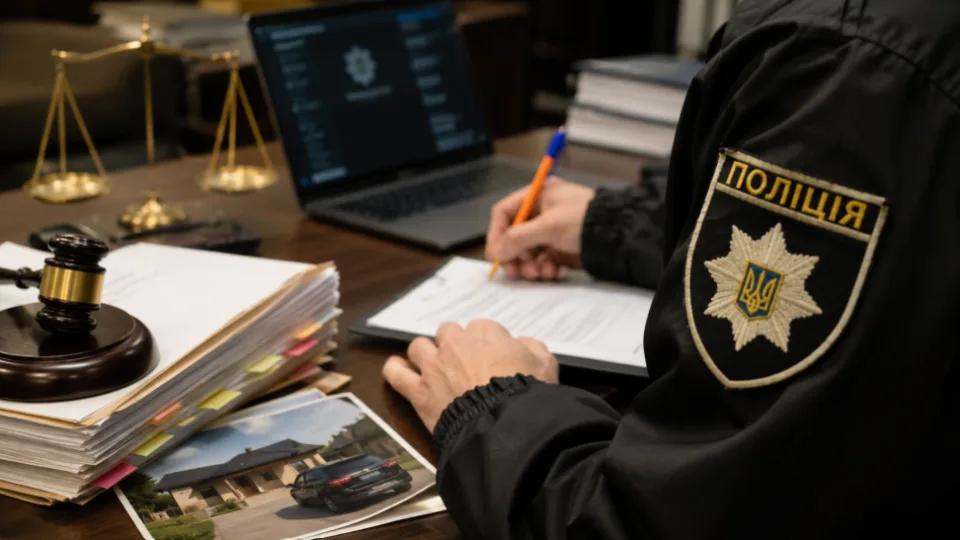










The meeting of the Verkhovna Rada Committee on Law Enforcement Activities held on 15 July provided a platform for reviewing the draft Law No. 15260, aimed at enhancing measures to detect unjustified assets and gathering evidence for their subsequent recovery to state revenue. The need for reform is justified by the current lack of adequate procedural tools within civil legislation for the effective confiscation of property of mid-level officials by the National Police when investigating criminal cases of illegal enrichment under Article 368-5 of the Criminal Code of Ukraine.
Essence of Legislative Changes
The document proposes amendments to the Code of Ukraine on Administrative Offences, the Civil Procedure Code, and the Law "On the National Police".
The bill suggests granting the National Police the authority to identify unjustified assets, collect relevant evidence, and transfer materials to prosecutors to initiate lawsuits recognising assets as unjustified and recovering them to state revenue through civil proceedings. Currently, these responsibilities are mainly assigned to NABU, SAP, and the SBI.
Moreover, heads of authorised police units will be able to access information, including restricted data, from state registers, databases, and automated information systems necessary to fulfil these duties.
The document also empowers the National Police to engage experts and specialists voluntarily or on a contractual basis to determine the market value of assets under review.
Another significant change is the shift in asset valuation criterion from "minimum market value" to "market value". This indicator is proposed for determining the value of assets for potential recognition as unjustified.
Currently, the main entities responsible for detecting unjustified assets and preparing materials for their recovery to state revenue include the National Anti-Corruption Bureau of Ukraine, the Specialised Anti-Corruption Prosecutor’s Office, and the State Bureau of Investigations. The bill aims to broaden the scope of bodies involved in this work by including the National Police.
The Cost of Ignoring
The draft suggests updating Article 185-13 of the Code of Ukraine on Administrative Offences. Failure to comply with lawful requests for information from National Police officials or providing false data now incurs a fine ranging from 250 to 400 non-taxable minimum incomes of citizens. This aligns the National Police with NABU and the SBI in safeguarding their information requests.
Despite the general support for strengthening anti-corruption measures, the State Regulatory Service of Ukraine raised significant concerns regarding the draft.
Experts highlighted a potential "unjustified competition" between the updated Article 185-13 and the existing Articles 185 and 188-28 of the Code of Ukraine on Administrative Offences. The substantial difference in fines poses corruption risks in determining the offence’s classification.
Furthermore, changes to the Code of Ukraine on Administrative Offences should be addressed by a separate law from regulatory legislation adjustments. According to part 4 of Article 2 of the Code, any modifications to the legislation on administrative offences must be made through laws amending this Code and other laws of Ukraine establishing administrative responsibility. However, the primary section of the submitted bill introduces changes to the Code of Ukraine on Administrative Offences, while the final provisions amend the Civil Procedure Code of Ukraine and the Law of Ukraine "On the National Police".
During the Committee meeting, it was emphasised that most declarants handled by the police, specifically officials of categories "B" and "V" and local council deputies, currently evade civil confiscation due to the limited police powers.
The Specialised Anti-Corruption Prosecutor’s Office endorsed the draft, noting that 80% of materials currently originate from the National Agency on Corruption Prevention. A SAP representative illustrated with an example: when documenting a traffic accident, an inspector may identify an expensive car registered to a third party, which is sufficient reason to commence gathering evidence of asset unjustification.
The Ministry of Internal Affairs and the National Police also supported the initiative as a measure to enhance operational efficiency, while expressing a desire not to restrict the individuals authorised to sign information requests.
However, concerns were raised during the committee meeting regarding process costs. Will the state spend a million hryvnias on courts and expert examinations to confiscate a used car valued at 100 thousand hryvnias? The SAP responded that utilising police resources locally would actually reduce the cost of evidence collection.
Following the meeting, the Committee concluded that enacting bill No. 15260 would ensure a comprehensive approach to documenting instances of illegal enrichment.
Subscribe to our Telegram channel t.me/sudua, follow SUD.UA on Google News , and join us on VIBER, WhatsApp, Facebook and on Instagram to stay informed about the important events.