The $110 Billion Deal at Risk: Court Blocks Paramount and Warner Bros Discovery Merger


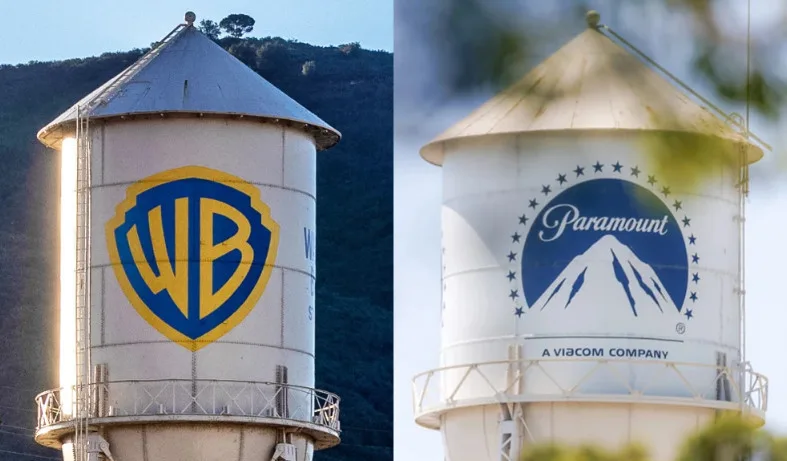










The acquisition of Warner Bros. Discovery by Paramount Skydance encountered a setback on Monday after a federal judge temporarily halted the proposed merger. The judge granted a request from a coalition of 12 state attorneys general who had filed a lawsuit seeking to block the $110 billion deal, NBC News reported.
U.S. District Court Judge Araceli Martinez-Olguin, of the Northern District of California, issued a temporary injunction preventing Paramount from completing the transaction. The merger was intended to combine two film studios, two streaming platforms, and two news organisations under the control of David Ellison, son of billionaire tech entrepreneur Larry Ellison.
According to Martinez-Olguin’s ruling, the injunction blocking the completion of the deal will remain in effect for 14 days. The judge has scheduled a hearing for 3 August on the states' motion for a preliminary injunction, which could freeze the deal during the case review.
The plaintiffs, led by California Attorney General Rob Bonta, filed their lawsuit to block the merger on 13 July. In a 38-page complaint, they asserted that the deal "will destroy competition" in Hollywood.
"The illegal merger of these two entertainment industry giants will lead to higher prices, lower quality, and less content for films and television, harming film theatres, cable TV distributors, and ultimately viewers on every couch and every seat in U.S. cinemas," Bonta stated in a press release accompanying the court filing.
Bonta and other attorneys general argue that the deal violates Section 7 of the Clayton Antitrust Act of 1914, a federal law that prohibits mergers which may substantially lessen competition.
The states believe the deal will reduce competition in three areas: theatrical wide-release film distribution, distribution of potentially highest-grossing films, and the market for basic cable channel distribution among cable and satellite operators.
Paramount strongly denied these allegations, stating that the states' campaign is "wrong both factually and legally", and characterising the attempt to block the deal as "one of the weakest merger challenges in modern antitrust history."
"We will vigorously defend the deal and prove that this challenge contradicts sound competition policy and the real conditions of the media market," Paramount said.
Paramount owns the 114-year-old Paramount Pictures studio, the streaming service Paramount+, the CBS television network, and several cable assets including MTV and Nickelodeon.
Warner Bros. owns its 116-year-old studio, cable brands CNN and HBO, as well as popular intellectual property including the Batman and Superman franchises.
The states' lawsuit represents the most serious threat to the deal since its announcement, but it is not the only obstacle facing Paramount.
The merger has also faced opposition from unions and consumer groups.
The Writers Guild of America filed its own antitrust lawsuit, claiming the deal will lead to lower wages for its members and fewer available jobs.
Separately, a consumer group filed a lawsuit focusing on potential harm from the merger of the Paramount+ and HBO Max streaming services. Meanwhile, Martinez-Olguin denied consumers' request for a preliminary injunction to suspend the deal.
Subscribe to our Telegram channel t.me/sudua, follow SUD.UA on Google News , and join us on VIBER, WhatsApp, Facebook and on Instagram to stay informed about the important events.