The Supreme Court explained when a fine for failure to present documents by a driver should be canceled


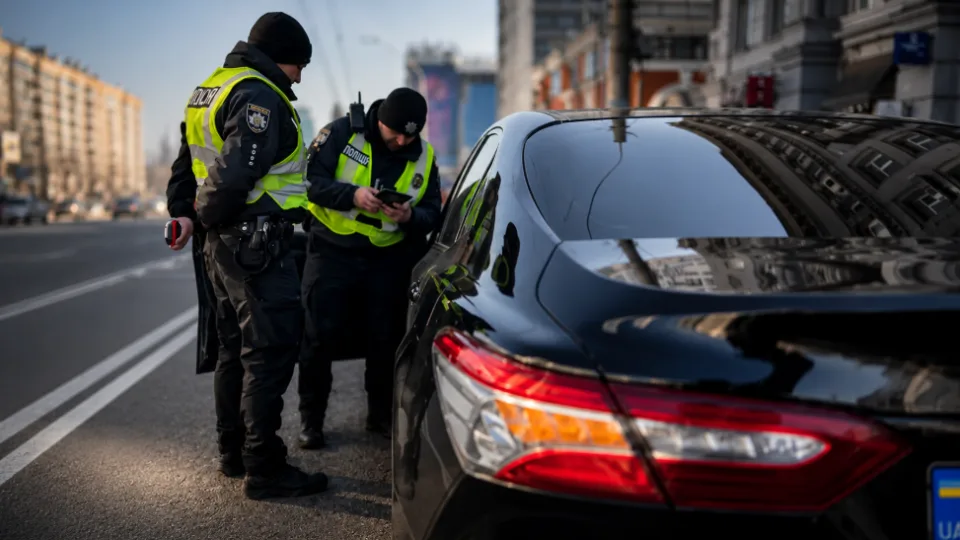










In cases where a police officer justifies the demand to present documents by citing a violation of traffic rules, these circumstances must be properly confirmed. If proper and admissible evidence is absent, the ruling on administrative liability under part one of article 126 of the Code of Administrative Offenses of Ukraine (CAO) must be canceled.
The Administrative Cassation Court of the Supreme Court upheld the appellate court’s decision, which canceled the patrol police’s ruling imposing a fine for failure to present the vehicle registration document.
Circumstances of the case
A patrol police officer in Khmelnytskyi fined a driver 425 UAH under part one of article 126 CAO. The ruling stated that the driver did not present the vehicle registration certificate upon the police officer’s request.
The driver disagreed with this decision and appealed to the court, claiming he did not commit an administrative offense and that the ruling was issued without legal grounds.
The court of first instance denied the claim, recognizing the driver’s guilt as proven.
However, the appellate court reached a different conclusion. It found that the Patrol Police Department did not provide proper and admissible evidence of the driver’s administrative offense and therefore canceled the fine ruling. The police appealed this decision to the Supreme Court.
What the Supreme Court stated
The Administrative Cassation Court agreed with the appellate court’s conclusions.
The court noted that the police officer justified the demand to present documents by alleging the driver violated traffic rules. According to the law enforcement officer, this was the basis for checking documents under the Law "On the National Police" and the Traffic Rules.
At the same time, during the case review, it was established that the respondent did not properly document or prove the fact of the driver’s traffic violation. Moreover, no ruling was issued against the driver for the specific traffic violation the police officer cited as the basis for demanding documents.
Under these circumstances, the Supreme Court agreed with the appellate court’s conclusion that the respondent failed to prove the circumstances that, according to the police officer, justified the demand for the driver to present documents. The Court also supported the conclusion about the absence of proper and admissible evidence of the offense under part one of article 126 CAO.
Legal position
The Supreme Court confirmed that in case 686/11314/17, the police officer justified the demand to present documents by a traffic violation, but the respondent did not provide proper and admissible evidence to confirm this circumstance. In the absence of such evidence, the appellate court reasonably canceled the ruling on holding the driver administratively liable under part one of article 126 CAO.
The court also emphasized that during cassation review, it is not entitled to re-evaluate evidence or establish new factual circumstances. Since the appellate court fully clarified the dispute’s circumstances and correctly applied substantive and procedural law, there were no grounds to cancel its decision.
As a result, the cassation complaint of the Patrol Police Department was dismissed, and the ruling of the Vinnytsia Appellate Administrative Court remained unchanged.
Subscribe to our Telegram channel t.me/sudua and to Google News SUD.UA, as well as to our VIBER and WhatsApp pages, and follow us on Facebook and Instagram to stay informed about the most important events.