The Ministry of Education refused to lower the minimum NMT score for admission from 150 to 130













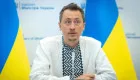
The Ministry of Education and Science published an official position regarding the proposal to lower the minimum competitive score for admission to certain specialties from 150 to 130 points. The initiative appeared after the appeal of the Commissioner of the Verkhovna Rada of Ukraine for Human Rights Dmytro Lubinets, who stated that this year's conditions for conducting the National Multi-subject Test (NMT) due to the war significantly affected the applicants' ability to demonstrate their knowledge.
At the same time, the Ministry emphasized that it understands the difficult conditions of the admission campaign but does not support changing its rules without a comprehensive assessment of possible consequences.
As previously reported, Dmytro Lubinets appealed to the Cabinet of Ministers and the Ministry of Education with a proposal to reconsider the approaches to conducting the NMT.
In particular, the ombudsman proposed considering the possibility of lowering the minimum competitive score for admission to certain specialties from 150 to 130 points.
According to Lubinets, this year's conditions for taking the NMT were significantly complicated due to air raid alerts, prolonged stays in shelters, technical failures, and the absence of an effective appeal mechanism regarding incorrect test tasks. He emphasized that such factors affect test results and create unequal conditions for applicants.
The ombudsman reported that only in June 2026 he received 21 appeals regarding problems during the NMT, but he believes the actual number of such cases is much higher.
Among Dmytro Lubinets' proposals are also the restoration of the right to appeal incorrect test tasks, publication of tests and correct answers after the NMT is completed, as well as regulation of testing for children in places of detention. According to him, they also have a constitutionally guaranteed right to education.
The Ministry of Education explained its position on reviewing admission rules
The Ministry of Education and Science stated that it has already received the submission from the Commissioner of the Verkhovna Rada of Ukraine for Human Rights.
The Ministry noted that the issues raised require expert evaluation by the Ministry itself, the Ukrainian Center for Educational Quality Assessment, higher education institutions, and other responsible bodies depending on the content of the appeal.
The Ministry emphasized that its position remains consistent: the state must support applicants under difficult war conditions, respond to specific organizational problems, and guarantee an additional testing session for participants who, for objective reasons, could not complete or take the test during the main session.
The Ministry stressed that the admission campaign cannot be changed under the influence of situational decisions without proper analysis of possible consequences.
Why the Ministry of Education does not support lowering the minimum competitive score
The Ministry pointed out that Ukrainian graduates have been taking the NMT for the fifth year during the full-scale war. Air raid alerts, evacuations, and prolonged stays in shelters create additional burdens on children, their parents, and examination center staff.
That is why participants who, for objective reasons, could not take or complete the test during the main session are provided with participation in an additional NMT session.
At the same time, the Ministry emphasized that the increased minimum competitive score requirements — from 150 points even for contract admission — were introduced gradually and are not a new measure for 2026.
Why higher requirements apply to medicine, law, and international relations
The Ministry explained that for medical specialties, the increased minimum competitive score is related to the need to ensure quality training of future specialists, whose professionalism will affect people's lives and health.
Regarding specialties such as "Law," "International Law," "Public Administration," "International Relations," as well as certain economic specializations, the Ministry noted that the state must ensure a sufficient level of academic preparation of applicants, since these fields are directly related to protecting citizens' rights, making management decisions, representing Ukraine internationally, and the activities of state institutions.
The Ministry of Education provided admission campaign statistics
The Ministry noted that some specialties for which a review of the minimum competitive score is proposed traditionally have high demand among applicants.
Therefore, changing the established threshold will affect not only admission conditions but also the quality of competitive selection and trust in the admission campaign rules.
For example, the Ministry cited 2025 statistics. The average competitive score for budget admission in specialty C3 "International Relations" was 174.34, and for specialty C2 "Political Science" — 172.89.
The Ministry explained the difference between the NMT and the competitive score
The Ministry separately drew attention to a common mistake during discussions of the admission campaign.
The Ministry emphasized that the widespread phrase "passing NMT score of 150" is incorrect because admission concerns not the result of the national multi-subject test itself but the minimum value of the competitive score required to participate in the competitive selection for certain specialties.
The competitive score is calculated according to an established formula considering the NMT results and special coefficients for the respective specialty.
The Ministry: admission rules must be predictable
The Ministry stressed that any changes to admission rules must be made exclusively within the defined procedure and after assessing their impact on the entire admission campaign.
The Ministry reminded that the Admission Procedure for higher education in 2026 was formed in advance, discussed with representatives of higher education institutions, professional communities, and other stakeholders.
Based on it, universities have already approved their own admission rules, configured electronic systems, and applicants are planning their educational trajectories.
Summarizing its position, the Ministry of Education and Science stated that it remains open to dialogue with all interested parties but insists that admission rules must be predictable, fair, and correspond to the long-term interests of the state, and not change under the influence of situational social tension.
Subscribe to our Telegram channel t.me/sudua and to Google News SUD.UA, as well as to our VIBER and WhatsApp, Facebook page and Instagram page to stay informed about the most important events.