Not Every Locust is Dangerous – Only When an Invasion Can Really Destroy the Crop


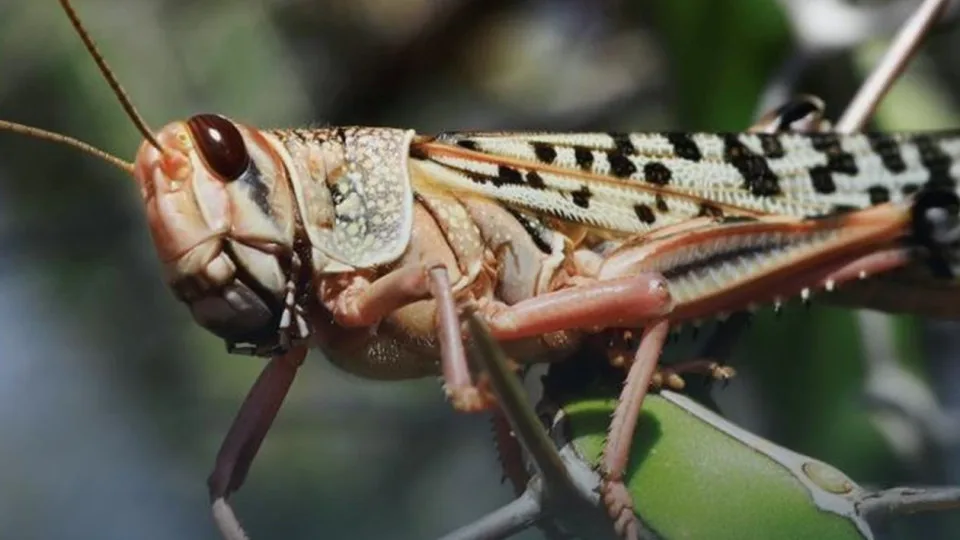










Recently, media reports about locusts have become more frequent, but the appearance of isolated insects does not constitute an emergency. Experts emphasise that locusts are a natural part of Ukraine's ecosystem, and a serious threat to agricultural land only arises under specific conditions.
As explained by the State Service of Ukraine on Food Safety and Consumer Protection, both solitary (non-swarming) and swarming species of locusts are found in Ukraine. Most of these live locally and do not cause significant damage to crops, as their numbers are controlled by natural factors and predators.
The threat emerges during prolonged heat, drought, and the presence of extensive areas of abandoned land. Under such conditions, the insect population sharply increases, they switch to a swarming form, alter their colouration and behaviour, gather into large swarms, and can migrate over considerable distances. It is at this stage that locusts are capable of completely destroying agricultural crops.
The primary habitat of locusts in Ukraine remains the southern and south-eastern regions. The highest risk of increased population outbreaks is observed in the Dnipropetrovsk, Kherson, Zaporizhzhia, and Odesa regions, as well as in certain districts of the Mykolaiv region.
However, this does not signify a mass spread of pests across the entire country. Outbreaks usually have a localised character, and the situation is under constant control by specialists from the State Service of Ukraine on Food Safety and Consumer Protection.
During mass reproduction, locusts feed on the green mass of plants and can damage grain crops, corn, sunflowers, vegetables, melons, legumes, and fodder grasses. They cause the most damage during periods of mass development when large concentrations of insects can rapidly destroy vegetation over extensive areas.
The State Service emphasises that effective plant protection begins with the early detection of outbreaks. To this end, specialists regularly conduct phytosanitary monitoring, assess risks, and forecast population development. If the number of locusts exceeds the economic damage threshold, measures are promptly taken to localise and eliminate the outbreaks.
To control pest numbers, it is recommended to regularly inspect agricultural lands, fallow lands, pastures, and abandoned areas, carry out mechanical soil treatment in a timely manner, use insecticides permitted in Ukraine according to the State Register of Pesticides and Agrochemicals, inform beekeepers before treatments, and monitor the effectiveness of the measures taken.
As previously reported by Judicial-Legal Newspaper, to protect crops, ecologists advise acting at the larval stage when locusts are not yet flying. During this period, the most effective methods are monitoring and biological control, including preparations based on entomopathogenic fungi such as Metarhizium acridum. Chemical agents should be used with caution — they harm not only locusts but also beneficial insects and birds that naturally regulate their numbers.
Subscribe to our Telegram channel t.me/sudua, follow SUD.UA on Google News , and join us on VIBER, WhatsApp, Facebook and on Instagram to stay informed about the important events.