Galushchenko's Defense: Court Denied Request for Materials Justifying NABU's Extension of Investigation












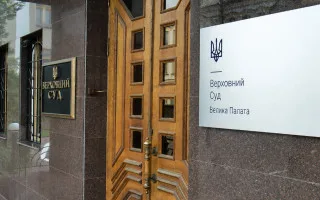
Yesterday, July 28, the High Anti-Corruption Court considered a motion by the NABU detective to extend the pre-trial investigation period in a criminal case, in which one of the suspects is the former Minister of Energy and Justice Herman Galushchenko. Today, July 29, Judge Andriy Bitsyuk announced a ruling partially granting the motion and extending the investigation period until October 10, 2026.
During the case hearing on July 28, the defense filed several motions aimed at verifying the grounds on which the prosecution justified the need to extend the pre-trial investigation, but the judge denied their satisfaction.
This was reported by Ukrainian News.
At the beginning of the session, the lawyers requested to organize a broadcast of the hearing on the High Anti-Corruption Court’s YouTube channel, but Judge Bitsyuk did not support this motion.
"The case has significant public resonance, so broadcasting would allow seeing not only the prosecution’s version but also the defense’s arguments without retellings and interpretations. Openness in such a process is a guarantee of public trust in the court," said lawyer Maksym Kravchenko in a comment to Ukrainian News.
Before the substantive consideration of the case, the defense requested to return the detective’s motion altogether, as it, in the lawyers' opinion, did not meet the legal requirements (Part 2, Article 295-1 of the Criminal Procedure Code). The complaint was that for each unfinished investigative action, the detective had to clearly explain why it was necessary, how much time was needed, and why it was not completed earlier—but this was not done. Additionally, part of the documents justifying the main prosecution arguments was not attached to the motion. Judge Bitsyuk refused to return the motion.
The defense also requested the court to demand primary prosecution materials in four areas: the status of forensic examinations, unfulfilled requests for international legal assistance, search protocols and seized equipment, and protocols and information from mobile operators. In all four cases, the judge refused, citing the absence of a separate procedure for requesting such documents at this stage of the proceedings.
At the same time, the court recommended that the prosecution provide the very documents the defense emphasized as missing before the trial concludes, and later, despite the lawyers' objections, Judge Bitsyuk granted the detective’s motion to attach the materials.
"A procedurally paradoxical situation has arisen. Despite significant inconsistencies of the motion with the requirements of Part 2, Article 295-1 of the Criminal Procedure Code, the judge refused to return it to the detective and rejected the defense’s motion to request materials to verify the prosecution’s arguments. When it became clear that without these documents the grounds for extending the period were unproven, the court recommended the detective provide additional materials and, despite the defense’s objections, even attached those dated the day of the hearing. This looks like assistance to the prosecution, which gives the proceedings signs of one-sidedness and calls into question adherence to the principles of legality, adversarial process, and party disposition," said lawyer Susanna Tirzikyan.
One of the main prosecution arguments was the large number of unfinished forensic examinations. Defender Vitaliy Polozhishny noted that the mere list is insufficient—it is necessary to know the status of each examination separately. "For some orders issued as early as November 2025, the objects were transferred to the forensic institution only in May 2026," he said.
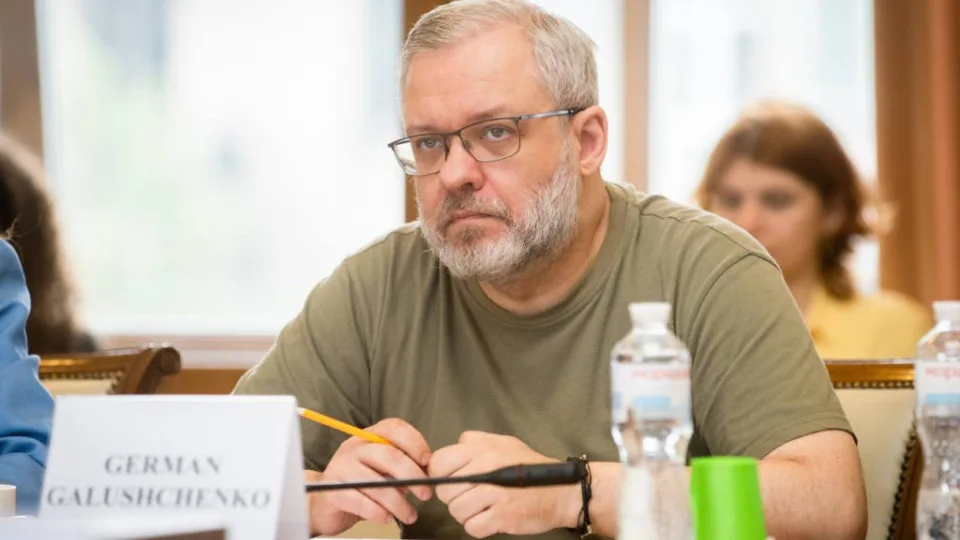
Herman Galushchenko himself emphasized during the hearing that he wants the case to move to an open court trial as soon as possible to prove his innocence.
"Do these examinations that NABU talks about concern me specifically? No, I do not see that. No examination was aimed at establishing my identity as a participant in conversations. The question arises: why should I be a hostage of examinations of other persons that do not concern me?" said the former minister.
A separate defense motion concerned 17 requests for international legal assistance, responses to which, according to the detective, have not yet been received. However, the investigation did not provide the court with the requests themselves, confirmations of their receipt, or deadlines for execution.
"Without primary materials, it is impossible to establish what exactly was requested, which episode and which person it concerns. We cannot even verify which of these requests are related to the suspicion against Herman Galushchenko," emphasized Maksym Kravchenko.
The lawyers also requested to examine documents regarding equipment seized during searches and information from mobile operators. In the motion, the detective referred to the need to complete the review of a large array of devices and analyze telecommunications data, but according to the defense, without search protocols, descriptions of seized items, temporary access protocols, and registers of received files, it is impossible to verify the volume of work, its start time, or the actual completion period.
According to the defense, the refusal to request primary documents complicated the adversarial verification of the prosecution’s claims, while these claims were taken into account as grounds for extending the period.
"Adversarial process is not a formal presence of a lawyer in the courtroom but a real opportunity to check the documents the prosecution refers to and provide a substantive response. The Convention for the Protection of Human Rights is not an optional appendix to the Criminal Procedure Code. The Ukrainian court is obliged to apply it and the ECHR practice as a source of law. If an almost maximum term is granted due to unfinished examinations, interrogations, or other actions, it is necessary to establish why they could not be performed earlier for objective reasons. Otherwise, the right to a reasonable time becomes a declaration, and judicial control a formal sanctioning of the prosecution’s wishes," stressed Maksym Kravchenko.
Separately, the defense also emphasized that the consolidation of the case does not exempt the investigation from the obligation to individualize the grounds for extending the period.
"Galushchenko’s defense does not ask for privileges: if there is evidence—submit the indictment to the court. If additional evidence is expected—prove its necessity, explain the reasons for untimely receipt, and specify a concrete term. A person cannot be kept in the status of a suspect only for further search for confirmation of an already stated version," summarized Kravchenko.
Recall that Herman Galushchenko has held the positions of Minister of Energy and Minister of Justice of Ukraine at different times. He denies involvement in the crimes attributed to him. The pre-trial investigation in the criminal case is ongoing.
Subscribe to our Telegram channel t.me/sudua and to Google News SUD.UA, as well as to our VIBER and WhatsApp, Facebook page and Instagram to stay updated on the most important events.