Court canceled the mobilization of a reserved paramedic due to incorrect data in the state register


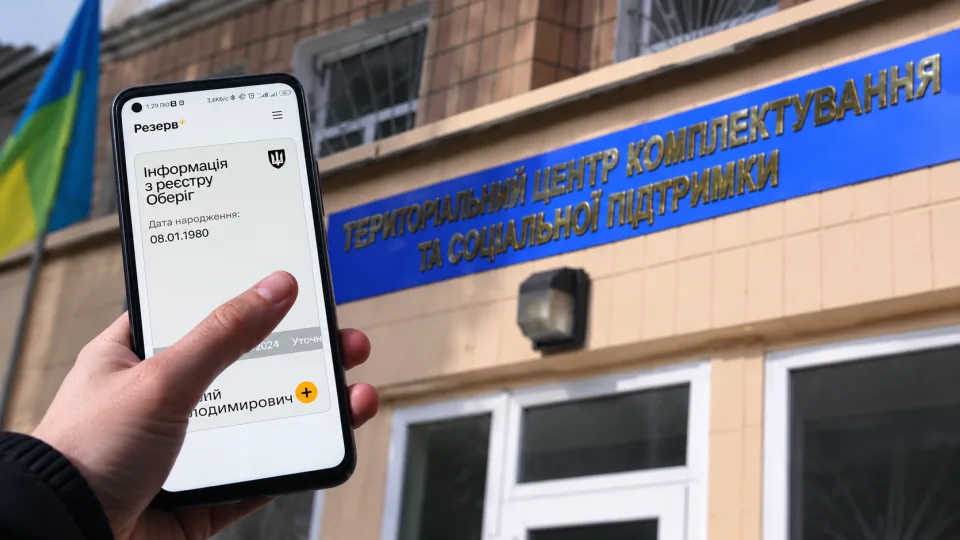










The Chernivtsi District Administrative Court considered case No. 600/5075/25-a regarding the appeal against the order of conscription for military service during mobilization and the demand for dismissal from military service of a person who at the time of mobilization had a valid reservation as an employee of a critically important enterprise.
The court concluded that the mobilization order was unlawful, canceled it in the contested part, and obliged the military unit to make a decision to dismiss the plaintiff from military service and remove him from the personnel lists.
Case circumstances
The plaintiff requested to recognize as unlawful and cancel the order of the head of the Territorial Recruitment and Social Support Center regarding conscription for military service during mobilization in the part of his assignment to the military unit, as well as to oblige the military unit to make a decision on his dismissal from military service and removal from the personnel lists.
The claim was based on the fact that at the time of mobilization the plaintiff worked as a paramedic at the Chernivtsi Regional Center for Emergency Medical Care and Disaster Medicine, which is a critically important enterprise, and his position is subject to reservation. The plaintiff stated that he had a valid reservation and a certificate granting a twelve-month deferment from conscription. However, during verification of the military registration document in the “Reserve+” application, he found information about being wanted by the Territorial Recruitment and Social Support Center. After arriving at the center to clarify the reason for this record, he was detained and sent to the military unit for military service. According to the plaintiff, the employees of the Territorial Recruitment Center unjustifiably entered information about his dismissal from work into the Unified State Register of conscripts, reservists, and military liable persons, which led to illegal mobilization.
The defendant opposed the claim, stating that the mobilization was conducted according to the law. According to the data of the Unified State Register of conscripts, reservists, and military liable persons, the plaintiff’s reservation was terminated due to his dismissal from work, and the cancellation of the reservation occurred automatically as a result of electronic information interaction between state registers. The military unit also noted that the law does not provide for the dismissal of a serviceman conscripted during mobilization solely on the basis that there is an order for reservation after conscription.
During the case review, the court established that the plaintiff has worked at the Chernivtsi Regional Center for Emergency Medical Care and Disaster Medicine since 2016 and has held the position of paramedic since January 1, 2025. The court also established that this institution is a critically important enterprise, and the paramedic position is included in the list of positions subject to reservation.
Furthermore, on August 5, 2025, the plaintiff was issued a certificate of deferment from conscription for twelve months. Despite this, on September 25, 2025, by order of the head of the Territorial Recruitment and Social Support Center, he was conscripted for military service during mobilization and sent to the military unit, where he was enrolled in the personnel lists and appointed to a military position.
Conclusions and court decision
Examining the case materials, the court first focused on the legislative regulation of military service during mobilization and the reservation of military liable persons. The court noted that according to the Law "On Military Duty and Military Service," during mobilization, only those liable for military service who are not reserved according to the established procedure are conscripted. At the same time, the Law "On Mobilization Preparation and Mobilization" explicitly provides that military liable persons reserved for the period of mobilization and martial law are not subject to conscription.
The court found that the plaintiff had a valid certificate granting deferment from conscription issued on August 5, 2025, for twelve months. Thus, on the date of mobilization—September 25, 2025—he had the legal status of a reserved person and, according to paragraph 1 of part one of Article 23 of the Law "On Mobilization Preparation and Mobilization," could not be conscripted for military service.
Assessing the arguments of the Territorial Recruitment and Social Support Center that the reservation ended due to the alleged dismissal of the plaintiff from work, the court noted that the legality of issuing the deferment certificate and arranging the reservation by the defendants was not disputed. At the same time, the claim of dismissal was based solely on the data of the Unified State Register of conscripts, reservists, and military liable persons. The court critically evaluated these arguments, emphasizing that incorrect operation of state registers cannot create negative legal consequences for a person who was properly reserved.
The court also took into account that upon arrival at the Territorial Recruitment Center, the plaintiff reported having a valid reservation, provided the deferment certificate, and stated that he continued to work at the Chernivtsi Regional Center for Emergency Medical Care and Disaster Medicine. These circumstances were confirmed by official letters from the employer, according to which the employee remained in employment relations, did not submit a resignation, and no notification of his dismissal was sent to the Territorial Recruitment Center. The defendants provided no evidence of dismissal to the court.
Under these circumstances, the court concluded that the order for the plaintiff’s conscription for military service in the part of his assignment to the military unit is unlawful and subject to cancellation. The court emphasized that canceling an illegal individual act does not violate the stability of public-law relations regarding military service but rather indicates the inadmissibility of illegal actions by Territorial Recruitment Centers during mobilization of persons entitled to deferment.
Considering the demand for the plaintiff’s dismissal from military service, the court noted that enrollment of a serviceman in the personnel lists of a military unit is carried out based on an order after his referral by the Territorial Recruitment Center. However, in this case, it was the illegal actions of the Territorial Recruitment Center that became the basis for such enrollment. The court stressed that unlawful actions cannot produce lawful consequences, and the legal consequences of violating a person’s rights must be eliminated by restoring the legal status that existed before the violation. In this context, the court also referred to the "fruit of the poisonous tree" doctrine, according to which an illegal initial decision cannot be the basis for the emergence of lawful derivative consequences.
The court separately rejected the military unit’s reference to the Supreme Court ruling dated February 5, 2025, in case No. 160/2592/23, which stated that the mobilization procedure is irreversible and its recognition as unlawful does not by itself restore the previous status of the person. The Chernivtsi District Administrative Court emphasized that this ruling is not a precedent and was made under different factual circumstances. It concerned a serviceman who challenged mobilization almost a year after conscription, citing failure to pass the military-medical commission, so the conclusions cannot be applied to the disputed legal relations.
The court also disagreed with the arguments about the impossibility of canceling an individual act after its execution. It noted that the mere fact of executing such an act or its expiration does not deprive a person of the right to judicial protection. Any individual act of a public authority that directly affects the rights or legitimate interests of a person can be subject to judicial review. The purpose of administrative proceedings is not an abstract statement of legality or illegality of the actions of a public authority but ensuring effective protection of the actually violated rights of the person.
The court noted that Article 26 of the Law "On Military Duty and Military Service" defines grounds for dismissal of servicemen arising after lawful conscription. At the same time, the absence of a separate ground for dismissal in case of cancellation of an unlawful mobilization order does not mean such dismissal is impossible. The court believes this only indicates that the legislator did not foresee a situation where a person could serve in the military after mobilization carried out in violation of the law.
The court emphasized that in this case, the plaintiff’s enrollment in the personnel lists of the military unit was a direct consequence of illegal mobilization. Retaining his status as a serviceman after canceling the unlawful conscription order would not ensure real restoration of his violated rights and would leave the person in a state of legal uncertainty. The court took into account the legal position of the Supreme Court expressed in the ruling dated April 11, 2024, in case No. 520/7954/22, which confirmed the possibility of dismissing a person from military service due to cancellation of mobilization orders and enrollment in the personnel lists of the military unit.
Referring to the principle of the rule of law, the provisions of the Code of Administrative Procedure of Ukraine, Article 13 of the Convention for the Protection of Human Rights and Fundamental Freedoms, and the practice of the Constitutional Court of Ukraine, the court noted that the chosen method of protection must be effective and ensure real restoration of violated rights. In the court’s opinion, any other method of protection in this case would be ineffective, as it would effectively shift the consequences of illegal actions of the public authority onto the person whose rights were violated.
Given the established circumstances, the court concluded that the illegality of mobilization is sufficient grounds to oblige the military unit to make a decision on the plaintiff’s dismissal from military service and removal from the personnel lists, despite the fact that the commander of the military unit did not commit unlawful actions when issuing the enrollment order.
As a result, the Chernivtsi District Administrative Court fully satisfied the claim. The court recognized as unlawful and canceled the order of the head of the Territorial Recruitment and Social Support Center dated September 25, 2025, regarding the plaintiff’s conscription for military service during mobilization, obliged the military unit to make a decision on his dismissal from military service and removal from the personnel lists, and also recovered the paid court fee in favor of the plaintiff.
Subscribe to our Telegram channel t.me/sudua and to Google News SUD.UA, as well as to our VIBER and WhatsApp, Facebook page Facebook and Instagram to stay informed about the most important events.