Built a fake amphitheater, told stories about Caesar and Juliet, and charged 40 euros: how an Italian deceived tourists for 20 years


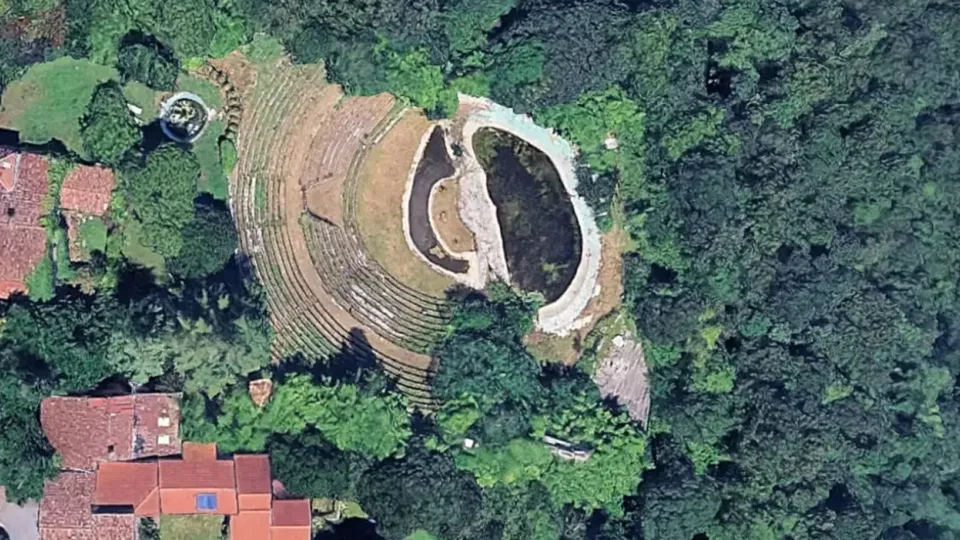










In Italy, a court sentenced a man who for nearly two decades convinced tourists that the structure he built with his own hands was an ancient Roman amphitheater. He charged 40 euros per visitor for tours to the supposedly unique landmark, but his stories turned out to be fabricated. Moreover, the site was even included in a tourist guide funded by the European Union.
The man called the self-built structure the "oldest and largest amphitheater"
As reported by Euronews, 69-year-old Franco Malosso, who presented himself as Franco Malosso "von Rosenfranz," was convicted of fraud after selling tickets for years to tourists to visit a fake Roman amphitheater.
The structure, known as the Berico Maritime Amphitheatre, is located near the city of Vicenza in northeastern Italy.
According to Malosso, he supposedly "discovered" the amphitheater after a landslide in 2005. He told visitors that it was one of the oldest and largest amphitheaters in the world, built in 393 AD.
He charged 40 euros per tourist for tours to this landmark.
Fabricated stories about Julius Caesar and Juliet
To make the legend more convincing, Malosso added historical and literary plots.
In particular, he claimed that Julius Caesar supposedly visited this amphitheater while returning to Rome from Egypt with Cleopatra. He also stated that Juliet Capulet—the heroine of William Shakespeare’s tragedy—lived in an old church on the complex’s territory.
Additionally, Malosso called himself a philanthropist, entrepreneur, and orchestra conductor. He even managed to convince local authorities to include the site in Vicenza’s tourist guide and mobile app, created with financial support from the European Union.
Archaeologists exposed the forgery
Doubts about the truthfulness of this story arose back in 2016.
After an inspection conducted by archaeologists at the request of the Italian military police Carabinieri, it was revealed that the "ancient Roman" structure was built from modern materials.
Experts found fiberglass in the construction, papier-mâché columns, plastered blocks, and gypsum statues made in the early 2000s.
Satellite images also showed that initially a hill was leveled on this site, after which the fake "ancient" complex was built on the cleared area.
Historians also easily refuted other claims by Malosso. In particular, Julius Caesar lived about 400 years before 393 AD, so he could not have visited a structure that, according to the fraudster, was built at that time. Moreover, the setting of Shakespeare’s tragedy "Romeo and Juliet" is traditionally associated not with Vicenza but with Verona.
The punishment the fraudster received
The court found Franco Malosso guilty of illegal construction, forgery of artistic objects, and creating structures without the necessary permits.
He was sentenced to two years and four months in prison and fined 3,000 euros.
In addition, the municipality of Arcugnano filed a civil lawsuit demanding 560,000 euros in compensation for damages, which the local authorities believe were caused by the convicted man’s activities.
Subscribe to our Telegram channel t.me/sudua and to Google News SUD.UA, as well as to our VIBER and WhatsApp, Facebook page and Instagram to stay informed about the most important events.