Why the Supreme Court Reduces Lawyers' Fees: The Position of the Grand Chamber


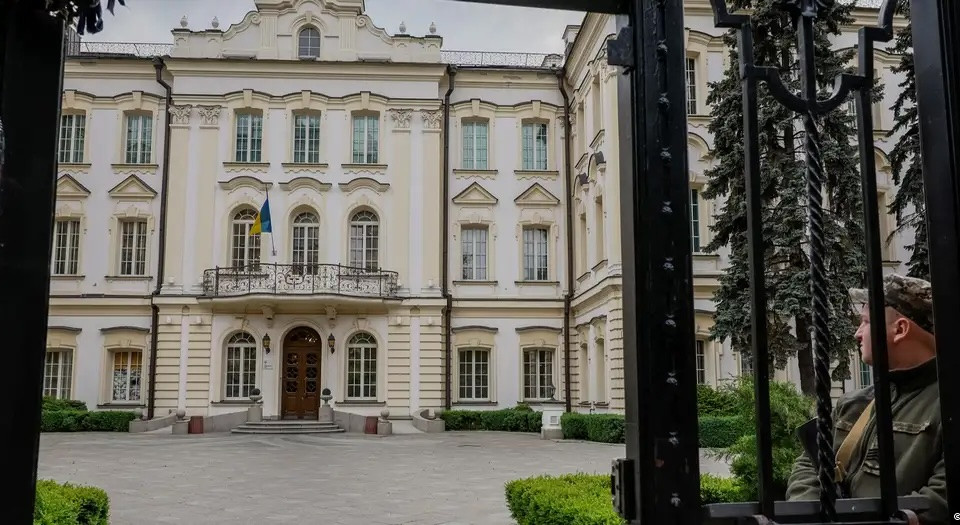










The issue of allocation of court costs in commercial proceedings is a rather controversial category of procedural law, where the principle of freedom of contract between the client and the lawyer intersects with the limits of judicial control over the proportionality of expenses.
In case No. 911/969/24, the Supreme Court in the composition of the Grand Chamber formulated new approaches not only to the assessment of costs for professional legal assistance but also to the issue of their actual reimbursement in complex commercial disputes by an additional ruling.
The decision in this case became a guideline for further practice regarding the criteria courts should follow when determining the reasonableness and necessity of expenses for legal services at the highest level of judicial instance. The Grand Chamber of the Supreme Court resolved not only the dispute concerning the supply of agricultural machinery but also the question of how much intellectual work of a lawyer costs at the highest judicial instance.
The "Judicial and Legal Newspaper" has already covered the position in which the Grand Chamber of the Supreme Court explained when a buyer loses the right to demand goods after returning the prepayment. The buyer company tried to force the supplier company through the court to deliver the equipment after the buyer silently accepted the returned prepayment. The Grand Chamber of the Supreme Court in the ruling dated 18.02.2026 decided that acceptance of money without objections indicates the termination of the obligation by agreement of the parties.
Since the supplier won the case in cassation and the plaintiff's complaint was dismissed, the supplier gained the right to reimbursement of costs for professional legal assistance.
So, let's analyze the Additional ruling of the Grand Chamber of the Supreme Court dated 20.05.2026, which reveals the mechanisms for assessing the "reality" and "inevitability" of lawyers' expenses.
Fee formula
The supplier requested to recover 65,000 hryvnias from the opponent. The lawyer justified the amount as follows: his hourly rate is 10,000 UAH. Drafting objections against the opening of cassation proceedings took 4 hours, costing 40,000 hryvnias. Drafting a response to the cassation complaint took 2 hours, costing 20,000 UAH, and the motion for a videoconference took 0.5 hours, costing 5,000 UAH.
The supplier provided a full package of documents: contract, additional agreement, acceptance certificate of services, and invoice. It seemed that the formal requirements of the Commercial Procedural Code of Ukraine were met.
Plaintiff's defense
The plaintiff raised objections that became key for the court.
Thus, the plaintiff noted that the content of the supplier's objections and response essentially repeated the position stated in the courts of first and appellate instances. There was no new legal analysis in cassation.
The plaintiff pointed out the overstatement of the time spent. In particular, the claimed 4 hours for preparing objections, the content of which essentially duplicated the arguments of the response, were indicated as not meeting the criteria of reasonableness and necessity of expenses.
The plaintiff referred to contractual obligations with the lawyer, but no actual evidence of payment for the provided services or settlements at the time of considering the issue of costs was submitted. This became an additional argument when assessing the proportionality of the claimed amounts.
Together, these circumstances influenced the court's approach to determining the limits of compensation for legal assistance costs and confirmed the trend toward controlling their justification in commercial proceedings.
Position of the Grand Chamber
The Grand Chamber of the Supreme Court rejected the plaintiff's argument about the absence of payment for the lawyer's services. For the allocation of costs, it is sufficient to prove that they must be paid according to the contract.
The court recognized that interference in the contractual relations between the lawyer and the client (Article 627 of the Civil Code) is possible only in case of a justified motion by the other party about disproportionality.
Referring to the practice of the European Court of Human Rights (cases "Dvoynykh v. Ukraine", "East/West Alliance Limited"), the Grand Chamber emphasized that costs must be "actual, inevitable, and justified."
However, the Grand Chamber agreed with the plaintiff regarding the disproportionality of the work.
The Grand Chamber of the Supreme Court noted that when opening cassation proceedings in this case by the ruling dated April 7, 2025, the Supreme Court did not take into account any of the plaintiff's objections regarding the opening of cassation proceedings, in particular concerning the dissimilarity of legal relations in the cited cases and in the case under review, since such arguments are examined during the substantive consideration of the cassation complaint.
Such circumstances as the cassation court's rejection of procedural documents prepared by the lawyer were repeatedly considered by the Cassation Commercial Court in the Supreme Court as grounds for reducing the amount of claimed costs for professional legal assistance, in particular in rulings dated March 12, 2024, in case No. 904/1105/23, and April 2, 2026, in case No. 903/466/25.
When assessing the proportionality of the claimed costs for drafting the response to the cassation complaint, the court must also take into account that the defendant's position in the context of his objections to satisfying the claims was formed already in the court of first instance and did not change in connection with the cassation appeal.
Moreover, the objections stated in the response to the cassation complaint regarding the essence of the claimed claims are similar to those presented in the courts of previous instances, and the content of the response partially duplicates the conclusions of the courts of first and appellate instances in this case and the content of procedural documents previously submitted by the defendant, in particular objections against opening cassation proceedings. That is, the defendant's position was formed already at the first instance.
The court explicitly stated that the lawyer's participation in cassation boiled down to "repeating the already formed position." The Supreme Court has repeatedly pointed out that when determining the amount of reimbursement of court costs for professional legal assistance, the court must proceed from the criterion of the reality of lawyers' expenses, as well as the criterion of the reasonableness of their amount, taking into account the specific circumstances of the case and the financial condition of both parties (additional ruling of the Grand Chamber of the Supreme Court dated February 19, 2020, in case No. 755/9215/15-c).
As a result, the Grand Chamber of the Supreme Court recognized that 65,000 UAH for repeating previously written theses does not meet the criteria of reasonableness and reality and reduced the claimed amount of costs for professional legal assistance to 20,000 UAH, which the plaintiff must reimburse to the defendant.
Subscribe to our Telegram channel t.me/sudua and to Google News SUD.UA, as well as to our VIBER and WhatsApp, page on Facebook and on Instagram to stay informed about the most important events.