Court rulings may be closed in the registry for a year: The Rada paused the controversial reform


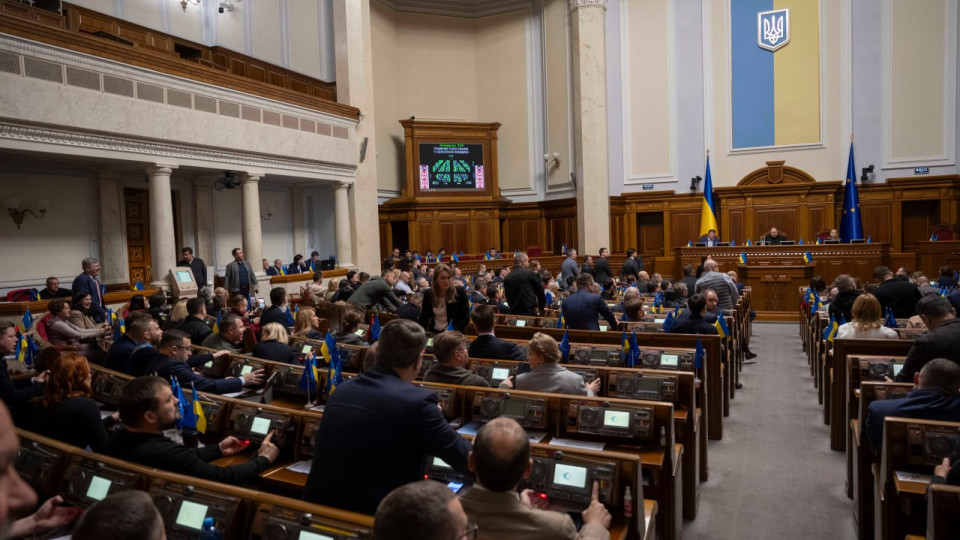










Can the openness of justice become a weapon in the hands of the enemy? This question became central at the regular meeting of the Committee on Legal Policy on June 3, 2026, during the discussion of the high-profile bill No. 7033-d.
Bill No. 7033-d aims to find a balance between the constitutional principle of openness of court decisions and the requirements of national security in the conditions of full-scale aggression. The main idea is to restrict access to certain information that could be used by the enemy for intelligence and strikes, as well as to protect the secrecy of pre-trial investigation.
What exactly does bill 7033-d propose
The bill proposes amendments to the Law of Ukraine "On Access to Court Decisions."
It is proposed to postpone for one year the full and general access to rulings on property arrest, temporary access to things, searches, and conducting covert investigative (search) actions (CISA).
Separately, the bill strengthens restrictions on open court texts. They prohibit indicating the names of military units, management bodies, as well as the addresses of defense enterprises and strategic facilities.
Access to the reasoning parts of decisions in cases of evasion from mobilization (Art. 336 of the Criminal Code of Ukraine), as well as regarding restrictions on the right to drive a vehicle upon requests from the Territorial Recruitment Centers, is proposed to be opened only one year after the end of martial law.
In addition, judges are proposed to be granted the right to independently conceal certain information in open decisions if they believe that its disclosure may harm security — particularly in matters of defense developments or modernization of armaments.
Security factor
The Chairman of the Verkhovna Rada Committee on Legal Policy, Denys Maslov, presented arguments in favor of the bill. According to him, there are still confirmed cases when the enemy used data from the Unified State Register of Court Decisions to adjust fire.
The committee was presented with the experience of the United Kingdom, where courts have the right not to publish decisions at all for national security reasons.
The state enterprise "Information Judicial Systems" confirmed its readiness to implement these restrictions, noting that rulings on CISA already enter the registry only after declassification, so a one-year delay is just an additional precautionary step.
Representatives of the Ministry of Defense and the Security Service of Ukraine generally supported the draft, emphasizing the importance of concealing data about the search for persons and the methodology of special services.
Risks of discretion
At the meeting, it was emphasized that the Criminal Procedure Code does not provide a clear procedure for delivering rulings on searches if the person was not at home. If such a ruling is closed in the registry for a year, the homeowner will not even be able to find out on what grounds the search was conducted and will not be able to file a complaint.
After the search, secrecy no longer exists — the action is completed. Concealing the ruling for a year looks like an attempt by law enforcement to hide their own mistakes or illegal actions during the investigation.
Despite a prepared comparative table for the second reading, the parliamentary Committee decided to postpone the decision on the bill amending the Law "On Access to Court Decisions." The reasons were both terminological contradictions and political disagreements between factions.
One of the key problems was the lack of a unified understanding of key legal categories. The committee recorded confusion between the concepts of "general access" (anonymous publication of decisions) and "full access" (access for participants in the process and authorized bodies), which complicated the finalization of the text.
The chairman of the relevant committee proposed to hold additional internal consultations to agree on legal formulations. According to him, this should prevent situations where amendments are made without proper elaboration during the meeting.
Thus, consideration of the bill has been temporarily put on hold.
Subscribe to our Telegram channel t.me/sudua and to Google News SUD.UA, as well as to our VIBER and WhatsApp, page on Facebook and on Instagram to stay informed about the most important events.