Deepfakes, hacked accounts, screenshots of correspondence, and the "information bubble": how to counter scammers


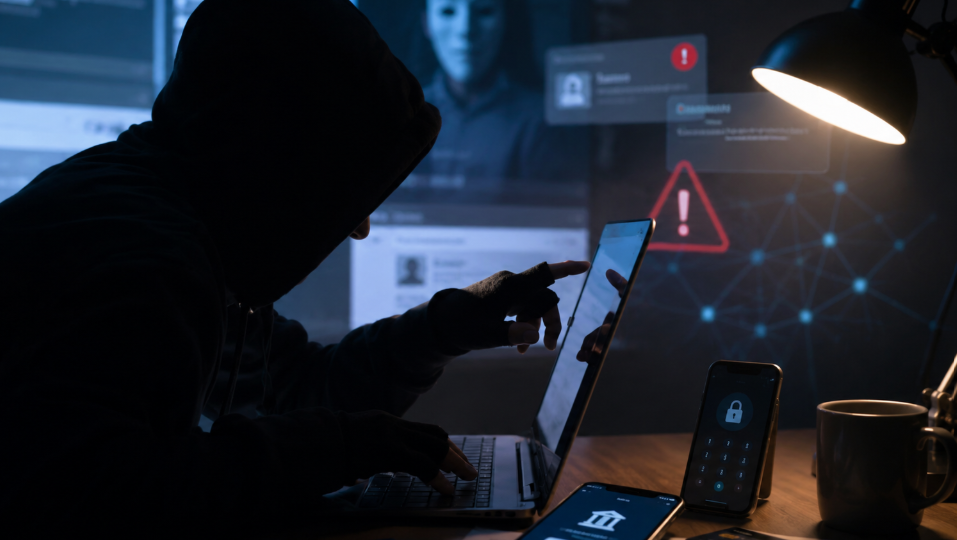










The Ministry of Digital Transformation of Ukraine notes that fraud continues to evolve, and over the past year, 67% of adults and 78% of teenagers have encountered online threats. Basic cyber hygiene is no longer enough to protect your finances and personal information.
According to the Ministry of Digital Transformation, almost 44% of adults received messages from allegedly acquaintances or friends urgently asking to lend money due to hacked accounts. Phishing schemes and disinformation campaigns also remain widespread.
As an example, the ministry cited the spread of false information about allegedly sending summonses through the "Diia" app, the source of which turned out to be a fake website not related to government agencies.
Therefore, the Ministry of Digital Transformation emphasizes that in wartime, cyber and online security are part of national resilience, as information operations and fraudulent schemes can be used to influence society.
Sharing screenshots of correspondence may have legal consequences
One of the most unexpected warnings was a reminder about the protection of correspondence secrecy.
The Ministry stressed that even if messages were sent personally to the user, this does not automatically grant the right to publish them. Disclosure of another person's personal information without their consent may cause legal liability, as correspondence secrecy is protected by law.
How to recognize a deepfake
A separate algorithm is dedicated to detecting videos created using artificial intelligence.
Experts advise paying attention to linguistic features. According to them, modern deepfakes often make mistakes in Ukrainian stress. Another sign may be incorrectly rendered inscriptions or text in the video background.
Special caution is recommended when a person in the video urgently asks to transfer money or provide confidential information.
How to protect bank accounts and personal data
Among the practical recommendations of the Ministry of Digital Transformation is the separation of digital contacts for different purposes.
In particular, it is recommended to use a separate email for registration in online stores and various services. For online banking, it is advisable to have a separate phone number that is not used on social networks, messengers, or marketplaces.
The ministry calls this approach one of the basic standards of cyber hygiene.
How to get out of the information bubble
The Ministry also drew attention to the operation of social network algorithms. It is noted that simply clicking "Not interested" is not enough to change the recommendation feed.
One way to influence algorithms is to interact with content that usually does not match the user's interests. According to the project authors, unexpected likes can change the recommendation logic and help get out of the so-called information bubble.
Older people are more often victims of cyber fraudsters
The UN Development Programme in Ukraine highlighted the problem of digital inequality. According to sociological research, older people are the least likely to use the internet and government electronic services. One of the main reasons they name is the lack of digital skills.
UNDP notes that because of this, elderly people often become the easiest targets for cyber fraudsters.
The organization emphasizes that digital inequality today lies not only in access to the internet but also in the ability to use online services, receive necessary information, and protect oneself from digital threats.
Security algorithms are available free of charge
Seven digital security algorithms are collected in the educational series "Digital Skills and Online Safety," published on the Diia.Education platform at this link.
The materials cover issues of protecting funds after unauthorized debits, countering phishing, recognizing deepfakes, setting device privacy, cyberbullying, and actions in case of communication interruptions.
The Ministry of Digital Transformation emphasizes that with the increase in online threats, digital security becomes not only a personal matter for users but also an element of social resilience.
Additionally, read the article from the "Judicial and Legal Newspaper" about deepfake attacks on Ukrainians and how scammers clone relatives' voices using artificial intelligence.
Subscribe to our Telegram channel t.me/sudua and to Google News SUD.UA, as well as to our VIBER and WhatsApp, Facebook page and Instagram to stay informed about the most important events.