Why Military Families Are Forced to Apply Separately for Each State Benefit: Legislative Analysis


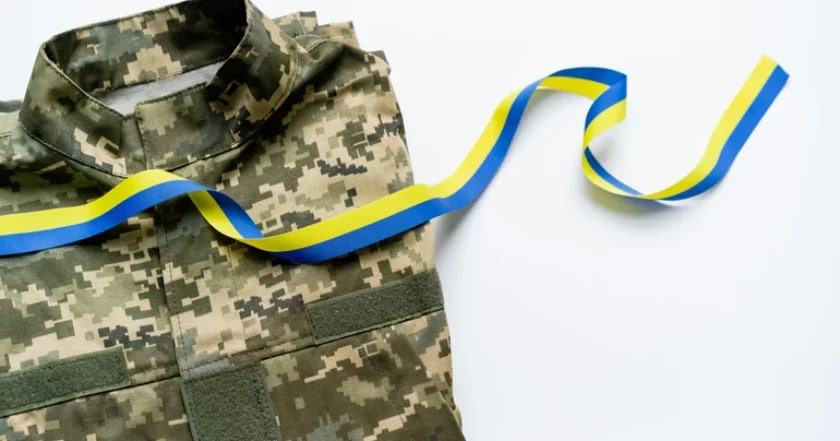










The full-scale invasion required the state to massively expand the social security structure for the military and their families. Currently, Ukrainian legislation provides for dozens of different types of money, compensations, benefits, pension payments, and privileges. The introduction of these measures aimed to help those who serve the state and their families in case of injury, disappearance, captivity, or death of a serviceman.
However, behind the spread of guarantees lies another aspect of the system – almost all payments have separate processing procedures, separate documents with corresponding deadlines, and different budget administrators. As a result, a serviceman's family often has to go through numerous independent procedures, regardless of how related they are, in the event of a single incident.
Can such a model be considered socially fair?
The law does not give a clear answer. But the current analysis of its legislation shows how well the state support system works. Article 1 of the Constitution of Ukraine defines Ukraine as a social and legal state, and according to its constitution: military social protection becomes a constitutional duty. One application of this is the provision of state guarantees for citizens' social welfare.
The right to social protection is directly enshrined in Article 46 of the Constitution of Ukraine, which guarantees citizens the right to social protection, including the right to support in case of full, partial, or temporary disability, loss of a breadwinner, unemployment due to circumstances beyond their control, as well as old age and other cases provided by law.
Specific guarantees for servicemen are defined by the Law of Ukraine "On Social and Legal Protection of Servicemen and Their Families" No. 2011-XII. This law establishes state guarantees for material, medical, pension, and social security for servicemen and their family members.
In particular, Article 9 of Law No. 2011-XII states that the state guarantees servicemen an adequate level of monetary provision, which should take into account the nature of service, its complexity, intensity, and risks.
"The state guarantees servicemen sufficient material, monetary, and other types of provision in an amount corresponding to the conditions of military service, stimulating the retention of qualified military personnel.
The central executive body implementing state policy in the field of labor and social policy, and other central executive bodies according to their competence develop and submit proposals on monetary provision for servicemen in the prescribed manner," the law text states.
Monetary provision is not a single payment
According to Article 9 of Law No. 2011-XII and the Order of the Ministry of Defense of Ukraine No. 260 dated June 7, 2018, the monetary provision system includes three large groups of payments.
The first is monthly basic payments. These include the official salary, salary by military rank, and seniority allowance. These form the basic income level of a serviceman.
The second group is monthly additional payments. These are various allowances, supplements, increases in official salaries, bonuses, rewards for service specifics, tasks in cybersecurity, and other types of material incentives.
The third category is one-time payments assigned depending on specific life circumstances or service. These include various rewards and material assistance. Thus, even the concept of "monetary provision" actually unites a whole system of different payments, each having its own grounds for accrual.
Separate procedure for almost every type of assistance
Analysis of the Procedure for Payment of Monetary Provision to Servicemen of the Armed Forces of Ukraine, approved by the Ministry of Defense Order No. 260, shows that most social payments are regulated by separate sections of the document.
For example, health improvement assistance is paid according to one algorithm. According to Section XXIII of Order No. 260, it can be granted during the annual leave or even without leave if the serviceman submits the appropriate report and the commander issues an order. The amount of assistance equals one month's monetary provision.
"Monetary assistance for health improvement is provided to servicemen in case of departure for the full duration of annual main leave, or the second part of the annual main leave, or without leave based on the order of the military unit commander, and the commander receives an order from a higher commander (chief) indicating the amount of monetary assistance.
Servicemen discharged from military service who were entitled to monetary assistance for health improvement and did not receive it within a year, the payment of this assistance is made based on the order of the military unit commander about the exclusion of the serviceman from the personnel list of the military unit, which announces its payment," the Ministry of Defense Order states.
Material assistance for solving social and domestic issues has a different procedure. In 2026, its payment is carried out according to the instruction of the Minister of Defense of Ukraine dated January 6, 2026, No. 38/ud and Section XXIV of Order No. 260.
At the same time, the right to such assistance arises only under certain circumstances. For example, in case of disability caused by injury, childbirth, death of close relatives, prolonged treatment, oncological disease, or if a family member is in captivity or missing. Even in these cases, assistance is not assigned automatically. It is necessary to confirm the presence of relevant grounds with documents, and the decision is made after passing the established procedure.
This system design raises more and more questions not only among servicemen but also among lawyers. Because in fact, each social guarantee exists as a separate mechanism requiring a separate application, its own document package, and a separate decision by an authorized body.
Dozens of guarantees – dozens of separate procedures
Analyzing current legislation, it becomes obvious: the state has not provided a unified mechanism of social support for servicemen and their families. Instead, there is a whole system of separate payments, each regulated by its own normative acts, having different appointment procedures, and often processed through different state bodies.
In fact, even within one normative document – the Ministry of Defense Order No. 260 dated June 7, 2018 – separate mechanisms are provided for monetary provision accrual, material assistance for health improvement, assistance for solving social and domestic issues, bonuses, additional rewards, and other payments.
Added to this are guarantees established by the Law of Ukraine "On Social and Legal Protection of Servicemen and Their Families," the Law of Ukraine "On Pension Provision for Persons Discharged from Military Service and Some Other Persons," the Law of Ukraine "On the Status of War Veterans, Guarantees of Their Social Protection," Cabinet of Ministers of Ukraine resolutions, and departmental normative acts.
The system works not on the principle of "one event – one procedure," but on the principle of "each guarantee – a separate mechanism."
When one event generates multiple applications
This is best seen in the example of a serviceman's family. If a soldier is seriously injured, the right arises immediately to several different types of state support. This may include monetary provision during treatment, one-time payments, material assistance for social and domestic issues, health improvement assistance, separate medical guarantees, and after disability is established – other social payments and benefits.
Each of these guarantees has its own appointment conditions. One requires a commander's report, another a military medical commission conclusion, a third documents confirming a certain life circumstance or status. The system becomes even more complicated when a serviceman is killed, goes missing, or is taken prisoner.
In such cases, family members have to separately resolve issues of receiving one-time monetary assistance, arranging a pension due to loss of a breadwinner, payment of due but unpaid monetary provision, realization of benefits, local support programs, and other social guarantees. Each procedure has its own document package, review deadlines, and competent authority.
From a legal point of view, the mere existence of different mechanisms does not contradict legislation. Each type of payment has its own targeted purpose, different funding sources, and separate conditions for receipt. However, from a practical point of view, another question arises: does such a model correspond to the principle of a social state enshrined in Article 1 of the Constitution of Ukraine? After injury or loss of a loved one, the family is in an extremely difficult psychological state.
During this difficult period, a person often faces the need to independently master numerous legislative norms, interact with various state bodies, prepare document packages, and carefully monitor established submission deadlines. That is, besides overcoming difficult life circumstances, they are also burdened with the obligation to understand complicated administrative procedures.
This is why public opinion is growing in favor of using the "single window" concept. The essence of the approach is that after official confirmation of legally significant events, such as death, injury, or disability application, state enterprises should independently obtain the necessary data from each other in exchange, and social grants and other privileges (their provision) should be established automatically without the need for repeated citizen appeals.
Is simplification possible?
Conditions for this already exist. Electronic interaction between state registers in Ukraine is developing, administrative services are becoming digital, and information exchange between state institutions is also carried out without citizen involvement.
Thus, a proper continuation of this reform could be the automatic provision of all social guarantees, or at least some of them, to servicemen and their families as soon as legally reliable facts are disclosed to the relevant authorities in the appropriate legal documents. Such an approach will not only reduce the administrative burden on the family but also reflect governance as a general concept, a principle that the state should organize service provision as easily as reasonably possible, in the simplest and most practical way.
Subscribe to our Telegram channel t.me/sudua and to Google News SUD.UA, as well as to our VIBER and WhatsApp, Facebook page and Instagram to stay informed about the most important events.


Popular news